$4.67 million helps put new fruits to the test
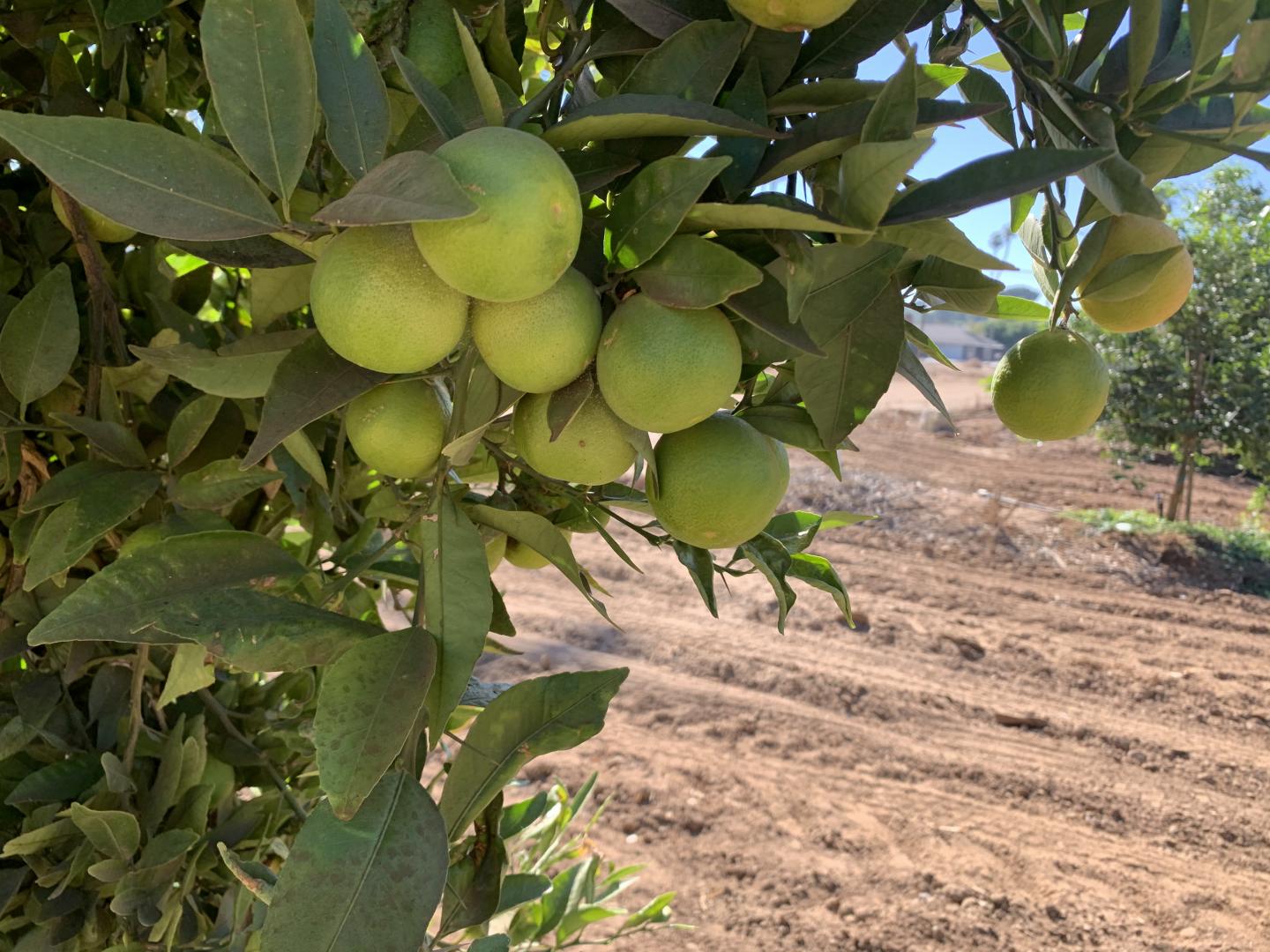
Credit: Chandrika Ramadugu/UCR
UC Riverside scientists are betting an ancient solution will solve citrus growers’ biggest problem by breeding new fruits with natural resistance to a deadly tree disease.
The hybrid fruits will ideally share the best of their parents’ attributes: the tastiness of the best citrus, and the resistance to Huanglongbing, or HLB, displayed by some Australian relatives of citrus.
There is no truly effective commercial treatment for HLB, also called citrus greening disease, which has destroyed orchards worldwide. The disease has already been detected in California, where 80 percent of the country’s fresh citrus is grown. However, it has not yet been detected in a commercial grove.
To prevent that from happening, the National Institute of Food and Agriculture has awarded a UC Riverside-led research team $4.67 million. Chandrika Ramadugu, a UCR botanist leading the project, helped identify microcitrus varieties with natural resistance to HLB about eight years ago.
“HLB is caused by bacteria, so many people are trying to control it with antimicrobial sprays,” Ramadugu said. “We want to incorporate resistance into the citrus trees themselves through breeding, to provide a more sustainable solution.”
Part of the challenge with this approach to solving the HLB problem is that it’s possible to breed hybrids that are resistant to the disease but don’t taste good, Ramadugu said. “Hence the need to generate a lot of hybrids and screen them for the ones that will be most ideal for the citrus industry.”
Microcitrus, such as the Australian finger lime, tends to have a sharper, more bitter taste than its relative citrus fruits, like oranges. The perfect cross will have just the right mix of genes to give it sweetness and HLB resistance.
Ramadugu’s team includes collaborators from Texas A&M University, the University of Florida, Washington State University and the U.S. Department of Agriculture, as well as scientists from UC Riverside’s Department of Botany and Plant Sciences.
Currently, the team is studying differences in the genetic makeup of the hybrids they’ve already bred. Analyzing the new plants’ DNA will help the team see whether enough disease resistance has been bred into the fruit, but not so much that the flavor is compromised.
Another challenge with breeding is the time it takes for new citrus varieties to flower naturally, which can be several years. With the help of Sean Cutler, UCR professor of plant cell biology, the team is hoping to accelerate the time it takes for the hybrid plants to bear fruit in a greenhouse.
This way the hybrids can be analyzed for taste much sooner. Clones of the best hybrid plants will then be grown in Florida and Texas field trials.
UC Riverside scientists are using a variety of approaches to fight HLB. While some hope that altering soil and root bacteria will improve plants’ immunity to the disease, others are trying to improve HLB resistance by tweaking citrus metabolism, or by using an antibacterial peptide to clear HLB from an infected plant.
The fruit produced through Ramadugu’s method will appeal to many consumers because it will not have genes introduced into them by scientists. Breeding has been done for thousands of years to improve crops and is considered a more natural practice.
Additionally, Ramadugu says she’s excited about her approach because it will ultimately produce a product useful for growers and consumers.
###
Media Contact
Jules Bernstein
[email protected]
Original Source
https:/