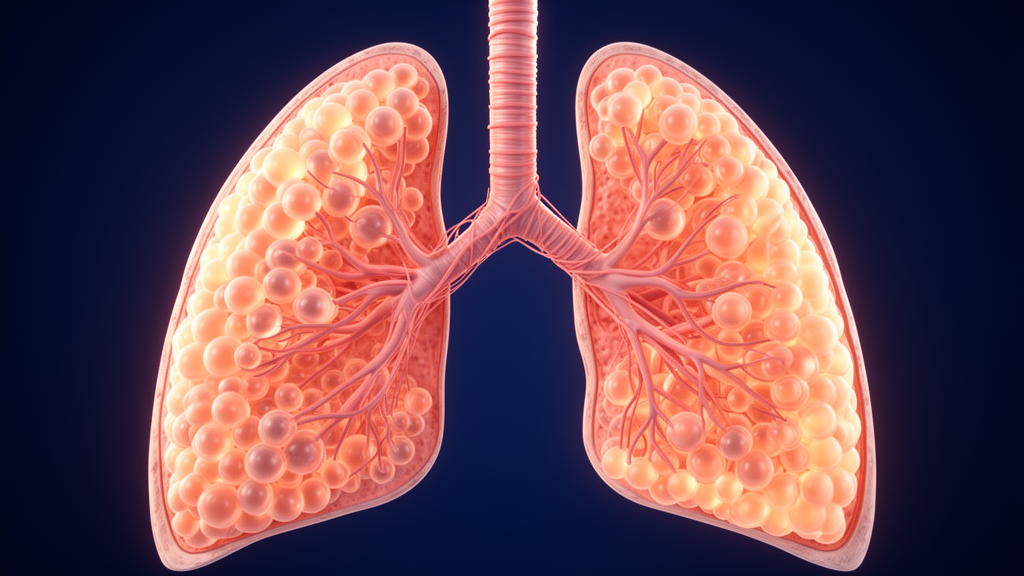
A defined-component formula derived from the traditional Chinese medicine Shenling Baizhu San (SLBZS) attenuated cigarette smoke-induced lung inflammation and oxidative injury in a rat model, according to a study published in BMC Complementary Medicine and Therapies. The research, led by Genyan Liu and colleagues, evaluated whether a standardized version of the herbal mixture could mitigate pulmonary damage during ongoing smoke exposure. The study found that medium and high doses of the formula significantly reduced levels of key inflammatory markers and improved histopathological abnormalities compared to untreated smoke-exposed controls.
The study addressed a specific limitation in the standardization of SLBZS, a complex herbal composition with previously shown anti-inflammatory activity. Seventy male Sprague-Dawley rats were randomly assigned to seven groups of ten animals each. The groups included a control group, a model group exposed to smoke without treatment, a dexamethasone group, a commercial SLBZS group, and three groups receiving low, medium, and high doses of the DCF.
Except for the control group, all rats underwent cigarette smoke exposure for 120 minutes per day over an eight-week period. Drug administration began concurrently with the smoke exposure. The DCF was administered at approximately 2.75, 5.49, and 10.98 mg/kg/day for the low, medium, and high-dose groups, respectively.
The researchers measured lung tissue levels of several inflammatory cytokines, including IL-1β, IL-6, TNF-α, CXCL1, and CCL2. They also assessed oxidative stress markers, specifically 8-iso-PGF2α, malondialdehyde (MDA), and superoxide dismutase (SOD) activity. Additionally, the study evaluated lung histopathology and the protein levels of phosphorylated p38 (p-p38) and phosphorylated p53 (p-p53), which are associated with stress-response pathways.
Compared with the control group, cigarette smoke exposure significantly increased the levels of IL-1β, IL-6, TNF-α, CXCL1, CCL2, and 8-iso-PGF2α, while reducing SOD activity and increasing p-p38 and p-p53 protein levels. The medium- and high-dose DCF groups showed significant reductions in these inflammatory and oxidative injury-related changes compared to the model group. The treatment also improved histopathological abnormalities in the lung tissue.
The authors concluded that concurrent administration of the DCF attenuated cigarette smoke-induced lung inflammation and oxidative injury during continued smoke exposure. The observed reductions in p-p38 and p-p53 suggest possible involvement of related stress-response pathways, although the study did not establish causal pathway regulation.
Subject of Research: Evaluation of a Shenling Baizhu San-derived formula on cigarette smoke-induced lung inflammation in rats
Article Title: A Shenling Baizhu San-derived defined-component formula attenuates cigarette smoke-induced lung inflammation in rats
Article References: Liu, G., Huang, Y., Qu, H., Yang, T., & Mao, L. (2026). A Shenling Baizhu San-derived defined-component formula attenuates cigarette smoke-induced lung inflammation in rats. BMC Complementary Medicine and Therapies. https://doi.org/10.1186/s12906-026-05655-1
Image Credits: AI Generated
DOI: 10.1186/s12906-026-05655-1
Keywords: Shenling Baizhu San, Cigarette smoke, Lung inflammation, Oxidative stress, Rat model, Traditional Chinese Medicine, Pulmonary injury, Anti-inflammatory, Shenling, Baizhu, San-derived, defined-component
News Source: Ophelia Keating. (November 10, 2026). Defined Formula Reduces Smoke-Induced Lung Inflammation in Rats. Scienmag.