• HOME
  • NEWS
  • EXPLORE
    • CAREER
      • Companies
      • Jobs
    • EVENTS
    • iGEM
      • News
      • Team
    • PHOTOS
    • VIDEO
    • WIKI
  • BLOG
  • COMMUNITY
    • FACEBOOK
    • INSTAGRAM
    • TWITTER
Thursday, June 25, 2026
BIOENGINEER.ORG
No Result
View All Result
  • Login
  • HOME
  • NEWS
  • EXPLORE
    • CAREER
      • Companies
      • Jobs
        • Lecturer
        • PhD Studentship
        • Postdoc
        • Research Assistant
    • EVENTS
    • iGEM
      • News
      • Team
    • PHOTOS
    • VIDEO
    • WIKI
  • BLOG
  • COMMUNITY
    • FACEBOOK
    • INSTAGRAM
    • TWITTER
  • HOME
  • NEWS
  • EXPLORE
    • CAREER
      • Companies
      • Jobs
        • Lecturer
        • PhD Studentship
        • Postdoc
        • Research Assistant
    • EVENTS
    • iGEM
      • News
      • Team
    • PHOTOS
    • VIDEO
    • WIKI
  • BLOG
  • COMMUNITY
    • FACEBOOK
    • INSTAGRAM
    • TWITTER
No Result
View All Result
Bioengineer.org
No Result
View All Result
Home NEWS Science News Health

Deeper insight into how tick spit suppresses cattle immunity

Bioengineer by Bioengineer
January 28, 2021
in Health
Reading Time: 2 mins read
0
IMAGE
Share on FacebookShare on TwitterShare on LinkedinShare on RedditShare on Telegram

IMAGE

Credit: itabajara da Silva Vaz Jr)

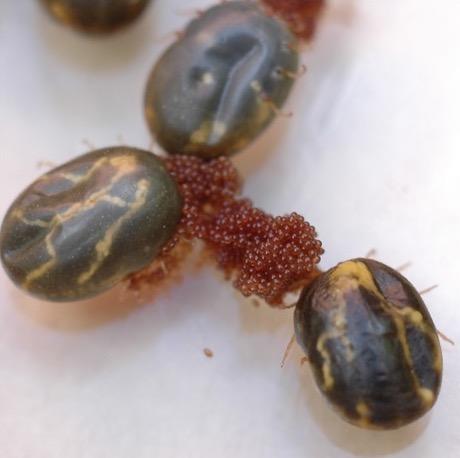
A tick saliva study reveals immune responses that could lead to better protection for cattle.

Scientists from Hokkaido University, Japan and Universidade Federal do Rio Grande do Sul and Universidade Federal do Rio de Janeiro, Brazil, have revealed that substances in tick saliva activates immune response-suppressing proteins in cattle that facilitates the transmission of tick-borne diseases. The finding was published in the journal Scientific Reports and could help in the development of alternative control strategies.

The Asian blue tick, Rhipicephalus microplus, feeds on cattle, causing skin lesions, chronic blood loss and transmission of disease-causing parasites. The costs of preventing and treating disease and loss of some cattle are considerable in many parts of the world.

Some ticks have developed resistance against currently used acaricides, the tick equivalent of insecticides. To develop alternative strategies that can better protect cattle, such as vaccines, scientists need to better understand tick infections at the molecular level. For example, scientists already know that tick saliva suppresses the immune response in cattle, facilitating the transmission of tick-borne parasites, but the exact process has not been fully clarified.

Infectious disease veterinarian, Satoru Konnai, and scientists at Hokkaido University in Japan and colleagues in Brazil investigated what happens to immune cells when they are exposed to tick saliva. The team found that substances in tick saliva, likely a lipid compound called a prostaglandin, increase the expression of two specific cellular membrane proteins on some immune cells. The interaction of these proteins, called programmed cell death protein 1 (PD-1) and programmed death-ligand 1 (PD-L1), leads to the suppression of an immune cell called helper T cell (Th1). This means that the cattle’s immune response is less able to combat invading tick-borne parasites.

Further investigation showed Asian blue tick saliva contains a high concentration of prostaglandin E2, which is known to induce PD-L1 expression. However future studies need to confirm if prostaglandin E2 plays a direct role in suppressing the cattle immune response. Also, since this study involved cells in the laboratory, the team says further research in live cattle is needed.

“Our findings suggest that Asian blue tick saliva inhibits the immune responses of helper T cells, at least in part, via the interaction between PD-1 and PD-L1,” says Konnai.

Associate Professor Satoru Konnai of the Laboratory of Infectious Diseases at Hokkaido University conducts research on the development of novel therapeutic strategy for intractable diseases control in animals; the pathogenesis of bovine leukemia; analysis of mechanism of tick-borne pathogen transmission and development of anti-tick vaccines.

###

Media Contact
Sohail Keegan Pinto

[email protected]

Original Source

https://www.global.hokudai.ac.jp/blog/deeper-insight-into-how-tick-spit-suppresses-cattle-immunity/

Related Journal Article

http://dx.doi.org/10.1038/s41598-020-80251-y

Tags: BiologyEntomologyImmunology/Allergies/AsthmaMolecular BiologyParasitologyZoology/Veterinary Science
Share13Tweet8Share2ShareShareShare2

Related Posts

GW250114 Uncovers Post-Merger Black Hole Clues

June 25, 2026

Risk and Relapse Patterns in Triple-Negative Breast Cancer

June 25, 2026

Post-COVID Surge: Obesity Inequalities in England Widen, with Sharpest Rise Among Young Adults

June 25, 2026

Asian Working Group Revises Sarcopenia Criteria 2019-2025

June 25, 2026
Please login to join discussion

POPULAR NEWS

  • Saying Goodbye to PGY-6: Pediatric Fellowship Realities

    103 shares
    Share 41 Tweet 26
  • Multi-Hospital Study Reveals Long Covid Burden Is Twice as High as Current Estimates

    92 shares
    Share 36 Tweet 23
  • Detection of EDCs in Breast Milk and Infant Urine Up to Six Months Highlights Early Exposure Risks

    77 shares
    Share 31 Tweet 19
  • New Drug Candidate Developed at McMaster Shows Potential for Treating Brain Cancer

    58 shares
    Share 23 Tweet 15

About

We bring you the latest biotechnology news from best research centers and universities around the world. Check our website.

Follow us

Recent News

Rare Mixed Liver Cancer Underscores Diagnostic and Therapeutic Challenges

“International Team Discovers ‘Super-Puff’ Planets Lighter Than Candy Floss”

Discover Millions of Government Documents Effortlessly with GovScape

Subscribe to Blog via Email

Enter your email address to subscribe to this blog and receive notifications of new posts by email.

Join 82 other subscribers
  • Contact Us

Bioengineer.org © Copyright 2023 All Rights Reserved.

Welcome Back!

Login to your account below

Forgotten Password?

Retrieve your password

Please enter your username or email address to reset your password.

Log In
No Result
View All Result
  • Homepages
    • Home Page 1
    • Home Page 2
  • News
  • National
  • Business
  • Health
  • Lifestyle
  • Science

Bioengineer.org © Copyright 2023 All Rights Reserved.