• HOME
  • NEWS
  • EXPLORE
    • CAREER
      • Companies
      • Jobs
    • EVENTS
    • iGEM
      • News
      • Team
    • PHOTOS
    • VIDEO
    • WIKI
  • BLOG
  • COMMUNITY
    • FACEBOOK
    • INSTAGRAM
    • TWITTER
Monday, May 11, 2026
BIOENGINEER.ORG
No Result
View All Result
  • Login
  • HOME
  • NEWS
  • EXPLORE
    • CAREER
      • Companies
      • Jobs
        • Lecturer
        • PhD Studentship
        • Postdoc
        • Research Assistant
    • EVENTS
    • iGEM
      • News
      • Team
    • PHOTOS
    • VIDEO
    • WIKI
  • BLOG
  • COMMUNITY
    • FACEBOOK
    • INSTAGRAM
    • TWITTER
  • HOME
  • NEWS
  • EXPLORE
    • CAREER
      • Companies
      • Jobs
        • Lecturer
        • PhD Studentship
        • Postdoc
        • Research Assistant
    • EVENTS
    • iGEM
      • News
      • Team
    • PHOTOS
    • VIDEO
    • WIKI
  • BLOG
  • COMMUNITY
    • FACEBOOK
    • INSTAGRAM
    • TWITTER
No Result
View All Result
Bioengineer.org
No Result
View All Result
Home NEWS Science News Biology

Deep sleep takes out the trash

Bioengineer by Bioengineer
January 20, 2021
in Biology
Reading Time: 2 mins read
0
IMAGE
Share on FacebookShare on TwitterShare on LinkedinShare on RedditShare on Telegram

Waste clearance is crucial for brain health, preventing neurodegenerative disease
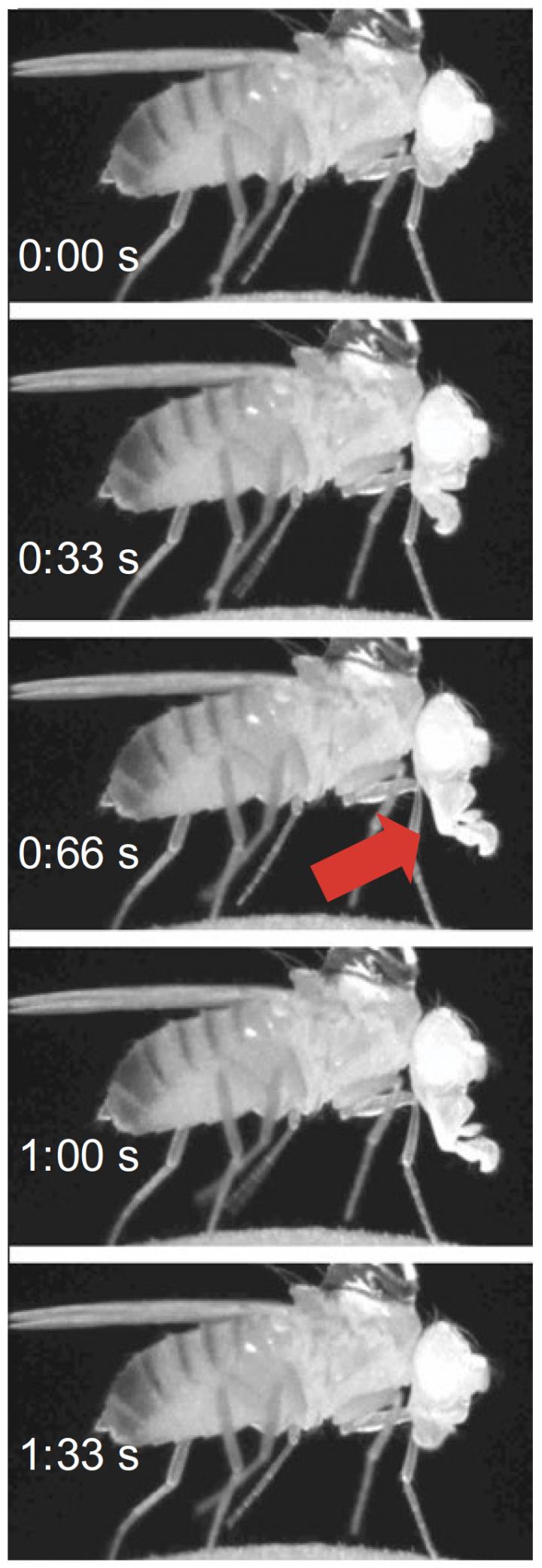
IMAGE

Credit: Ravi Allada/Northwestern University

A new Northwestern University study reaffirms the importance of getting a good night’s sleep.

By examining fruit flies’ brain activity and behavior, the researchers found that deep sleep has an ancient, restorative power to clear waste from the brain. This waste potentially includes toxic proteins that may lead to neurodegenerative disease.

“Waste clearance could be important, in general, for maintaining brain health or for preventing neurogenerative disease,” said Dr. Ravi Allada, senior author of the study. “Waste clearance may occur during wake and sleep but is substantially enhanced during deep sleep.”

The study will publish tomorrow (Jan. 20) in the journal Science Advances.

Allada is the Edward C. Stuntz Distinguished Professor in Neuroscience and chair of the Department of Neurobiology in the Northwestern’s Weinberg College of Arts and Sciences. He also is associate director of Northwestern’s Center for Sleep and Circadian Biology. Bart van Alphen, a postdoctoral fellow in Allada’s laboratory, was the paper’s first author.

Although fruit flies seem very different from humans, the neurons that govern flies’ sleep-wake cycles are strikingly similar to our own. For this reason, fruit flies have become a well-studied model organism for sleep, circadian rhythms and neurodegenerative diseases.

In the current study, Allada and his team examined proboscis extension sleep (PES), a deep-sleep stage in fruit flies, which is similar to deep, slow-wave sleep in humans. The researchers discovered that, during this stage, fruit flies repeatedly extend and retract their proboscis (or snout).

“This pumping motion moves fluids possibly to the fly version of the kidneys,” Allada said. “Our study shows that this facilitates waste clearance and aids in injury recovery.”

When Allada’s team impaired flies’ deep sleep, the flies were less able to clear an injected non-metabolizable dye from their systems and were more susceptible to traumatic injuries.

Allada said this study brings us closer to understanding the mystery of why all organisms need sleep. All animals — especially those in the wild — are incredibly vulnerable when they sleep. But research increasingly shows that the benefits of sleep — including crucial waste removal — outweigh this increased vulnerability.

“Our finding that deep sleep serves a role in waste clearance in the fruit fly indicates that waste clearance is an evolutionary conserved core function of sleep,” the paper’s coauthors write. “This suggests that waste clearance may have been a function of sleep in the common ancestor of flies and humans.”

###

The study, “A deep sleep stage in Drosophila with a functional role in waste clearance,” was supported by the U.S. Army (award numbers W81XWH-16-1-0169, W81XWH-16-1-0166, and W81XWH2010211) and the Alzheimer’s Association (award number AARG-17-532626).

Media Contact
Amanda Morris
[email protected]
Tags: Circadian RhythmEvolutionMedicine/HealthneurobiologySleep/Sleep Disorders
Share13Tweet8Share2ShareShareShare2

Related Posts

From Complexity to Clarity: Unraveling the “Topological Laws” Governing Cell Death — Biology

From Complexity to Clarity: Unraveling the “Topological Laws” Governing Cell Death

May 11, 2026
New Classification Framework Identifies Tumor-Associated Bacterial Effectors as Crucial Drivers of Tumor Biology and Immune Response — Biology

New Classification Framework Identifies Tumor-Associated Bacterial Effectors as Crucial Drivers of Tumor Biology and Immune Response

May 11, 2026

HIV-1 Strains Reveal Varied Paths to Antibody Escape

May 11, 2026

CRISPRi Screening Identifies Fungal-Specific Drug Targets

May 11, 2026
Please login to join discussion

POPULAR NEWS

  • Research Indicates Potential Connection Between Prenatal Medication Exposure and Elevated Autism Risk

    841 shares
    Share 336 Tweet 210
  • New Study Reveals Plants Can Detect the Sound of Rain

    728 shares
    Share 290 Tweet 182
  • Salmonella Haem Blocks Macrophages, Boosts Infection

    62 shares
    Share 25 Tweet 16
  • Breastmilk Balances E. coli and Beneficial Bacteria in Infant Gut Microbiomes

    57 shares
    Share 23 Tweet 14

About

We bring you the latest biotechnology news from best research centers and universities around the world. Check our website.

Follow us

Recent News

Humans and Zebra Finches Share Similar Speech Learning Techniques #ASA190

New Study Uncovers How Fungal Parasites Attack Strawberries and Raspberries

City of Hope Researchers to Present Groundbreaking Immunotherapy and Precision Medicine Advances Across Multiple Cancer Types at ASCO 2026

Subscribe to Blog via Email

Enter your email address to subscribe to this blog and receive notifications of new posts by email.

Join 82 other subscribers
  • Contact Us

Bioengineer.org © Copyright 2023 All Rights Reserved.

Welcome Back!

Login to your account below

Forgotten Password?

Retrieve your password

Please enter your username or email address to reset your password.

Log In
No Result
View All Result
  • Homepages
    • Home Page 1
    • Home Page 2
  • News
  • National
  • Business
  • Health
  • Lifestyle
  • Science

Bioengineer.org © Copyright 2023 All Rights Reserved.