A field experiment conducted in Northeast China has identified deep plowing as the most effective rotational tillage practice for restoring soil physical properties after two years of no-tillage with straw mulching. The study, led by Professor Haitao Chen at Northeast Agricultural University, was published in the journal ENGINEERING Agriculture. The research focused on Mollisols, a type of black soil that serves as a critical agricultural resource in the region and a core base for national food security. The findings provide a scientific basis for managing soil degradation and constructing rational rotational tillage systems in this specific geographic area.
Mollisols in Northeast China are characterized by high organic matter content and a unique soil structure. However, long-term intensive tillage in these regions can lead to soil degradation, compaction, and declines in fertility. To address these issues, no-tillage with straw mulching, often abbreviated as NTSM, has been widely promoted as a mainstream conservation tillage practice. This method is designed to stabilize the soil, conserve water, and increase soil organic matter content. Despite these benefits, the continuous application of NTSM can also cause soil compaction and impede water infiltration, which restricts the sustainable use of arable land resources.
The research team addressed the need for targeted field positioning experiments to clarify how different tillage practices affect the physicochemical properties of Mollisols. Large-scale agricultural machinery operations and the construction of rotational tillage systems in Northeast China face practical challenges, and the mechanisms by which various tillage methods influence soil health remained unclear. The study aimed to provide theoretical and technical support for improving arable land quality, which is closely related to development goals such as farmland carbon sequestration and agricultural emission reduction.
From 2019 to 2022, the researchers conducted a field positioning experiment in a typical Mollisols region of Northeast China. The experimental design followed two consecutive years of NTSM, after which three specific tillage treatments were established: deep plowing, rotary tillage following subsoiling, and subsoil tillage. A randomized block design was used to ensure statistical rigor. The team systematically measured indicators such as soil water content, bulk density, temperature, and penetration resistance across different soil layers to assess the impact of each practice.
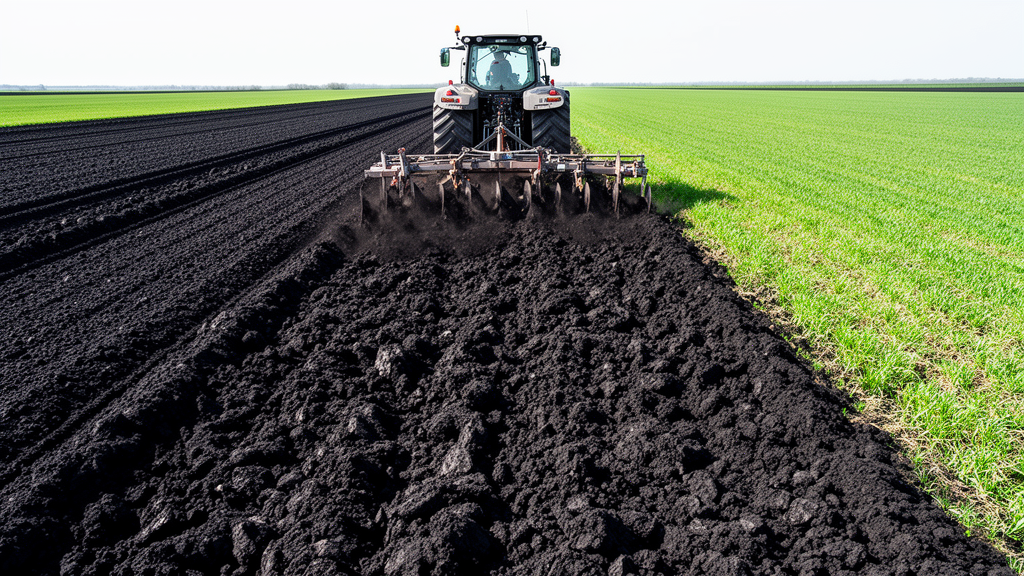
The results indicated that the three tillage practices had different emphases in improving the physical properties of Mollisols. Deep plowing effectively broke the compacted layer formed by the preceding no-tillage period. This treatment significantly reduced bulk density and penetration resistance in deep soil layers and optimized the vertical distribution of soil water. Consequently, deep plowing showed the best overall improvement in comprehensive soil properties. The study concluded that, considering all measured indicators, deep plowing was the optimal rotational tillage practice for the Mollisols of Northeast China following two years of NTSM.
Rotary tillage following subsoiling demonstrated a prominent loosening effect on shallow soil. This practice was found to be more conducive to soil and water conservation in the surface layer, offering specific benefits for topsoil management. Subsoil tillage, on the other hand, stabilized deep soil water and thermal conditions under drought conditions.
The study emphasized that the responses of soil to tillage practices in Northeast China differ markedly from those in other regions. The region has a cold climate with concentrated rainfall, and the Mollisols possess distinct structural characteristics. Therefore, the general applicability of the study’s conclusions to other geographic areas requires further experimental verification. The findings are localized to the specific conditions of the Mollisols region in Northeast China and should not be broadly extrapolated without additional data.
These results provide solid localized experimental evidence for scientifically selecting tillage practices and constructing a rational rotational tillage system. The research has important practical value for maintaining Mollisols fertility and stabilizing grain production capacity. By identifying deep plowing as the preferred method after short-term no-tillage, the study supports the sustainable utilization of Mollisols resources in the region. The work contributes to the broader goal of green, low-carbon agricultural development and the protection of precious arable land resources in China.
Subject of Research: Effects of rotational tillage practices on Mollisols physical properties in Northeast China
Article Title: Safeguarding the black soil granary: deep plowing is preferred after short-term no-tillage with straw mulching
Article References: Safeguarding the black soil granary: deep plowing is preferred after short-term no-tillage with straw mulching. Original publication (Bibliographic details unavailable.)
Image Credits: AI Generated
DOI: Not provided
Keywords: Mollisols, tillage, soil physics, Northeast China, no-tillage, straw mulching, deep plowing, soil compaction, agricultural sustainability, soil fertility, Safeguarding, black
News Source: Alan Morgan. (November 8, 2026). Deep Plowing Best for Black Soil After No-Tillage. Scienmag.