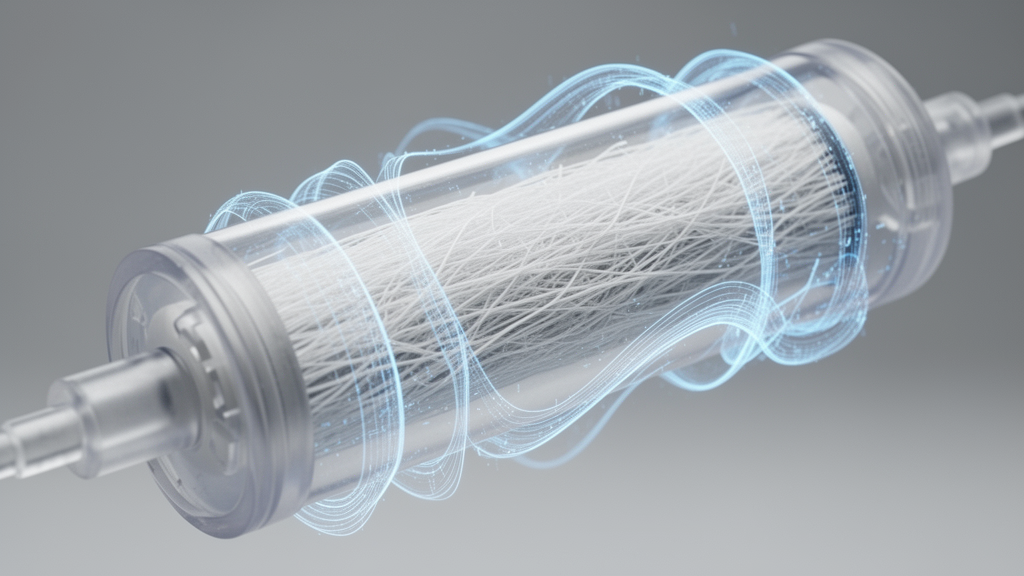
Researchers at Reims University Hospital have developed a deep learning model capable of dynamically predicting the risk of extra-corporal circuit clotting during hemodialysis sessions. Published in BMC Medical Informatics and Decision Making, this retrospective study leverages artificial intelligence to analyze in-session temporal monitoring data alongside patients’ out-session clinical data. The primary objective of the research was to create a system that provides early alerts for clotting risks, aiming to allow medical staff to administer additional anticoagulants or initiate restitution procedures before the dialysis session ends with a clotting-related outcome. This approach addresses a well-known clinical issue where early detection of clotting is difficult, often leading to blood loss and reduced treatment duration.
The study utilized data collected from electronic records at Reims University Hospital between 2015 and 2021. The dataset comprised 113,119 hemodialysis sessions, providing a substantial foundation for training the machine learning algorithms. Each session included 47 in-session features and 28 out-session features, creating a comprehensive view of both the real-time physiological parameters and the broader clinical context of the patients.
They compared a standard LSTM architecture with two contextual LSTM approaches that incorporated out-session clinical data through concatenation and multiplication methods. Additionally, they tested an LSTM model without these contextual features to assess the specific impact of including patients’ out-of-session clinical data. The model was trained to predict the risk that a dialysis session would end with a clotting-related outcome, rather than attempting to detect clot formation at a specific, precise time point during the procedure.
The performance differences between the various model architectures were minimal, indicating that several configurations could achieve similar levels of accuracy. The final selected model, which used raw concatenation of in-session and out-session data, achieved an F1-Score of 0.8 and an area under the ROC curve of 0.89 for session-end prediction. These metrics suggest that the model has strong capability in determining whether a session will conclude with clotting issues. The high performance in session-end prediction indicates that dynamic clotting-risk prediction is feasible using deep learning techniques, providing a solid foundation for further advancements in clinical informatics.
However, the study also highlighted significant challenges regarding the timing of these predictions. In a simulated clinical evaluation using sequential predictions, the model surpassed an F1-Score of 0.67 only after two hours of session time had elapsed. At this point, the model demonstrated a sensitivity of 0.7 and a precision of 0.64. Given that the average length of a hemodialysis session is four hours, this delay in achieving robust predictive performance limits the potential for early intervention. The findings suggest that while the model is effective for end-of-session assessment, it struggles to provide reliable alerts in the early stages of the treatment, which is the critical window for preventing clotting complications.
The authors attribute the difficulty in early-session predictions to the granularity of clotting annotations in the study data.
Despite these limitations, the study provides valuable insights into the potential of artificial intelligence in hemodialysis care. Most previous studies have focused on finding ideal anticoagulation strategies without the support of data-driven solutions, making this approach a notable shift in methodology.
The research contributes to the growing field of medical informatics by demonstrating the feasibility of using LSTM networks for dynamic risk prediction in a clinical setting. While the current model’s ability to provide early alerts is constrained, the strong performance in session-end prediction validates the underlying data-driven approach. Future work will likely focus on addressing the annotation granularity issues and exploring methods to enhance early-session predictive accuracy.
Subject of Research: Deep learning prediction of hemodialysis clotting risk
Article Title: Dynamic prediction of extra-corporal circuit clotting risk during hemodialysis sessions using deep learning: a retrospective study
Article References: Gallay, L., Merieux, R., Verdier, V., Kazes, I., Rieu, P., & Vuiblet, V. (2026). Dynamic prediction of extra-corporal circuit clotting risk during hemodialysis sessions using deep learning: a retrospective study. BMC Medical Informatics and Decision Making. https://doi.org/10.1186/s12911-026-03942-y
Image Credits: AI Generated
DOI: 10.1186/s12911-026-03942-y
Keywords: hemodialysis, deep learning, LSTM, clotting risk, medical informatics, artificial intelligence, retrospective study, anticoagulation, Dynamic, prediction, extra-corporal, circuit
News Source: Blake Davidson. (November 8, 2026). Deep Learning Predicts Dialysis Clotting Risk. Scienmag.