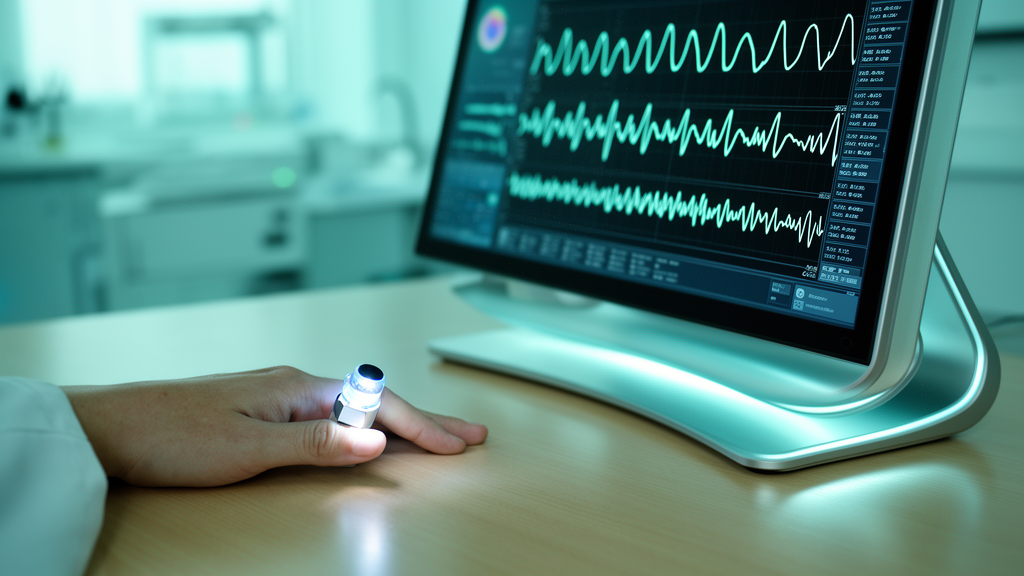
Researchers have proposed PPG2ECGNet, a deep learning model designed to reconstruct electrocardiogram-like waveforms directly from photoplethysmography signals. Electrocardiograms provide direct information regarding cardiac electrical activity, yet continuous signal acquisition typically requires dedicated recording equipment and skin-contact electrodes. In contrast, photoplethysmography is widely available in wearable devices and records peripheral blood-volume changes that are physiologically coupled to the cardiac cycle. The research team evaluated whether deep learning could bridge these two recording modalities by synthesizing electrocardiographic waveforms from peripheral optical signals.
The computational architecture of PPG2ECGNet is a one-dimensional framework inspired by U-Net++, incorporating nested skip connections along with residual blocks. To train and assess the model, the investigators utilized the Cuff-Less Blood Pressure Estimation dataset, which is derived from the MIMIC-II database. This underlying dataset comprises 12,000 physiological records. In their formal experimental analysis, the authors reported evaluating a total of 151,088 paired photoplethysmography and electrocardiogram signal segments to determine how accurately the network reconstructs target waveforms.
In benchmark testing across the analyzed segments, PPG2ECGNet achieved an average Pearson correlation coefficient of 0.90 for electrocardiogram waveform reconstruction. Beyond morphological waveform synthesis, the model also demonstrated capability in physiological rate estimation, achieving an average Pearson correlation coefficient of 0.85 for heart-rate estimation. A detailed morphological evaluation showed that the framework reconstructed QRS complexes with higher fidelity than it achieved for T-waves and P-waves, indicating varying reconstruction accuracy across distinct components of the cardiac cycle.
According to the study findings, these reconstruction and estimation outcomes support further investigation into photoplethysmography-derived electrocardiogram surrogates for monitoring applications. Because photoplethysmography sensors are already widespread in wearable hardware, generating reliable synthetic electrocardiographic waveforms could potentially aid continuous monitoring scenarios. The authors noted that synthesizing such waveforms offers a computational surrogate approach, providing a potential pathway for ongoing cardiac monitoring research that leverages readily accessible wearable sensor data.
The researchers emphasized that the present study represents an offline proof of concept rather than a clinical tool. The investigation does not establish diagnostic equivalence between the synthesized waveforms and measured electrocardiograms, nor does it establish validated performance under ambulatory wearable use conditions. Before PPG2ECGNet or similar surrogate frameworks can be deployed in practice, independent cohort validation and comprehensive clinical evaluation remain necessary to determine their diagnostic reliability and real-world effectiveness.
Subject of Research: Deep learning synthesis of electrocardiogram waveforms from photoplethysmography signals
Article Title: PPG2ECGNet: a deep learning model for electrocardiogram signal synthesis from photoplethysmography signal
Article References: Shuzan, M. N. I., Chowdhury, M. H., Alam, S. B., Reaz, M. B. I., Khan, M. S., Murugappan, M., & Chowdhury, M. E. H. (2026). PPG2ECGNet: a deep learning model for electrocardiogram signal synthesis from photoplethysmography signal. Neural Computing and Applications, 38(23), Article 922. https://doi.org/10.1007/s00521-026-12652-5
Image Credits: AI Generated
DOI: 10.1007/s00521-026-12652-5
Keywords: PPG2ECGNet, photoplethysmography, electrocardiograms, deep learning, U-Net++, residual blocks, nested skip connections, MIMIC-II dataset, Cuff-Less Blood Pressure Estimation dataset, waveform reconstruction, heart-rate estimation, Pearson correlation coefficient, QRS complexes, cardiac electrical activity, peripheral blood volume, wearable devices, offline proof of concept
News Source: Blake Davidson. (November 26, 2026). Deep Learning Model Reconstructs Electrocardiogram Waveforms From Optical Pulse Signals. Scienmag.