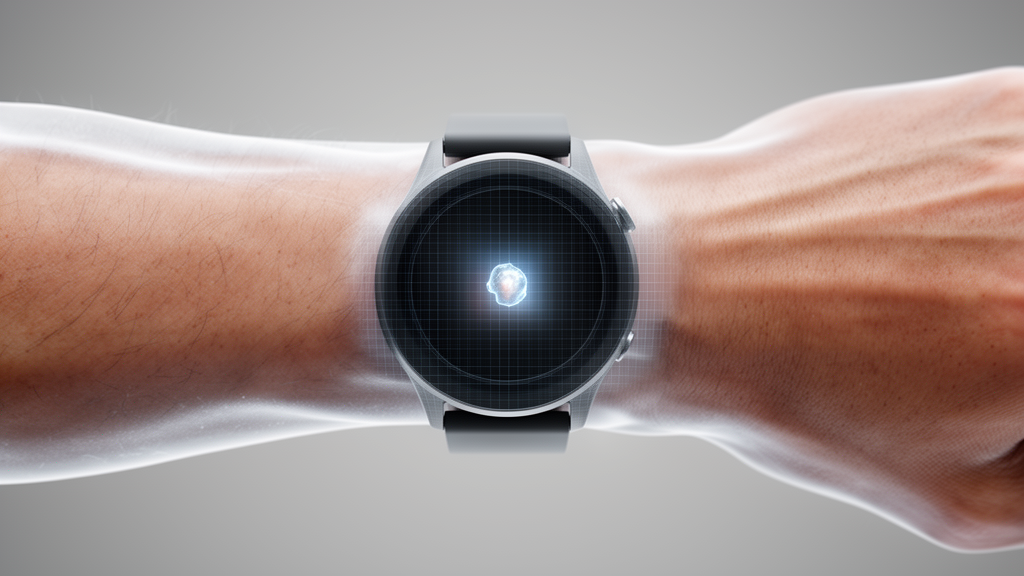
Researchers at Vishwakarma University and collaborating institutions have introduced AlertSafeNet, a multichannel deep learning framework designed to detect anomalous gait patterns in real time using data from wearable devices. The study, published in Discover Computing, presents a system that integrates physiological signals from smartwatches with contextual information from smartphones to identify potential safety risks. By leveraging a one-dimensional convolutional neural network with residual connections, the framework aims to provide proactive safety monitoring for individuals in high-risk scenarios, such as those facing violence or harassment. The primary objective is to automatically detect abnormal behavioral patterns and generate immediate alerts to trusted contacts or authorities, thereby bridging the gap between passive data collection and active safety intervention.
The motivation for this research stems from the significant global concern regarding personal safety, particularly for women, senior citizens, and children. Statistical data cited in the study highlights the prevalence of violence, including a National Crime Records Bureau report indicating over 28,000 rape cases in India in 2020 and a World Health Organization report stating that one in three women worldwide have experienced physical or sexual violence. While traditional safety measures like emergency hotlines and self-defense training exist, they often fail to provide immediate assistance during an emergency. The authors argue that integrating artificial intelligence with wearable technology can enhance personal protection by enabling rapid, data-driven responses to suspicious activities.
The dataset used for training and evaluating AlertSafeNet was collected from 25 individuals over a period of 45 days, resulting in 10,000 multivariate physiological observations. The participants ranged in age from 19 to 68 years, with a mean age of 37.34 years. Data was acquired using various commercial smartwatches, including Fastrack, Fitbit, Noise, and Redmi, synchronized with corresponding smartphone applications. These devices continuously recorded physiological signals such as heart rate, blood oxygen saturation (SpO₂), and electrocardiogram (ECG) data, along with location information. The sampling rates were governed by the device firmware and application settings, as explicit sensor-level frequencies were not configured in this study.
To prepare the data for machine learning, the raw sensor inputs underwent preprocessing to clean noise and ensure consistency. The data was categorized into two classes: label 1 for anomalous events and label 0 for non-anomalous events. Baseline normal patterns were established individually for each participant using the mean and standard deviation of gait, physiological, and contextual features recorded during routine activities. A segment was classified as abnormal if one or more features, such as cadence or acceleration variance, exhibited a statistically significant deviation from the participant-specific baseline. This threshold-based annotation process ensured that the training labels reflected genuine deviations from normal behavior.
The AlertSafeNet architecture is built upon a multichannel 1D convolutional neural network with residual connections. The model takes as input a multichannel sequence composed of heart rate, SpO₂, ECG, and location data, represented as a tensor with 100 time steps and four input channels. The network begins with a Conv1D layer that extracts low-level temporal features using convolutional kernels of size 5. This is followed by batch normalization and a ReLU activation function to introduce non-linearity. The feature maps are then processed through residual blocks, which consist of two Conv1D layers with kernel size 3, batch normalization, and ReLU activation. The residual connections, which add the input to the output of the block, help prevent the vanishing gradient problem and facilitate stable training.
After feature extraction, a Global Average Pooling layer reduces the dimensionality of the feature maps by aggregating temporal information into a compact vector. A Dropout layer is applied as a regularization mechanism to prevent overfitting, and a fully connected dense layer produces the final output. A sigmoid activation function is used to estimate the probability that the input sequence corresponds to an abnormal activity. The model contains a total of 50,929 trainable parameters, ensuring computational efficiency suitable for real-time inference. The architecture was selected for its ability to learn hierarchical temporal features from noisy multichannel wearable data while maintaining a lightweight footprint.
To evaluate the model’s performance, the dataset was partitioned at the participant level to prevent data leakage. Seventeen participants were assigned to the training set, four to the validation set, and four to the test set, corresponding to an approximate 70:15:15 split. Random oversampling was applied only to the training subset to address the class imbalance, where the non-anomalous class was the majority. The validation and test sets remained unchanged to ensure that model performance was assessed on unseen participant data. The model was trained using the Keras API with TensorFlow as the backend on the Google Colab platform, with training monitored over 30 epochs.
The results demonstrate that AlertSafeNet achieves high accuracy in detecting anomalous gait patterns. On the test set, the model reached an overall classification accuracy of 97.9%. The precision, recall, and F1-scores for both the non-anomalous and anomalous classes were above 96%, with F1-scores of 0.975 for non-anomalous and 0.970 for anomalous events. The confusion matrix revealed that the model incorrectly classified only two normal instances as anomalous and one anomalous instance as normal. These low false positive and false negative rates indicate that the system is reliable in distinguishing between normal and distress-related behaviors, which is crucial for safety-critical applications.
To assess real-time applicability, the researchers implemented a simulated streaming environment using a sliding window approach. Continuous sensor data was segmented into windows of 100 time steps and fed sequentially into the trained model. In this experimental deployment environment, the model demonstrated a low inference latency of 98 milliseconds, enabling near real-time prediction of anomalous events. In simulated distress scenarios, such as a sudden change in walking pattern combined with a raised heart rate, the model quickly identified the unusual activity. Conversely, routine movements were correctly classified as non-anomalous, confirming the system’s ability to function effectively in continuous monitoring contexts.
The study also provides a comparative analysis of AlertSafeNet against existing safety systems. While prior approaches have utilized various models and data sources, such as Random Forest for crime prediction or multimodal systems combining video and GPS, they often lack comprehensive reporting of precision, recall, and inference times. AlertSafeNet distinguishes itself by integrating physiological signals with location data and achieving high accuracy with a short inference time. The authors note that the framework’s efficiency and accuracy make it a strong candidate for real-time safety monitoring, offering a practical approach to improving personal security through technology.
Despite the promising results, the study acknowledges several limitations. The dataset size is relatively limited, with only 25 participants, which may not fully capture the diversity of real-world scenarios. The model currently focuses on binary classification, and its reliance on specific sensor modalities may limit its adaptability across devices with varying sensor configurations. The authors suggest that future work should focus on expanding the dataset, employing multimodal sensors, and conducting repeated subject-wise cross-validation to enhance the model’s robustness and generalizability. Additionally, ablation studies comparing the residual 1D-CNN with other architectures, such as LSTM or GRU, could further quantify the contribution of individual components.
The development of AlertSafeNet represents a significant step in the integration of deep learning and wearable technology for personal safety. By leveraging the continuous data streams from smartwatches and smartphones, the framework offers a proactive method for detecting potential threats. The use of open-source libraries like Pandas, TensorFlow, and Keras ensures that the pipeline is reproducible and deployable on cloud platforms. As wearable technology continues to evolve, systems like AlertSafeNet may play an increasingly important role in protecting vulnerable individuals by providing timely alerts and supporting incident analysis with preserved sensor data.
Subject of Research: AlertSafeNet a multichannel deep learning framework for real time anomaly detection using wearable device data
Article Title: AlertSafeNet a multichannel deep learning framework for real time anomaly detection using wearable device data
Article References: Ainapure, B., Pise, R., Gupta, N., & Derawi, M. (2026). AlertSafeNet a multichannel deep learning framework for real time anomaly detection using wearable device data. Discover Computing, 29(1), Article 827. https://doi.org/10.1007/s10791-026-10761-2
Image Credits: AI Generated
DOI: 10.1007/s10791-026-10761-2
Keywords: AlertSafeNet, multichannel, deep, learning, framework, real, time, anomaly, detection, wearable, device, data
News Source: Blake Davidson. (November 7, 2026). Deep Learning Model Detects Wearable Anomalies with 97.9% Accuracy. Scienmag.