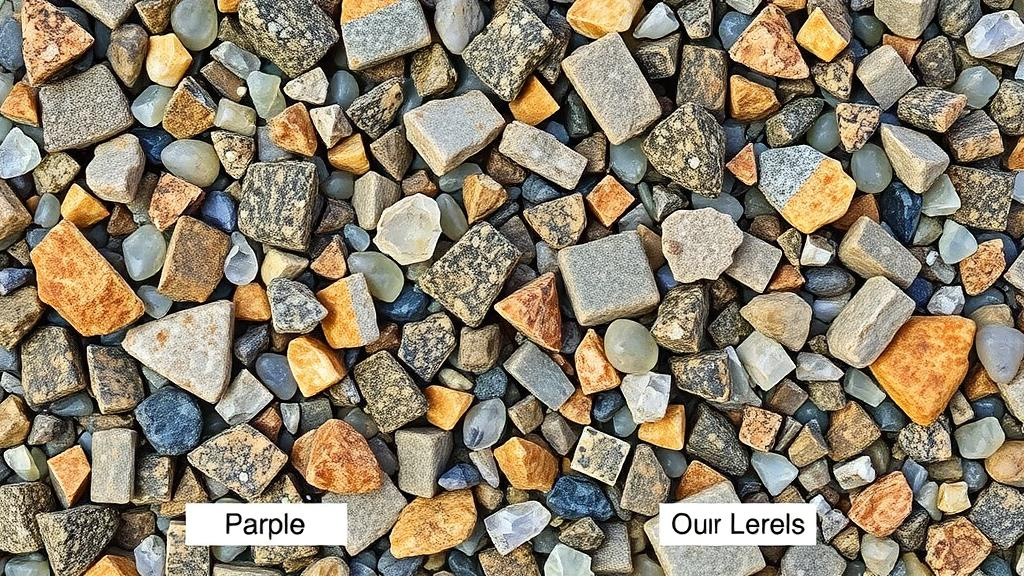
Geologists who study heavy minerals under the microscope have long faced a bottleneck: identifying grains of garnet, monazite, sillimanite or zircon by eye is slow, subjective and impractical at scale. A new study published in Earth Science Informatics on 29 October 2026 proposes a way around the problem with a framework called ADSDL-MCQ, an Adaptive Dual-Segmentation Deep Learning Framework for Mineral Classification and Quantification, developed by Priyadharshini Solaimalai and Eswaran Perumal.
The central innovation is that the framework is trained only on labelled single-grain images and performs segmentation solely at the inference stage, so it does not require annotated segmentation masks. This matters because existing automated methods depend on manually labelled segmentation databases, which are expensive to produce, and they tend to lose accuracy when mineral grains overlap heavily. The new approach also aims to generalize to mineral classes it has not seen during training.
Technically, the framework fuses deep feature extraction with texture analysis for classification. Its segmentation stage is adaptive: shape-based processing handles sparse-scale images, while the Segment Anything Model (SAM) is applied to dense-scale images where grains crowd together. A confidence-based mechanism flags classes of unknown minerals, and mineral counting is carried out automatically to yield quantitative estimates from the microscopic images.
In testing on microscopic images of four minerals—garnet, monazite, sillimanite and zircon—the framework achieved a classification accuracy of 97.57%, together with high precision, recall and F1-score, according to the abstract. The authors report that the system works without the need for annotated segmentation data, which they describe as making it effective and practical for automated mineral classification and quantitative estimation in real-world geological applications.
The reported results come from the paper’s abstract, which tests the framework on these four mineral types; broader performance across other mineral species, grain conditions and image datasets would need to be established in future validation. Within that scope, the study addresses a recognized gap: traditional manual heavy-mineral identification is time-consuming and subjective, while current automated alternatives struggle with overlapping grains and limited generalization. By combining adaptive segmentation, deep and texture-based features, unknown-class detection and automatic counting in a single pipeline trained without segmentation masks, the framework offers a route to large-scale, quantitative heavy-mineral analysis for geological exploration.
Subject of Research: A deep learning framework for classifying and quantifying heavy minerals in microscopic images without annotated segmentation data.
Article Title: Adaptive dual-segmentation based deep learning framework for minerals quantification and classification in microscopic images
Article References: Solaimalai, P., & Perumal, E. (2026). Adaptive dual-segmentation based deep learning framework for minerals quantification and classification in microscopic images. Earth Science Informatics, 19(12), Article 234. https://doi.org/10.1007/s12145-026-02263-y
Image Credits: AI Generated
DOI: 10.1007/s12145-026-02263-y
Keywords: deep learning, mineral classification, microscopic images, segmentation, Segment Anything Model, heavy minerals, garnet, monazite, sillimanite, zircon, geological exploration, Earth Science Informatics
News Source: Violet Maxwell. (October 29, 2026). Deep Learning Framework Classifies and Counts Mineral Grains Without Segmentation Labels. Scienmag.