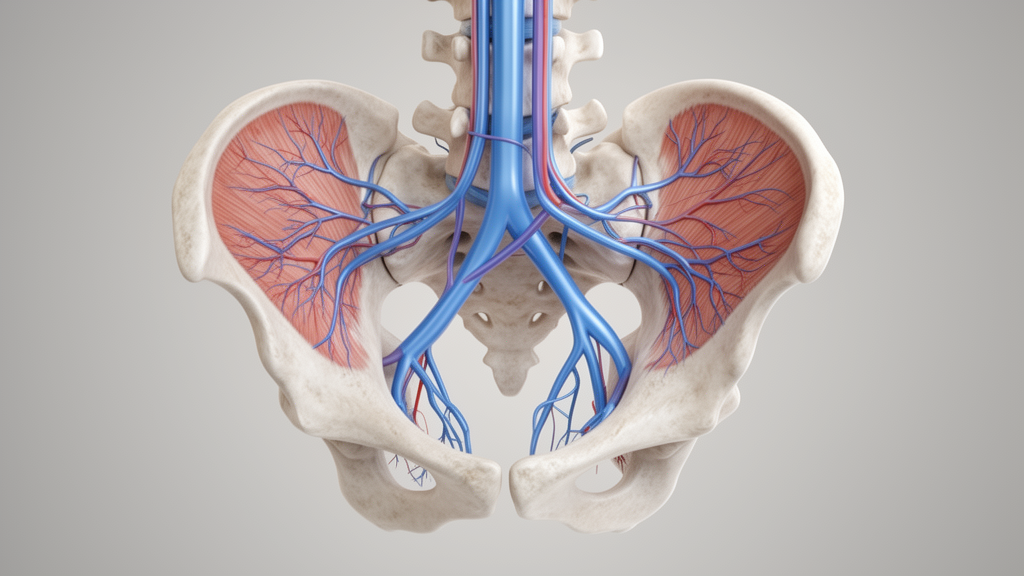
A systematic review and meta-analysis synthesising adult human anatomical and morphometric investigations has determined that while the deep circumflex iliac artery consistently demonstrates a reliable vessel calibre and usable pedicle length, its anatomical origin, terminal branching patterns, and cutaneous perforator configurations exhibit substantial variability across clinical and cadaveric cohorts. Published in the Bratislava Medical Journal, the investigation systematically examined decades of anatomical data to provide reconstructive microsurgeons with robust quantitative benchmarks for jaw reconstruction and composite tissue transfer. Across eighteen pooled datasets incorporating 1,417 verified specimens, sides, or surgical cases, researchers evaluated how different measurement standards, dissection strategies, and radiologic imaging modalities influence the documented morphology of this crucial donor vessel. The deep circumflex iliac artery, traditionally utilized as the foundational vascular pedicle for vascularized iliac-crest osteomyocutaneous free flaps in mandibular and maxillary reconstruction, presents distinct anatomical variations that carry immediate operational consequences for flap harvest, microvascular anastomosis, and preoperative radiologic evaluation.
The study was designed and conducted in accordance with the PRISMA 2020 reporting standards to consolidate disparate observational findings from international dissection series, angiographic studies, and intraoperative measurements published between 1980 and 2025. Two independent reviewers conducted systematic searches across PubMed, Web of Science, and Google Scholar from inception through July 2026, without language restrictions, identifying an initial pool of 1,247 records. Following the removal of 136 duplicate entries, 1,111 abstracts were screened, leading to full-text eligibility assessments of 89 reports. After excluding 54 articles that lacked systematic anatomical details, such as outcome-focused clinical papers or computer-aided planning descriptions, and eliminating seven unverifiable records during verification, 28 database-derived studies met all inclusion criteria. Supplementary full-text review and citation searching added three additional qualifying investigations, resulting in 31 total studies appraised for qualitative synthesis, 18 of which provided quantifiable morphometric data for random-effects meta-analysis while 13 were retained to supply narrative clinical context.
Methodological quality and risk of bias across all 31 included studies were evaluated using the five-domain Anatomical Quality Assessment tool, known as the AQUA checklist. This specialized appraisal framework evaluates research objectives and subject characteristics in domain one, study design in domain two, methodological characterization in domain three, descriptive anatomy in domain four, and the reporting of results in domain five. The analysis revealed that reporting quality was strongest in domain five, where 17 of the 31 appraised studies achieved a low risk rating, followed by domain four, which was rated low risk in 10 studies. Conversely, reporting was notably deficient in domain three, which was deemed high risk across all 31 studies, and domain two, where 30 studies exhibited high risk, primarily because donor specimen selection strategies, formal sample-size calculations, and observer blinding or calibration were rarely documented in the primary anatomical literature. Due to AQUA’s conservative aggregation standard, in which a failure to satisfy every signaling question in a domain yields a high-risk assignment, each included study received an overall high risk of bias rating, highlighting widespread reporting constraints intrinsic to descriptive anatomical research rather than invalid physical measurements.
Quantitative pooling of anatomical origin demonstrated that the reported trajectory of the deep circumflex iliac artery depends heavily on the anatomical classification system employed by primary researchers. Among four direct dissection studies that classified the parent vessel itself across 393 specimens, the deep circumflex iliac artery arose directly from the external iliac artery in a pooled 96 percent of cases, with a 95 percent confidence interval spanning 89 to 100 percent and an inconsistency index of 84 percent, with femoral artery origins accounting for only four to eight percent. In contrast, three studies that categorized origin strictly by spatial position relative to the inguinal ligament across 330 specimens yielded a pooled external iliac origin of only 57 percent, with a 95 percent confidence interval of 42 to 71 percent and an inconsistency index of 85 percent. These positional studies classified vessels emerging at or immediately below the ligament into the femoral category, capturing a high frequency of low arterial origins encountered within the femoral triangle. This definitional disparity accounts for seemingly contradictory literature values, such as an external iliac origin rate of 42 percent in a Japanese series compared to 100 percent in a Kenyan dissection cohort.
Continuous morphometric measurements established that the deep circumflex iliac artery maintains an adventitial diameter and pedicle length that are well suited for microvascular anastomosis in reconstructive surgery. Four studies evaluating directly measured external calibres at the vascular origin across 301 dissected specimens generated a random-effects pooled diameter of 2.38 millimetres, bounded by a 95 percent confidence interval of 2.21 to 2.55 millimetres, despite substantial statistical heterogeneity with an inconsistency index of 91 percent. Individual investigation averages ranged from 2.20 millimetres in early anatomical series to 2.55 millimetres under direct cadaveric caliper measurement. The researchers noted that these caliper-derived values reflect the external vessel wall diameter, which slightly exceeds the internal luminal diameter visualized on computed tomography angiography, where contrast filling captures only the interior vascular lumen. When total usable vascular pedicle length was evaluated across three studies that harmonised the distal measurement endpoint to the most distal branch entering the iliac crest, the pooled length reached 7.07 centimetres with a 95 percent confidence interval of 6.90 to 7.24 centimetres and zero heterogeneity.
Terminal branching configurations of the arterial trunk demonstrated notable anatomical diversity among the pooled dissection investigations. Across four cadaveric studies encompassing 396 dissected specimens, a standard bifurcation pattern occurred in a pooled 83 percent of cases, with a 95 percent confidence interval of 73 to 92 percent and an inconsistency index of 81 percent, while the remaining 17 percent comprised trifurcations, arborizations, or variant arterial courses. In addition to the primary branching pattern, the longitudinal position of the initial trunk division varied widely among specimens; one evaluated study observed late bifurcations located more than 60 millimetres distal to the origin in 59 percent of cases, indicating that a substantial length of undivided pedicle is frequently available to the operating surgeon. However, usable pedicle length is also mechanically linked to the management of the ascending branch, which ascends toward McBurney’s point between the transversus abdominis and internal abdominal oblique muscles to anastomose with the iliolumbar artery. Ligation and division of this ascending branch can mobilize additional pedicle length, but it sacrifices perfusion to the internal oblique muscle territory.
Evaluation of cutaneous perforators showed that the presence of reliable skin-nourishing vessels is frequent but subject to considerable definition-based variation. Four quantitative investigations evaluating 108 specimens and surgical cases yielded a random-effects pooled prevalence of a clinically suitable or dominant cutaneous perforator of 83 percent, with a 95 percent confidence interval of 63 to 96 percent and an inconsistency index of 81 percent. This statistical heterogeneity was largely driven by differences in inclusion criteria between anatomical dissection studies and radiologic mapping series. Specifically, a high-resolution computed tomography angiography study required perforators to measure at least 0.8 millimetres in internal diameter, identifying suitable vessels on 26 of 44 hemiabdominal walls for a 59.1 percent prevalence. When that imaging study was excluded in a pre-specified sensitivity analysis, the pooled prevalence among the remaining three studies rose to 90 percent with a 95 percent confidence interval of 82 to 96 percent and zero heterogeneity, confirming that stricter diameter thresholds substantially influence documented perforator availability.
In oral and maxillofacial reconstructive surgery, the deep circumflex iliac artery flap provides a reliable, curved corticocancellous bone strut that closely mimics the natural architectural contour of the human mandible and maxilla. As documented in early clinical reports and modern surgical series, vascularized iliac bone transfer provides superior vertical and horizontal bone stock necessary for secondary dental implantation and occlusal restoration compared to thinner donor sites such as the fibula or radius. The flap is particularly indicated for lateral mandibular defects spanning between 5 and 16 centimetres, encompassing the angle and body, where the natural sweep of the iliac crest recreates the jawline without requiring multiple osteotomies. Furthermore, composite or chimeric variations can incorporate the internal oblique muscle or overlying cutaneous paddles, supported by the ascending branch or direct cutaneous perforators, providing mobile soft-tissue coverage for complex three-dimensional mucosal defects. Modern computer-assisted virtual surgical planning and patient-specific cutting guides have demonstrated linear osteotomy deviations ranging between 0.7 and 2.7 millimetres, achieving high reconstruction accuracy and flap survival rates between 90 and 100 percent.
Despite these reconstructive advantages, iliac-crest tissue harvest carries recognized technical complexities and donor-site morbidity that must be weighed against alternative donor sites. The iliac skin paddle possesses relatively limited mobility and considerable thickness, which can restrict its orientation during oral lining reconstruction, while rotating the bulky paddle over or under the reconstructed jawbone risks applying shear or compression forces to fragile perforators. Donor-site complications include significant postoperative pain, antalgic gait disturbances, abdominal wall herniation, abdominal wall contour bulge, lateral femoral cutaneous nerve numbness resulting in meralgia paraesthetica, and rare femoral nerve injury. In comparative series, larger harvested bone volumes were significantly correlated with prolonged dependence on walking aids and greater interference with daily activities, while longer surgical incisions increased the risk of iliohypogastric nerve sensory deficits. Additionally, because the deep circumflex iliac artery runs directly adjacent to only the initial six centimetres of the harvested iliac bone, extensive central mandibular reconstructions requiring multiple osteotomies remain less favorable with this flap due to the risk of segmental devascularization.
The review authors highlighted critical methodological limitations that warrant cautious interpretation of the aggregated evidence base. High statistical heterogeneity across branching patterns, perforator prevalence, and vessel origin reflects genuine biological variability across diverse ancestral populations as well as unstandardised classification definitions and imaging protocols. Formal statistical evaluations for publication bias and small-study effects, such as funnel-plot asymmetry or Egger’s regression tests, could not be reliably conducted because every pooled outcome incorporated fewer than ten studies. Furthermore, the systematic review protocol was not prospectively registered in public databases such as PROSPERO, precluding independent confirmation of protocol fidelity. Crucially, the authors emphasized that their surgical recommendations, including the routine adoption of preoperative computed tomography angiography for vascular mapping, are derived entirely from anatomical and morphometric observations rather than comparative clinical trial data testing patient morbidity or flap survival. Consequently, surgeons must integrate these pooled anatomical parameters as anatomical guideposts rather than validated guarantees of altered clinical outcomes.
Subject of Research: Surgical anatomy and morphometric variation of the deep circumflex iliac artery in flap reconstruction
Article Title: Variation and Surgical Anatomy of the Deep Circumflex Iliac Artery: A Systematic Review and Meta-analysis
Article References: Rusu, M. C., & Brezean, I. (2026). Variation and Surgical Anatomy of the Deep Circumflex Iliac Artery: A Systematic Review and Meta-analysis. Bratislava Medical Journal, 127(10), 4366-4382. https://doi.org/10.1007/s44411-026-00838-1
Image Credits: AI Generated
DOI: 10.1007/s44411-026-00838-1
Keywords: deep circumflex iliac artery, iliac crest flap, mandibular reconstruction, maxillary reconstruction, vascularized bone flap, external iliac artery, femoral artery, anatomical variation, vessel diameter, pedicle length, branching pattern, cutaneous perforator, systemic review, meta-analysis, AQUA tool, PRISMA, computed tomography angiography, microsurgery, reconstructive surgery
News Source: Ophelia Keating. (November 25, 2026). Deep Circumflex Iliac Artery Study Clarifies Origin and Flap Anatomy Variations. Scienmag.