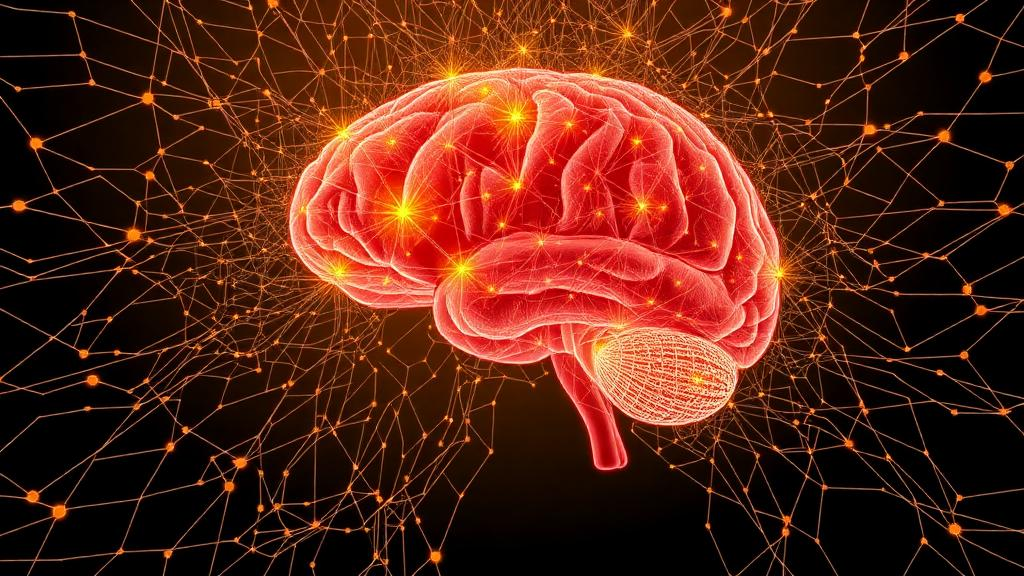
Intensive breathing exercises can reduce blood flow to the brain by up to 45 percent while simultaneously altering the way key neural networks communicate with one another, according to a new brain-imaging study presented at the ECNP Congress in Munich. The research, conducted by a team at the Central Institute of Mental Health in Mannheim, Germany, offers some of the most detailed evidence yet that a purely non-pharmacological practice can push the human mind into states that participants describe as strikingly similar to the effects of psychedelic drugs. The findings suggest that the subjective intensity of breathwork may depend less on the dramatic drop in cerebral blood flow itself and more on how the brain’s self-referential circuitry reorganizes its communication patterns under these conditions.
The study recruited 30 healthy, experienced breathwork practitioners who performed high-ventilation breathwork while lying inside a magnetic resonance imaging scanner. This design allowed the researchers to capture both physiological and subjective changes in real time, combining continuous measurement of cerebral blood flow with retrospective reports of the participants’ conscious experiences. Such a combination is rare in consciousness research, where altered states are often studied either through pharmacological manipulation with controlled substances or through meditation and sensory deprivation protocols that produce subtler shifts in awareness. Breathwork, by contrast, is legal, inexpensive, and free of the regulatory constraints that complicate psychedelic research, making it an attractive model system for scientists seeking to understand how consciousness can be systematically altered without drugs.
Participants reported experiencing strong altered states of consciousness during the scanning sessions. The dominant quality of these experiences was what the researchers describe as an oceanic state, a deep and pervasive feeling of connection to the universe and to other people. Many participants also reported altered perception, vivid mental imagery, a diminished or transformed sense of self, and a subjective sense of unity. When these reports were compared against established characterizations of psychedelic experiences, the researchers found that they resembled those produced by a moderate to high dose of LSD or psilocybin, although the breathwork-induced states involved less pronounced visual effects than are typically associated with classical psychedelics. This convergence between a breathing practice and a serotonergic drug state is one of the most intriguing aspects of the work, because the two interventions reach the brain through entirely different physiological pathways.
The imaging data revealed a substantial physiological effect. Global grey-matter cerebral blood flow fell by approximately 45 percent during the breathwork sessions, dropping on average from 16.24 to 9.81 milliliters per 100 grams of tissue per minute, a difference that was highly statistically significant across the 30 participants. This magnitude of reduction is remarkable for a voluntary behavioral intervention and reflects the intense hyperventilation that characterizes high-ventilation breathwork, which alters blood carbon dioxide levels and thereby constricts cerebral vessels. Yet the researchers emphasize that this dramatic reduction in blood supply does not by itself explain the intensity of the experiences participants reported. The brain, it appears, continues to function and to generate extraordinary states of consciousness even while its overall blood supply is sharply curtailed.
Instead, the key to understanding the altered states may lie in how the brain’s networks communicate with one another during the practice. The researchers found that participants who reported stronger and more profound altered states also showed greater changes in the default mode network, a set of interconnected brain regions involved in self-reflection, autobiographical thinking, and the construction of the sense of self. The default mode network has long been a focal point of psychedelic research, because drugs such as psilocybin and LSD are known to disrupt its normally synchronized activity, and the degree of this disruption correlates with experiences of ego dissolution. The new findings suggest that intensive breathing may converge on the same neural target through a fundamentally different mechanism, one driven by blood gas changes and vascular dynamics rather than by receptor pharmacology.
Lead researcher Dr Christian Schmitz of the Central Institute of Mental Health in Mannheim noted that although many practitioners of intensive breathwork report profound changes in perception and self-experience, the underlying brain mechanisms have remained poorly understood. According to Schmitz, the study indicates that these experiences are linked not only to marked changes in cerebral blood flow but also to alterations in how key brain networks communicate. This distinction matters because it reframes the question of how breathwork works. If reduced blood flow alone were responsible, one might expect any condition that lowers cerebral perfusion to produce similar states, which does not appear to be the case. The specificity of the network-level changes suggests that the pattern of reorganization, not the reduction in supply, carries the experiential signature.
Hana Adolphi, co-coordinator of the research, highlighted the practical implications of the work. Breathwork, she noted, is a legal, inexpensive, and non-pharmacological intervention that may provide a valuable tool for studying altered states of consciousness in laboratory settings. Understanding the mechanisms through which voluntary breathing patterns reshape brain communication could also inform future research into novel approaches for mental health treatment. This is a significant point given the current surge of interest in psychedelic-assisted therapies for depression, anxiety, and post-traumatic stress disorder. If breathwork can reliably induce states that overlap with those produced by psychedelics, and if those states can be harnessed therapeutically, an accessible and drug-free route to similar benefits may become available to a much broader population than psychedelic medicine can currently reach.
Independent commentators welcomed the study while cautioning that its conclusions remain preliminary. Dr Guy Fincham of Brighton and Sussex Medical School in the United Kingdom, who was not involved in the research, described the work as intriguing because it extends recent breathwork research suggesting that intensive breathing practices can yield altered states of consciousness that individuals describe in ways analogous to psychedelic compounds, and it does so under controlled brain-imaging conditions. He emphasized that such altered subjective experiences may be harnessed for the improvement of mental health, and that an accessible non-pharmacological route such as breathwork could prove invaluable for many people. At the same time, he pointed out that the study was uncontrolled and that its sample consisted entirely of experienced practitioners, so replication in breathwork-naive participants using a randomized controlled design will be needed to determine whether the findings translate more widely and produce genuine therapeutic benefit.
Professor David Nutt of Imperial College London, also commenting independently, framed the work in the context of the broader psychedelic research program. Breathwork, in his view, represents a non-pharmacological bridge to research into psychedelics, and studies that help clarify how it functions are a welcome addition to the field. The bridge metaphor captures an important scientific opportunity: because breathwork does not require controlled substances, special licensing, or supervised dosing of psychoactive drugs, it allows researchers to probe altered states of consciousness in settings that would otherwise be difficult to approve. Comparing the neural signatures of breathwork-induced states with those of psychedelic states could help isolate which aspects of network reorganization are essential to the therapeutic and experiential effects, and which are incidental to a particular method of induction.
The researchers themselves acknowledge the limitations of the current work. With 30 participants, all of them experienced practitioners, and no control condition, the study cannot yet establish whether the observed brain changes have clinical relevance or whether they would appear in people attempting intensive breathwork for the first time. Larger studies with controlled designs will be required to answer those questions. Nevertheless, the study marks a meaningful step forward in the science of consciousness. It demonstrates that a voluntary, drug-free behavioral practice can produce measurable reductions in cerebral blood flow alongside network-level reorganization that tracks with the intensity of subjective experience, and it points researchers toward a specific neural mechanism, altered communication within the default mode network, as the likely key to understanding how breathwork transforms the mind. For a field increasingly interested in non-pharmacological routes to altered states and mental health, the message is clear: the breath may be a more powerful instrument for probing and shaping consciousness than previously appreciated.
Subject of Research: Effects of intensive breathwork on cerebral blood flow, brain network communication, and altered states of consciousness
Article Title: Intensive breathing alters consciousness by changing brain communication
Article References: Intensive breathing alters consciousness by changing brain communication. (n.d.). Original publication
Image Credits: AI Generated
DOI: Not provided
Keywords: breathwork, consciousness, default mode network, cerebral blood flow, psychedelics, MRI, altered states, mental health, ECNP Congress, neuroscience, non-pharmacological intervention, self-experience
News Source: Cassandra Pierce. (October 10, 2026). Deep breathing reshapes brain networks to trigger psychedelic-like states. Scienmag.