• HOME
  • NEWS
  • EXPLORE
    • CAREER
      • Companies
      • Jobs
    • EVENTS
    • iGEM
      • News
      • Team
    • PHOTOS
    • VIDEO
    • WIKI
  • BLOG
  • COMMUNITY
    • FACEBOOK
    • INSTAGRAM
    • TWITTER
Sunday, May 17, 2026
BIOENGINEER.ORG
No Result
View All Result
  • Login
  • HOME
  • NEWS
  • EXPLORE
    • CAREER
      • Companies
      • Jobs
        • Lecturer
        • PhD Studentship
        • Postdoc
        • Research Assistant
    • EVENTS
    • iGEM
      • News
      • Team
    • PHOTOS
    • VIDEO
    • WIKI
  • BLOG
  • COMMUNITY
    • FACEBOOK
    • INSTAGRAM
    • TWITTER
  • HOME
  • NEWS
  • EXPLORE
    • CAREER
      • Companies
      • Jobs
        • Lecturer
        • PhD Studentship
        • Postdoc
        • Research Assistant
    • EVENTS
    • iGEM
      • News
      • Team
    • PHOTOS
    • VIDEO
    • WIKI
  • BLOG
  • COMMUNITY
    • FACEBOOK
    • INSTAGRAM
    • TWITTER
No Result
View All Result
Bioengineer.org
No Result
View All Result
Home Headlines

Decreased glucose metabolism in medial prefrontal areas is associated with nutritional status in patients with prodromal and early Alzheimer’s disease

Bioengineer.org by Bioengineer.org
January 26, 2018
in Headlines, Health, Science News
Reading Time: 2 mins read
0
Share on FacebookShare on TwitterShare on LinkedinShare on RedditShare on Telegram
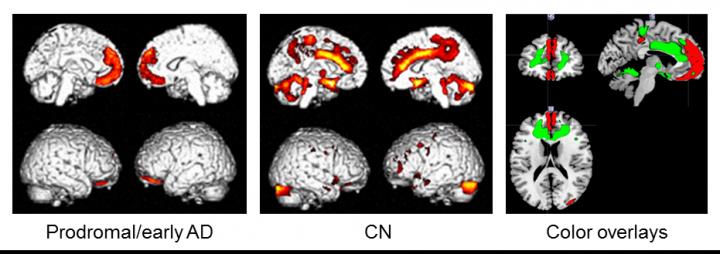
IMAGE

Credit: Research Funding of Longevity Sciences

Obu, Japan, September 15, 2017 – A new study from the Multimodal Neuroimaging for AD Diagnosis (MULNIAD) study, which is a prospective study implemented at the National Center for Geriatrics and Gerontology (NCGG), provides that hypometabolism in the medial prefrontal areas is specifically associated with Alzheimer's disease-related nutritional problems, and decrease in fat mass may have a key role. This study is published in the Journal of Alzheimer's Disease.

Nutritional problems, especially weight loss, are commonly seen in individuals with Alzheimer's disease (AD); however, the underlying mechanisms are not well understood.

"This study is a very important study to help understand the underlying mechanism of weight loss in patients with mild cognitive impairment and Alzheimer's disease.", says Dr. Takashi Sakurai, corresponding author, head of the Memory Clinic at the NCGG.

This current study is the first to clarify the associations of nutritional status with AD-related brain changes comprehensively by using multi imaging modalities including amyloid-β (Aβ)- positron emission tomography (PET), 18F-fluorodeoxyglucose (FDG)-PET, and structural magnetic resonance imaging.

Subjects were 34 Aβ-positive individuals with mild cognitive impairment or early AD (prodromal/early AD), and 55 Aβ-negative cognitively normal (CN) subjects. The associations between nutritional status (body mass index, waist to height ratio, fat mass index, and fat-free mass index) and brain changes were examined by multiple regression analysis using statistical parametric mapping.

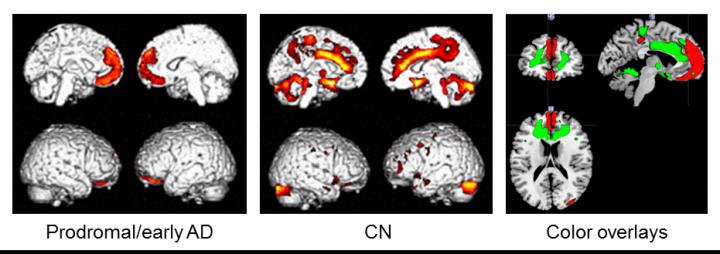
In the prodromal/early AD group, nutritional status was significantly positively correlated with regional cerebral glucose metabolism (rCGM) in the medial prefrontal cortices, while different topographical associations were seen in the CN group. Aβ deposition and gray matter volume were not associated with nutritional status. Sub-analysis in the prodromal/early AD group demonstrated that fat mass index, but not fat-free mass index, was positively correlated with rCGM in the medial prefrontal areas.

"These results suggest that hypometabolism in the medial prefrontal areas is specifically associated with AD-related weight loss, and decrease in fat mass may have a key role. However, this cross-sectional study provides preliminary results, so we need further longitudinal investigation considering the fat tissue metabolism including adipokines to deepen our understanding of AD related weight loss", says Dr. Takashi Sakurai. After adjusting for cognitive function, the significant link between fat-mass index and rCGM was preserved.

The study findings of decreased glucose metabolism in medial prefrontal areas in Aβ-positive individuals may explain the underlying mechanism of weight loss in AD.

###

Media Contact

Takashi Sakurai
[email protected]
81-562-462-311
@IOSPress_STM

http://www.iospress.com

Related Journal Article

http://dx.doi.org/10.3233/JAD-170257

Share12Tweet8Share2ShareShareShare2

Related Posts

Noncanonical Sulfur Metabolism, Immunity Altered in Down Syndrome — Technology and Engineering

Noncanonical Sulfur Metabolism, Immunity Altered in Down Syndrome

May 17, 2026

Physical Resilience Linked to Aging Views in Chinese Elders

May 17, 2026

Tau T205 Phosphorylation Controls Memory and Engrams

May 17, 2026

Phocaeicola dorei Eases Liver Fibrosis via Efferocytosis

May 17, 2026
Please login to join discussion

POPULAR NEWS

  • Research Indicates Potential Connection Between Prenatal Medication Exposure and Elevated Autism Risk

    844 shares
    Share 338 Tweet 211
  • New Study Reveals Plants Can Detect the Sound of Rain

    730 shares
    Share 291 Tweet 182
  • Salmonella Haem Blocks Macrophages, Boosts Infection

    62 shares
    Share 25 Tweet 16
  • Breastmilk Balances E. coli and Beneficial Bacteria in Infant Gut Microbiomes

    58 shares
    Share 23 Tweet 15

About

We bring you the latest biotechnology news from best research centers and universities around the world. Check our website.

Follow us

Recent News

Noncanonical Sulfur Metabolism, Immunity Altered in Down Syndrome

Physical Resilience Linked to Aging Views in Chinese Elders

Tau T205 Phosphorylation Controls Memory and Engrams

Subscribe to Blog via Email

Enter your email address to subscribe to this blog and receive notifications of new posts by email.

Join 82 other subscribers
  • Contact Us

Bioengineer.org © Copyright 2023 All Rights Reserved.

Welcome Back!

Login to your account below

Forgotten Password?

Retrieve your password

Please enter your username or email address to reset your password.

Log In
No Result
View All Result
  • Homepages
    • Home Page 1
    • Home Page 2
  • News
  • National
  • Business
  • Health
  • Lifestyle
  • Science

Bioengineer.org © Copyright 2023 All Rights Reserved.