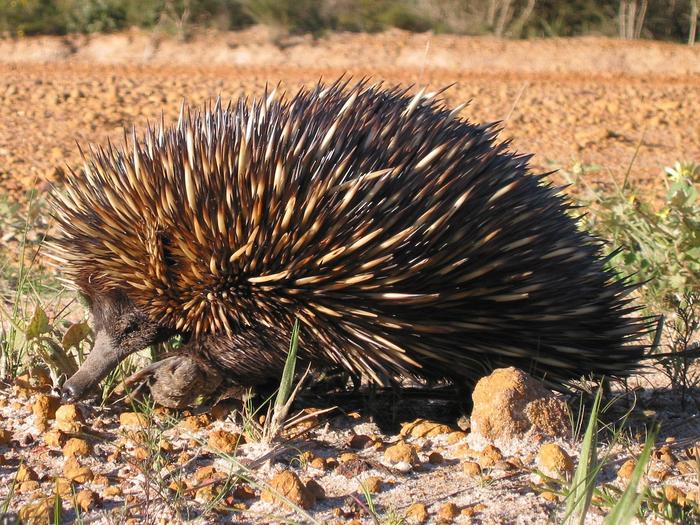

An astounding breakthrough has emerged in the quest to understand the evolutionary mechanics of sex determination amongst mammals, particularly focusing on the enigmatic echidna, an egg-laying creature that diverges significantly from typical mammalian reproductive biology. The recent sequencing of the short-beaked echidna genome—a meticulous effort by a consortium of international researchers—presents a nearly gapless reference that sheds light on the evolutionary processes leading to multiple sex chromosomes in this unique species. This remarkable study is spearheaded by Guojie Zhang and Qi Zhou from Zhejiang University, alongside experts from BGI-research and the University of Adelaide, and the findings have been published in the prestigious open-access journal, GigaScience.
The short-beaked echidna, scientifically referred to as Tachyglossus aculeatus, is one of Australia’s most iconic creatures. As a member of the monotreme category, which also includes the platypus, echidnas are distinguished from other mammals by their unique reproductive process involving the laying of eggs. Despite their unusual appearance, which may evoke comparisons to hedgehogs, echidnas represent a pivotal branch in the evolutionary tree of mammals. The research team’s sequencing initiative contributes critical knowledge to the understanding of the evolutionary origin and development of complex sex chromosome configurations, a phenomenon particularly entrenched in the biology of monotremes.
Monotremes are noted for their remarkable deviation from traditional mammalian sex determination mechanisms. While most mammals utilize a straightforward X/Y chromosome system, where the inheritance of these chromosomes dictates male or female characteristics, echidnas exhibit a far more intricate setup involving multiple sex chromosomes. In males, for instance, echidnas possess nine distinct sex chromosomes—five X chromosomes and four Y chromosomes—while the platypus boasts an even more complex system with ten sex chromosomes. This ingenuity of nature raises intriguing questions about how such elaborate sex determination systems evolved, particularly in a lineage that branched off from other mammals millions of years ago.
The echidna genome sequence is pivotal for understanding the origin of its complex sex chromosome structure. During gamete formation, echidna sex chromosomes engage in head-to-tail pairing, creating a unique configuration that ensures correct distribution to germ cells. This head-to-tail alignment starkly contrasts with the side-by-side pairing seen in organisms with a simpler chromosomal context. By examining the echidna genome, researchers can trace the evolutionary history of these chromosomes, uncovering chromosomal rearrangements and the genetic events that shaped the monotreme lineage over millions of years.
Zhang emphasizes the significance of this high-quality genome reference: it enables researchers to discern chromosome-sharing dynamics between echidnas and their platypus cousins since their evolutionary paths diverged around 55 million years ago. By establishing connections between the rearranged sex chromosomes and their ancestral forms, scientists can derive insights into the nature of chromosomal changes and the factors driving the emergence of unique sexual determination systems among monotremes. This investigation reveals not only the evolutionary trajectory of sex chromosomes but also their interaction with non-sex chromosomes, providing context for how these adaptations may have influenced survival and reproduction in the monotreme lineage.
The comprehensive genome assembly has allowed scientists to reconstruct the likely composition of the monotreme ancestral chromosomes. The research team employed chromosomal assemblies from various other species, spanning placentals, marsupials, and reptiles, thus enhancing the continuity of their evolutionary analysis. The comparative method has elucidated how echidnas and platypus have independently evolved sex chromosome systems, suggesting that gene exchanges and chromosomal fusion and fission have been influential in shaping their genetic landscapes over time.
Furthermore, the study highlights significant gene family expansions associated with the evolution of echidna and platypus sex chromosomes. Notably, particular attention was given to the gene SYCP3Y, integral to the formation of the synaptonemal complex, which regulates the pairing of chromosomes during germ cell development. The duplication and expansion of this gene in both species underscore the intricate relationship between structural genomic changes and functional adaptations in response to evolutionary pressures.
These findings lay the groundwork for understanding how genetic mechanisms adapt over time in response to the biological imperatives specific to various species. The open-access nature of the published work ensures that the scientific community can utilize these insights to further unravel the complexities of vertebrate evolution, particularly in the context of sex determination. Each revelation about the echidna genome enriches the broader narrative of mammalian evolution and the diverse strategies employed by species to navigate their reproductive challenges.
In conclusion, the sequencing of the echidna genome has provided invaluable insights into the evolutionary origins of multiple sex chromosomes in monotremes. The meticulous research undertaken by these international scientists not only illuminates the interplay of chromosomal evolution but also paves the way for future investigations into the enigmatic reproductive strategies of some of the world’s most unusual creatures. As more researchers dive into this area, we move closer to understanding the myriad ways in which evolution shapes the biological diversity and reproductive success of life on Earth.
Subject of Research: Animals
Article Title: Chromosome-level echidna genome illuminates evolution of multiple-sex-chromosome system in monotremes
News Publication Date: 8-Jan-2025
Web References: http://gigasciencejournal.com
References: Zhou Y et al., Chromosome-level echidna genome illuminates evolution of multiple-sex-chromosome system in monotremes. GigaScience. 2025. DOI: 10.1093/gigascience/giae112
Image Credits: Credit: Allan Whittome
Keywords: Echidna, genome sequencing, monotremes, sex chromosomes, evolution, chromosomal rearrangement, GigaScience, reproductive biology.