In a compelling advancement that reshapes our understanding of the origin of eukaryotic life, recent research has illuminated the intricate process by which eukaryotes assembled their complex cellular architecture. The study, published in Nature by Kay, Spang, Szöllősi, and colleagues, employs sophisticated molecular dating techniques on gene duplication events to chronicle the evolutionary timeline underpinning the emergence of key eukaryotic cellular compartments. This fresh perspective not only refines the narrative surrounding eukaryogenesis but also exposes the mosaic nature of gene incorporation from diverse ancestral sources, underscoring the deep evolutionary amalgamation of archaea and bacteria.
At the heart of eukaryotic sophistication lies the endomembrane system: a dynamic compilation of membrane-bound organelles orchestrating material transport, biosynthesis, and intracellular recycling. This system encompasses the endoplasmic reticulum (ER), Golgi apparatus, plasma membrane, and the endolysosomal components such as endosomes, lysosomes, and autophagosomes. By scrutinizing the genealogical origins and diversification timing of vesicle trafficking protein families—integral to the movement and sorting of cargo within vesicular carriers—the researchers have established a chronological sequence of compartment emergence. Intriguingly, the duplicated genes involved in trafficking between the ER, Golgi, and plasma membrane stand among the oldest, dating from approximately 2.9 to 2.1 billion years ago.
These ancestral gene duplications predominantly originated from archaeal lineages, particularly from the Asgard group known to be closely related to eukaryotes. Protein families such as SNARE proteins (like STX5), Rab GTPases (including RAB19, RAB30, and RAB33 variants), and COPI and COPII coat proteins reflect an early elaboration of trafficking machinery essential for developing fundamental membrane-bound compartments. The tight clustering of duplication events suggests a concerted and contemporaneous expansion of gene families dedicated to establishing the ER, Golgi, and plasma membrane compartments, suggesting a major evolutionary innovation phase during the early eukaryotic lineage.
In stark contrast, vesicle trafficking components tailored exclusively to the endolysosomal system appear to have diversified later, initiating around 2.4 billion years ago. This endomembrane subdivision, critical for digestion and recycling within the cell, is reflected by duplication events in genes encoding specialized SNARE proteins (STX7, STX12) and Rab GTPases (RAB7A, RAB9A/B), alongside ABC transporters and chloride channel proteins integral to organellar function. The later emergence of these world-defining compartments substantiates the hypothesis that eukaryotic cellular complexity was sculpted progressively, layering new specialized functions atop an existing membrane trafficking framework.
Beyond membrane trafficking, the study reveals that the endoplasmic reticulum’s membrane biogenesis pathways testify to an intimate genetic interplay across domains of life. Archaeal-derived gene duplications, such as those involving the SRD5A1 and STT3 paralogs, predate substantial bacterial gene duplications involved in lipid biosynthesis, illustrating a temporally overlapping integration. Notably, bacterial-origin genes like ACSL1, GPAT, LPCAT, and SPTLC families, fundamental to synthesizing membrane lipids, underwent duplications roughly contemporaneous with archaeal duplications. This confluence implies a gradual metabolic synchronization whereby archaeal genetic frameworks were supplemented and functionally enhanced by bacterial biochemical pathways long before the Last Eukaryotic Common Ancestor (LECA).
The origins of these bacterial contributions extend beyond alphaproteobacteria, traditionally associated with mitochondrial ancestry. Gene phylogenies of certain lipid biosynthesis enzymes point to potential acquisition from other bacterial groups such as Myxococcota, suggesting a broader bacterial involvement in shaping eukaryotic membranes. This multifaceted bacterial gene integration underscores a complex, possibly stepwise, membrane transition during eukaryote formation, challenging simpler, mitochondrion-centric views of membrane evolution.
Membrane transporters essential for the digestive endolysosomal compartments further complicate the evolutionary narrative. Chloride channels (CLCs), solute carrier families (SLCs), and ATP-binding cassette (ABC) transporters show duplication signatures contemporaneous with compartment diversification, aligning functional specialization with structural emergence. The bacterial origins of these transporters—including some from alpha-proteobacteria and others tracing back to non-alphaproteobacterial bacteria—reveal an extensive drawing from bacterial gene pools to equip the evolving endolysosomal system.
This integrative approach—tracing gene family duplications and their origins—provides a refined temporal framework situating the mitochondrial endosymbiosis event. Alphaproteobacterial gene families diversified within approximately 200 million years following the mitochondrial founding event, concordant with a hypothesis that mitochondrial acquisition catalyzed significant genomic and cellular innovation. The timing aligns with the later phases of endomembrane system elaboration, suggesting that mitochondrial integration was pivotal for subsequent internal complexity, energy metabolism, and compartmental specialization.
Fundamentally, these findings depict eukaryogenesis as an extended evolutionary tango, where gene duplications and horizontal gene transfers forged a cellular mosaic. This mosaic seamlessly incorporated archaeal endomembrane components with bacterial lipid synthesis and metabolic functions, assembling a multifunctional intracellular infrastructure of unprecedented complexity. The stepwise accumulation of gene products tailored for specific compartments echoes a blueprint in which genetic innovation through duplication directly fashioned novel organelles and cellular capabilities.
Importantly, the study’s data addresses longstanding debates around the role of phagocytosis in mitochondrial acquisition. The identification of an early digestive endolysosomal system suggests that phagocytic processes evolved from pre-existing endocytic and recycling machinery, countering the notion that phagocytosis emerged solely as a mechanism to engulf the proto-mitochondrial endosymbiont. This layered evolutionary scenario strengthens the view that the eukaryotic cell’s interior landscapes were already undergoing diversification when mitochondria were ensnared.
In sum, this research transcends traditional phylogenetic reconstructions by quantitatively dating gene duplications and correlating them with compartment-specific functions. It illuminates the nuanced choreography underpinning the eukaryotic cell’s emergence, emphasizing that the intricate dance of gene duplication, domain fusion, and lateral gene transfer forged the cellular grandeur seen today. Such insights not only deepen our understanding of cellular evolution but also open new investigative pathways in evolutionary cell biology and the origin of complex life.
These revelations compel the scientific community to rethink eukaryotic evolution as a deeply intertwined saga of archaeal and bacterial genetic interdependencies, staged over billions of years. The orchestration of this evolutionary symphony through gene duplication mechanisms underscores duplication as a driving force for cellular complexity. Future investigations inspired by this approach may unravel further the genomic riddles encoding the fundamental innovations that distinguish eukaryotes from their prokaryotic ancestors, propelling our quest to unravel life’s profound origins.
Subject of Research: Evolutionary assembly of eukaryotes; gene duplications in vesicle trafficking and membrane biology during eukaryogenesis.
Article Title: Dated gene duplications elucidate the evolutionary assembly of eukaryotes.
Article References:
Kay, C.J., Spang, A., Szöllősi, G.J. et al. Dated gene duplications elucidate the evolutionary assembly of eukaryotes. Nature (2025). https://doi.org/10.1038/s41586-025-09808-z
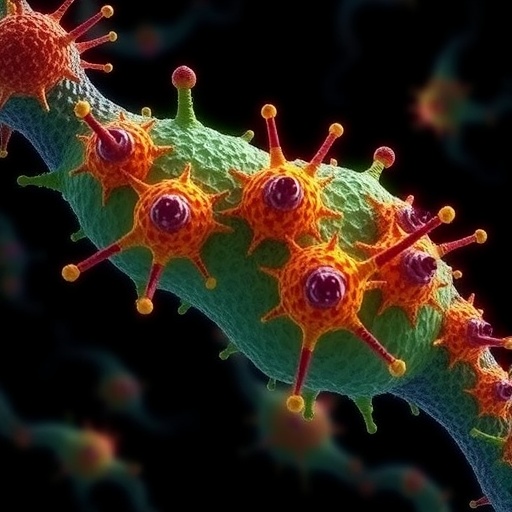
Image Credits: AI Generated
DOI: https://doi.org/10.1038/s41586-025-09808-z
Tags: ancestral gene incorporationarchaea and bacteria amalgamationcellular compartment emergenceendomembrane system developmenteukaryogenesis timelineeukaryotic evolutionevolutionary biology researchgene duplication eventsintracellular recycling mechanismsmembrane-bound organellesmolecular dating techniquesvesicle trafficking proteins