HANOVER, N.H. – A Dartmouth study reveals how the brain understands motion and still objects to help us navigate our complex visual world.
The findings have a number of potential practical applications, ranging from treatment for motion blindness to improved motion recognition algorithms used in airport and other public security systems.
The study appears in the journal Neuroimage. A PDF is available on request.
"By analyzing how terrorists would move in public spaces and incorporating this action signature into pattern recognition algorithm, better accuracy of recognition of terrorist suspects may be achieved than with facial-feature based recognition algorithm," says co-lead author Zhengang Lu, a doctoral student in Psychological and Brain Sciences.
Our brain's visual system consists of a "where" (dorsal) pathway and a "what" (ventral) pathway. A normally function brain can imply motion from still pictures, such as the speed line in cartoons being interpreted as motion streaks of a still object. However, patients with lesions to the dorsal pathway know where objects are but have difficulty recognizing them, while patients with lesions to the ventral pathway have trouble recognizing objects but no problem locating them.
To survive in a dynamic world, the sensitivity of the human visual system for detecting motion cues is a critical evolutionary advantage. For example, people with akinetopsia (the inability to perceive motion) have difficulty crossing the street because they can't gauge oncoming traffic — they see moving objects as a series of stills, like an object moving under strobe lights. People with object agnosia (the inability to recognize objects) have difficulty navigating everyday life.
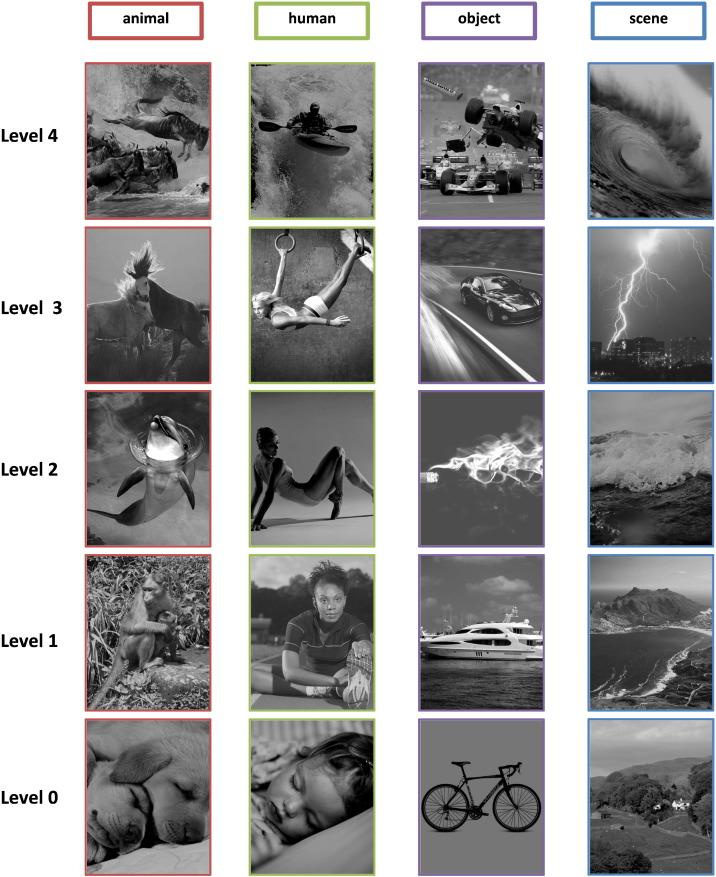
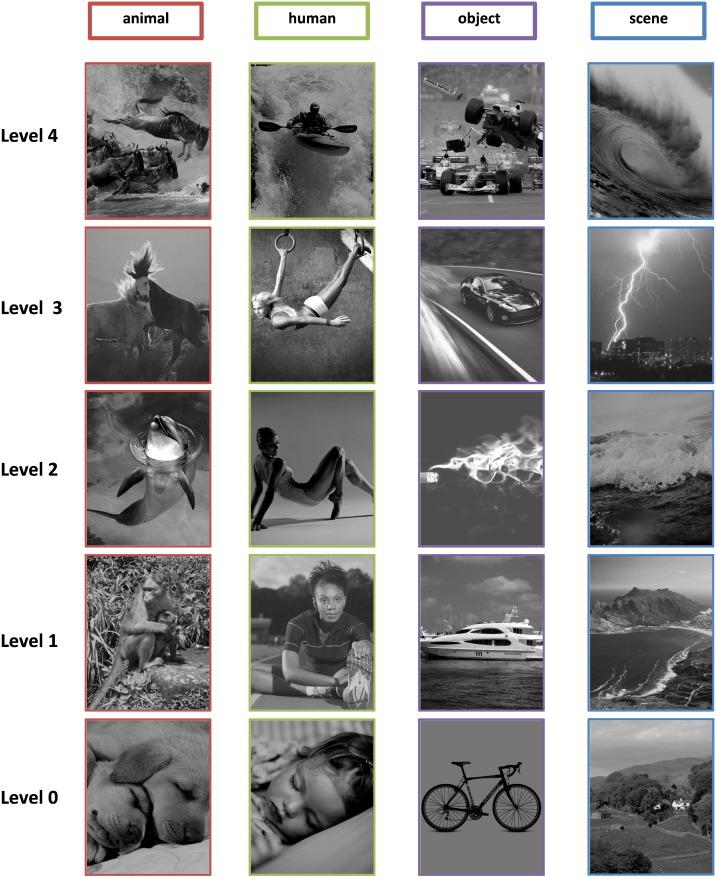
The Dartmouth researchers studied neural activity to understand how the brain processes motion in still pictures of animate and inanimate objects. Their findings showed that the brain may process motion differently based on whether it is animate motion or inanimate motion. This suggests the brain not only categorizes objects into animate versus inanimate, but it knows the location of objects based on whether they are animate or inanimate.
"Our findings suggest the brain's two visual pathways interact with each other instead of being separate when processing motion and objects," Lu says. "To fully understand a complex scene when multiple objects moving at different speed, the brain combines the motion signal with the knowledge of how a particular object will move in the world. Our results might not be able to provide treatment directly, but they suggest that treatment for people with motion blindness and object agnosia should consider the functional interaction between these two pathways."
###
The research was supported by the National Science Foundation.
Available to comment are co-lead authors Zhengang Lu at [email protected] and Assistant Professor Ming Meng at [email protected]
Broadcast studios: Dartmouth has TV and radio studios available for interviews. For more information, visit: http://communications.dartmouth.edu/media/broadcast-studios