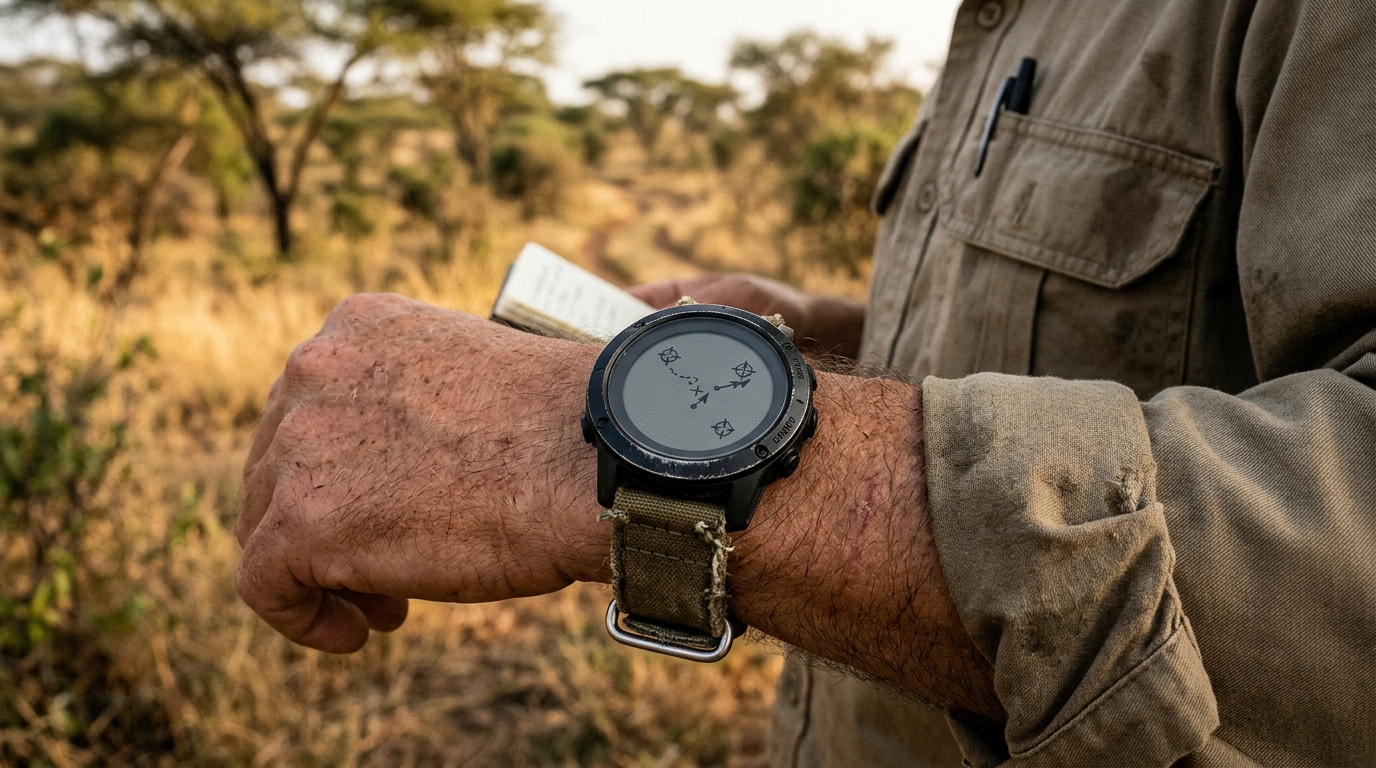
Custom-designed geolocation wristwatches demonstrated greater spatial accuracy and longer battery life than mobile phones running tracking software during field evaluations in remote, forested regions. Researchers evaluated both tracking methodologies to address the persistent difficulties of collecting fine-scale human movement data in remote areas where emerging infectious diseases originate. By gathering precise location data, investigators sought to better understand how humans interact with wildlife reservoirs and assess the risks of zoonotic pathogen spillover.
Most emerging infectious diseases arise in wildlife populations, and contact between humans and zoonotic reservoirs directly dictates spillover risk. Despite recent advances in consumer and research-grade geolocation devices, tracking human movements across remote landscapes remains a major operational challenge. To identify an optimal approach, researchers conducted preliminary testing in remote, forested areas of Macenta Prefecture in the Republic of Guinea and Malaysian Borneo, both of which are regions characterized by repeated zoonotic spillover events.
The investigation tested two candidate technologies under realistic field conditions: mobile devices equipped with the GPSLogger application and custom-designed wristwatches integrated with geolocation technology. Spatial accuracy, battery endurance, and general user experience served as the primary comparative criteria. The evaluation aimed to establish whether either tool could reliably collect fine-scale movement records necessary to examine potential bat-borne pathogen spillover in rural communities of Macenta.
Field trials revealed that both tracking methods succeeded in capturing fine-scale spatial movement and documenting participant proximity to wildlife habitats. However, initial testing indicated distinct operational differences between the two tools. The custom-designed wristwatches demonstrated greater accuracy and maintained longer battery life compared to the mobile devices.
Participant feedback also favored the wearable hardware over handheld devices. Study participants reported that the custom-designed wristwatches were more comfortable to carry throughout daily activities than mobile phones. This wearable format reduced burden on individuals while consistently capturing fine-scale heterogeneities in how people use space across remote terrain.
The evaluation demonstrated that fine-scale spatial monitoring can identify specific locations and human populations at elevated risk of wildlife contact. While the proof-of-concept testing supported the value of custom watches in rural Guinea, researchers noted that mobile devices could still prove practical in areas with broader cellular coverage and established smartphone usage. Integrating these location tracks with demographic and ecological datasets represents the next critical step in determining how environmental factors and human behavior drive disease emergence.
Subject of Research: Field evaluation of human location tracking methods for zoonotic spillover research
Article Title: Evaluation of location tracking methods to understand human-wildlife contact and pathogen spillover risks
Article References: Lim, R. N., Boré, J. A., Tipton, T., Jumail, A., Salgado-Lynn, M., Key, S., Baker, C., Manrique, E., Boumbaly, S., Onivogui, Z., Sovogui, K., Zoumanigui, K. Z., Dopavogui, G., Koulemou, S., Zogbélémou, L., Li, G., Yan, L., Carroll, M. W., & Fornace, K. M. (2026). Evaluation of location tracking methods to understand human-wildlife contact and pathogen spillover risks. International Journal of Health Geographics. https://doi.org/10.1186/s12942-026-00498-y
Image Credits: AI Generated
DOI: 10.1186/s12942-026-00498-y
Keywords: location tracking, human movement, zoonotic spillover, pathogen spillover, wildlife contact, GPSLogger, geolocation wristwatches, spatial accuracy, battery life, remote sensing, infectious disease emergence, Macenta Prefecture, Republic of Guinea, Malaysian Borneo, field epidemiology, disease ecology
News Source: Margaret Porter. (November 16, 2026). Custom Tracking Watches Improve Spatial Data Collection on Human Wildlife Contact. Scienmag.