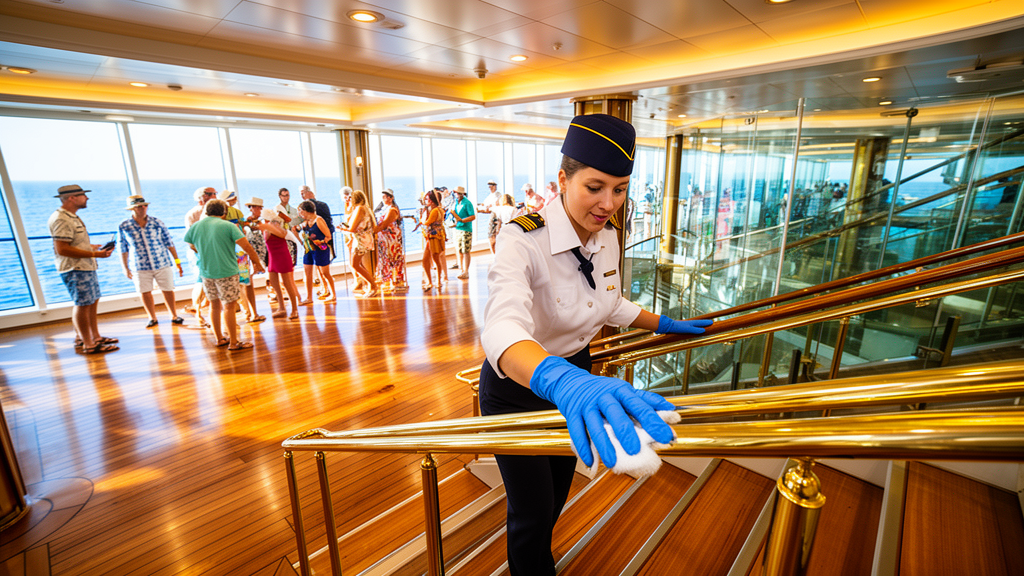
A systematic review and meta-analysis synthesising data from more than five decades of commercial maritime travel has revealed distinct transmission patterns between passengers and crew members across major pathogen categories. Gastrointestinal infections, headed predominantly by norovirus, continue to represent the largest overall proportion of documented cruise ship outbreaks, but respiratory pathogens such as severe acute respiratory syndrome coronavirus 2 have emerged as major contributors to the total burden of maritime illness. Across 619 outbreak event records identified aboard 236 distinct commercial cruise ships between 1969 and 2026, researchers found that the risks of acquiring an infection diverged markedly depending on an individual’s occupational and environmental role aboard the vessel. Passengers experienced higher attack risks during norovirus outbreaks, whereas crew members sustained substantially higher attack risks during outbreaks of coronavirus disease 2019.
To evaluate these dynamics, an international research team searched four comprehensive biomedical databases from their inception through May 17, 2026, without language restrictions, retrieving 8,619 records across Embase, PubMed, Web of Science Core Collection, and Scopus. Following the removal of 3,007 duplicate citations, 5,612 records were screened at the title and abstract stage, leading to 417 full-text assessments and the ultimate inclusion of 107 primary studies. These publications yielded 619 discrete outbreak event records spanning ocean, river, and expedition passenger vessels. The investigators supplemented formal peer-reviewed databases with systematic searches of grey literature, including outbreak archives from the World Health Organization, the European Centre for Disease Prevention and Control, and surveillance reports compiled by the United States Centers for Disease Control and Prevention Vessel Sanitation Program. The resulting body of evidence was registered in the PROSPERO database and analysed using the Preferred Reporting Items for Systematic Reviews and Meta-Analyses guidelines.
Out of the 619 extracted outbreak events, 458 records provided sufficient quantitative data to calculate pooled proportions for predefined primary outcomes, specifically attack risks, mortality risks, and case fatality proportions across overall, passenger, and crew cohorts. The median year of documented outbreaks was 2007, with an interquartile range from 2002 to 2015. Shipboard populations documented in the dataset were substantial, reflecting the high-density nature of modern leisure travel: the median total onboard population was 1,715 individuals, with an interquartile range of 924 to 2,904 persons and an overall range extending from 9 to 7,454 individuals. Across all recorded events, gastrointestinal illness accounted for 432 outbreaks or 69.8 percent of the records, while other or unspecified syndromes constituted 92 outbreaks or 14.9 percent. Coronavirus disease 2019 and other respiratory viral illnesses accounted for 21 records each, representing 3.4 percent apiece, followed by vaccine-preventable diseases in 19 records, foodborne or waterborne infections in 18 records, legionellosis in 12 records, and other infectious diseases in 4 records.
Norovirus was by far the single most common pathogen identified in the global dataset, implicated in 358 outbreak records, or 57.8 percent of all events. Enterotoxigenic Escherichia coli was confirmed in 31 outbreaks, while severe acute respiratory syndrome coronavirus 2 appeared in 21 records and influenza virus in 19 records. A notable proportion of incidents, comprising 108 records or 17.4 percent, remained without laboratory confirmation, reflecting historical diagnostic practices and operational constraints. In their primary random-effects meta-analyses, which applied logit transformations, inverse-variance weighting, restricted maximum-likelihood estimators of between-outbreak variance, and Hartung-Knapp adjustments with an ad hoc variance correction, the investigators pooled outcomes across pathogen categories. For norovirus, the pooled attack risk among passengers was calculated at 6.5 percent across 291 eligible records, compared with 1.5 percent among crew members across 283 records. Between-outbreak heterogeneity was exceptionally high for these calculations, registering an I-squared of 98.5 percent for passenger events and 88.0 percent for crew events.
In sharp contrast to enteric spread, outbreaks driven by respiratory pathogens displayed markedly different distributions. For severe acute respiratory syndrome coronavirus 2, the pooled attack risk across the entire onboard population was 20.3 percent across 17 records. However, when stratified by onboard role, the pooled passenger attack risk was 5.1 percent across 8 records, whereas the pooled crew attack risk rose to 26.4 percent across 11 records, accompanied by an I-squared heterogeneity statistic of 98.4 percent in both groups. For influenza virus outbreaks, the pooled attack risk showed minimal divergence between cohorts, registering at 6.5 percent among passengers across 11 records and 7.3 percent among crew members across 9 records. The investigators noted that documented mortality risks and case fatality proportions remained generally low across the majority of evaluated pathogens aboard cruise ships. A prominent exception emerged for Legionella pneumophila, which demonstrated a pooled case fatality proportion of 11.4 percent based on 9 outbreak records, accompanied by a low heterogeneity value of 9.4 percent.
Subgroup analyses and multivariable meta-regression models were conducted to investigate the potential sources of the pronounced between-outbreak heterogeneity observed in norovirus events. Univariable and multivariable models including outbreak year, log-transformed denominator, and the presence of documented laboratory confirmation methods demonstrated that norovirus passenger attack risk exhibited a continuous historical decline, decreasing by an odds ratio of 0.98 per successive calendar year. Categorical comparisons confirmed that norovirus passenger attack risk was modestly lower in the coronavirus disease 2019 era, defined as 2020 and onward, at 5.50 percent across 54 records, compared with 6.76 percent during the pre-2020 era across 233 records. Norovirus crew attack risk did not show a corresponding temporal reduction, registering at 1.45 percent pre-2020 and 1.65 percent from 2020 onward. Additionally, larger exposed onboard populations were independently associated with lower attack risks for norovirus across overall, passenger, and crew subsets, with odds ratios ranging from 0.64 to 0.72 per one-unit increase in the natural logarithm of the population denominator.
The study also compiled qualitative evidence on critical epidemiological transmission parameters to illuminate how pathogens behave within semi-enclosed maritime environments. For severe acute respiratory syndrome coronavirus 2, basic reproduction numbers ranged between 2.00 and 5.55 across three evaluated studies, including estimates of 3.27 and 3.78 derived from early investigations of the Diamond Princess before quarantine implementation. The incubation period for coronavirus disease 2019 was reported at approximately 4 to 6 days with point estimates between 5.0 and 5.2 days, serial intervals ranged from 2.0 to 4.3 days, and secondary attack rates reached 19.2 to 28.4 percent. For norovirus, basic reproduction numbers derived from mathematical modelling studies ranged from 1.50 to 15.60, with generation times between 3.65 and 3.70 days, secondary attack rates of 18.2 percent in a single cruise report, and incubation periods spanning 0.5 to 3 days. Influenza secondary attack rates reached 55 percent overall among passenger cabin contacts, climbing to 76 percent among children under 12 years of age. Incubation periods for other gastrointestinal pathogens varied widely, spanning 1 to 8 hours for staphylococcal food poisoning, 13 hours to 3 days for bacterial gastroenteritis, and 25 to 40 days for hepatitis E.
The authors discussed the probable behavioral and structural mechanisms underlying the contrasting attack rates between travelers and ship personnel. For norovirus, which spreads predominantly through person-to-person contact, contaminated food, and fomites, spatial segregation between passenger guest spaces and crew service corridors, combined with separate dining and sleeping facilities, likely mitigated exposure among crew members. In contrast, the elevated attack risk among crew members during coronavirus disease 2019 outbreaks was likely driven by quarantine protocols that confined passengers to individual private cabins while crew members continued essential operational, catering, and cleaning duties in shared, high-density quarters with shared mess halls and communal bunking. The researchers also underscored that while non-pharmaceutical interventions and enhanced sanitation post-2020 coincided with lower norovirus attack rates among passengers, the stability of crew rates highlights an ongoing occupational vulnerability in shipboard environments.
Extensive sensitivity analyses supported the structural stability of the meta-analytic findings across multiple statistical methods. Sequentially removing individual records through leave-one-out models preserved the overall pooled attack risks, and applying alternative between-study variance estimators, such as DerSimonian-Laird and Paule-Mandel models, yielded concordant results. Similarly, repeating analyses after excluding extreme denominators under 50 or over 3,000 persons, excluding minimally described outbreak notices, or reconciling overlapping records from continuous-voyage series did not fundamentally alter the conclusions. However, restricting analyses to records explicitly reporting laboratory confirmation methods, or excluding surveillance records from the Vessel Sanitation Program, consistently generated higher pooled attack risks for norovirus and enterotoxigenic Escherichia coli, indicating that active public health surveillance captures a broader spectrum of milder, unconfirmed, or lower-burden events than academic case series.
The authors emphasized several fundamental limitations inherent to the available maritime outbreak literature that warrant cautious interpretation of pooled point estimates. High between-study heterogeneity persisted across most primary analyses, leading to an overall certainty of evidence rating of very low for pooled attack risks under the Grading of Recommendations Assessment, Development and Evaluation framework. Important confounding variables, such as voyage duration, scheduled itinerary length, age, and sex distributions, were inconsistently reported across historical records, precluding quantitative adjustment for individual-level characteristics. Furthermore, sparse data for mortality and case fatality proportions constrained statistical precision for severe outcomes. To strengthen maritime public health preparedness, the authors concluded that future outbreak management requires pathogen-specific strategies that combine environmental disinfection for enteric microbes with targeted occupational health monitoring, ventilation improvements, and rapid isolation protocols to protect essential crew members during respiratory outbreaks.
Subject of Research: Epidemiological analysis of infectious disease outbreaks on commercial cruise ships
Article Title: Epidemiology of infectious disease outbreaks on cruise ships: a systematic review and meta-analysis
Article References: Wang, S., Zhou, L., Yin, Y., Liu, M., Lucey, D. R., & Liu, J. (2026). Epidemiology of infectious disease outbreaks on cruise ships: a systematic review and meta-analysis. eClinicalMedicine, 101, Article 104325. https://doi.org/10.1016/j.eclinm.2026.104325
Image Credits: AI Generated
DOI: 10.1016/j.eclinm.2026.104325
Keywords: cruise ships, infectious disease outbreaks, norovirus, SARS-CoV-2, influenza, Legionella pneumophila, attack risk, crew health, maritime medicine, systematic review, meta-analysis, gastrointestinal illness, epidemiology, transmission parameters, Vessel Sanitation Program, occupational health
News Source: Ophelia Keating. (November 13, 2026). Cruise Ship Outbreaks Show Sharp Attack Risk Contrasts Between Passengers and Crew. Scienmag.