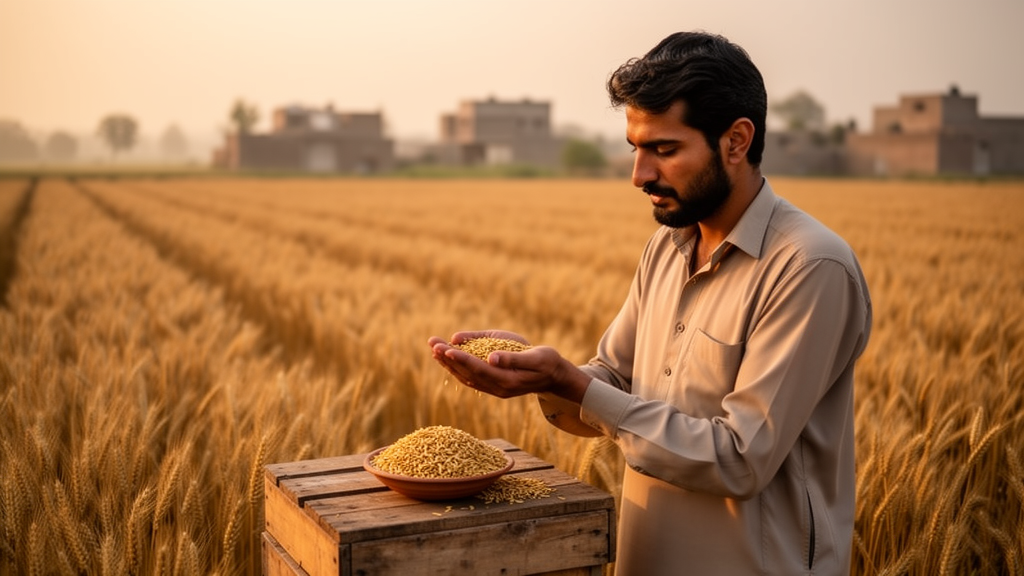
A cross-sectional survey in two districts of Sindh, Pakistan, found low awareness and limited reported use of fortified and biofortified wheat products among households, farmers and market actors. The abstract reports that only 2.9% of surveyed households knew about fortification and 3.6% of farming households knew about biofortified wheat, despite expressed willingness among some respondents to use or produce these products.
Researchers conducted household and market components between 25 November 2021 and 17 February 2022, using mobile-based data-collection applications and trained field staff. They interviewed 1,915 households and 845 merchandisers, including 84 owners of small wheat mills, known as atta chakkis, and 11 owners of large-scale mills. Data were analyzed with Stata version 16. The study assessed practices surrounding wheat cultivation and flour use, awareness and use of fortified or biofortified wheat, willingness to adopt the products, and reported technical and market barriers.
Among all surveyed households, 95.2% prepared meals with wheat flour, while 73.8% of farming households reported cultivating wheat. Awareness of fortification was 2.9%, and awareness of fermentation was 17.5%. Only 12.2% of households aware of fortification reported using fortified wheat flour. Among farming households, 3.6% knew about biofortified wheat and 4.4% of those households reported cultivating it. When asked about willingness to adopt biofortified wheat, 53.8% said they were willing, with higher nutrient value cited by 62.3% and better production cited by 48.3%.
Market awareness also varied substantially by business scale. None of the 84 atta-chakki owners knew about biofortification, and 1.2% knew about fortification. Six of the 11 large-scale mill owners, or 54.5%, knew about fortification; five of those six had technical training, and all six had the required machinery. All surveyed mill owners identified a lack of consumer awareness, low market demand and weak government regulation as barriers. Both small mills and large mills expressed willingness to switch to fortified or biofortified wheat if provided with free or subsidized wheat grain, micronutrients and minerals, equipment, tools and machinery, and free technical training.
The abstract concludes that uptake was limited by poor consumer awareness and weak regulatory enforcement, while willingness was stronger among some stakeholders. Because the available evidence comes from the study’s abstract, the full methods, questionnaire and results cannot be assessed here. The cross-sectional design measured reported awareness, practices and attitudes at one point in time; it did not establish changes over time or demonstrate health outcomes from consuming fortified or biofortified wheat flour. The findings are also limited to the surveyed households, farmers and merchandisers in the two Sindh districts rather than representing all of Pakistan or establishing broader market adoption.
Subject of Research: Household and market awareness, use and willingness to adopt fortified and biofortified wheat flour in two Sindh districts of Pakistan
Article Title: From field to bread: quantitative assessment of the implementation and acceptance of zinc biofortified and fortified wheat flour
Article References: Yasin, R., Padhani, Z. A., Rizvi, A., Mirani, M., Jamali, M. K., Chauhadry, I. A., Sohail, S., & Das, J. K. (2026). From field to bread: quantitative assessment of the implementation and acceptance of zinc biofortified and fortified wheat flour. BMC Public Health. https://doi.org/10.1186/s12889-026-29902-9
Image Credits: AI Generated
DOI: 10.1186/s12889-026-29902-9
Keywords: Sindh, Pakistan, wheat flour, zinc biofortification, food fortification, cross-sectional survey, household awareness, consumer adoption, wheat farming, flour mills, field, bread
News Source: Alan Morgan. (October 20, 2026). Cross-sectional Sindh survey finds low awareness and limited use of fortified and biofortified wheat flour. Scienmag.