• HOME
  • NEWS
  • EXPLORE
    • CAREER
      • Companies
      • Jobs
    • EVENTS
    • iGEM
      • News
      • Team
    • PHOTOS
    • VIDEO
    • WIKI
  • BLOG
  • COMMUNITY
    • FACEBOOK
    • INSTAGRAM
    • TWITTER
Thursday, June 25, 2026
BIOENGINEER.ORG
No Result
View All Result
  • Login
  • HOME
  • NEWS
  • EXPLORE
    • CAREER
      • Companies
      • Jobs
        • Lecturer
        • PhD Studentship
        • Postdoc
        • Research Assistant
    • EVENTS
    • iGEM
      • News
      • Team
    • PHOTOS
    • VIDEO
    • WIKI
  • BLOG
  • COMMUNITY
    • FACEBOOK
    • INSTAGRAM
    • TWITTER
  • HOME
  • NEWS
  • EXPLORE
    • CAREER
      • Companies
      • Jobs
        • Lecturer
        • PhD Studentship
        • Postdoc
        • Research Assistant
    • EVENTS
    • iGEM
      • News
      • Team
    • PHOTOS
    • VIDEO
    • WIKI
  • BLOG
  • COMMUNITY
    • FACEBOOK
    • INSTAGRAM
    • TWITTER
No Result
View All Result
Bioengineer.org
No Result
View All Result
Home NEWS Science News Biology

Crop residue burning is a major contributor to air pollution in South Asia

Bioengineer by Bioengineer
February 27, 2019
in Biology
Reading Time: 2 mins read
0
IMAGE
Share on FacebookShare on TwitterShare on LinkedinShare on RedditShare on Telegram

IMAGE

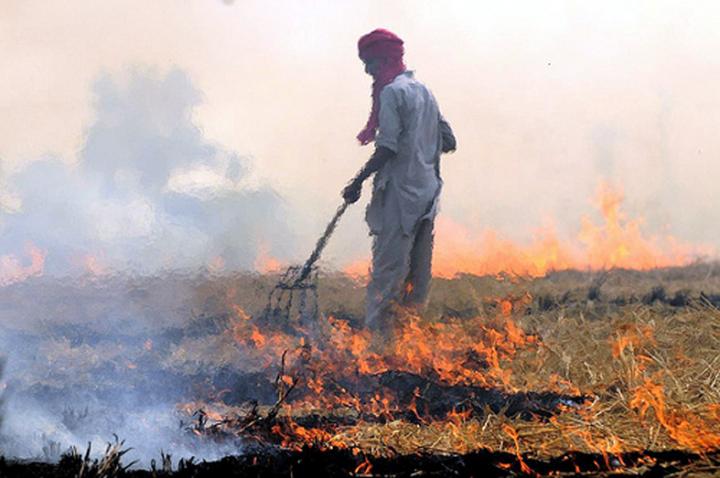
Credit: Dr. Atinderpal Singh, Physical Research Laboratory (PRL, Ahmedabad) /Stockholm University

While fossil fuel emissions in New Delhi account for 80 percent of the air pollution plume during the summer, emissions from biomass burning (such as crop residue burning) in neighboring regions rival those from fossil fuels during the fall and winter.

“Black carbon aerosols are damaging to human health and their levels are higher in New Delhi than in many other megacities. During fall and winter, the levels of polluting air particles in New Delhi can reach ten times the limit recommended by the World Health Organization. To determine the environmental effects of black carbon in this highly populated city, it is crucial to quantify the contributions from the key emissions sources,” says August Andersson, Researcher at the Department of Environmental Science and Analytical Chemistry (ACES), Stockholm University and co-author of the study.

The researchers collected air samples from New Delhi during 2011 and analyzed their black carbon content by creating carbon isotope signature profiles of each of the samples to identify the source of the particles. Different sources of carbon give their own unique isotopic fingerprints. When they compared the relative amounts of the black carbon particles from the different sources over the course of a year they discovered a strong seasonal variation. The relative contribution from fossil fuel combustion peaked during rainy summers and the contribution from biomass burning (for example wood and straw burning) peaked during the dry fall and winter months. In addition, the scientists found that the sources of the high biomass emissions were regional rather than local and urban, for example, burning of residual crops by farmers living approximately 200 km away from New Delhi. In India, crop residue burning occurs after harvest, which typically occurs in October/November for wheat, and in April/May for rice.

“Our findings contradict the widespread notion that the emission flux between cities and the countryside is mainly one-way. No other study has conclusively reported such high amounts of black carbon from biomass burning in the middle of a megacity, where the main source is expected to be traffic. The wintertime regional influx of black carbon into New Delhi suggests that to efficiently combat severe air pollution, it is necessary to not only mitigate the urban emissions, but also regional-scale biomass emissions, including agricultural crop residue burning,” says August Andersson. He continues: “Air pollution in the Indo-Gangetic region, which includes eastern Pakistan, northern India and Bangladesh, is a regional problem, potentially affecting nearly 1 billion people.”

###

Contact information

August Andersson, co-author

Tel: +46 (0) 727 078 984

E-mail: [email protected]

Örjan Gustafsson, co-author

Tel: +46 (0) 703 247 317

E-mail: [email protected]

Media Contact
August Andersson
[email protected]

Related Journal Article

http://dx.doi.org/10.1038/s41893-019-0219-0

Tags: Atmospheric SciencePollution/Remediation
Share12Tweet8Share2ShareShareShare2

Related Posts

Natural Hallucinogens: Evolution’s Ecological Tools, Not Mere Chemical Byproducts

June 25, 2026

This Famous Butterfly Revealed: Three Distinct Species Hidden in One

June 25, 2026

Scientists Attack Soybean Cyst Nematode by Starving Its Food Source

June 25, 2026

Decoding the Secret Code of a Crucial Immune Sensor

June 24, 2026
Please login to join discussion

POPULAR NEWS

  • Saying Goodbye to PGY-6: Pediatric Fellowship Realities

    103 shares
    Share 41 Tweet 26
  • Multi-Hospital Study Reveals Long Covid Burden Is Twice as High as Current Estimates

    92 shares
    Share 36 Tweet 23
  • Detection of EDCs in Breast Milk and Infant Urine Up to Six Months Highlights Early Exposure Risks

    77 shares
    Share 31 Tweet 19
  • New Drug Candidate Developed at McMaster Shows Potential for Treating Brain Cancer

    58 shares
    Share 23 Tweet 15

About

We bring you the latest biotechnology news from best research centers and universities around the world. Check our website.

Follow us

Recent News

Tracking Lanthanide-Labeled Microplastics in Plants

POSTECH Researchers Slash Cost of Reconstituted Cell-Free Systems by 95%

AI and Physics Collaborate to Design Advanced Hydrogen Storage Materials

Subscribe to Blog via Email

Success! An email was just sent to confirm your subscription. Please find the email now and click 'Confirm' to start subscribing.

Join 82 other subscribers
  • Contact Us

Bioengineer.org © Copyright 2023 All Rights Reserved.

Welcome Back!

Login to your account below

Forgotten Password?

Retrieve your password

Please enter your username or email address to reset your password.

Log In
No Result
View All Result
  • Homepages
    • Home Page 1
    • Home Page 2
  • News
  • National
  • Business
  • Health
  • Lifestyle
  • Science

Bioengineer.org © Copyright 2023 All Rights Reserved.