Nucleic acid-based biosensors are emerging as a transformative foundation for next-generation healthcare, bridging molecular precision with technological innovation. A recent review synthesizes how the integration of four distinct technological pillars—CRISPR-Cas systems, DNA nanotechnology, wearable and implantable platforms, and artificial intelligence—is redefining the capabilities of modern diagnostic tools. By moving beyond isolated sensing modalities, this convergence offers a paradigm shift toward decentralized, intelligent, and patient-centered biotechnology. The development is crucial for clinical applications, ranging from rapid infectious disease detection and oncology to real-time, non-invasive physiological monitoring. While these technologies show immense promise, their transition from research-grade tools to broadly deployed clinical diagnostics depends on overcoming substantial engineering, regulatory, and governance challenges.
CRISPR-Cas systems have fundamentally transformed the landscape of molecular sciences, moving well beyond their initial applications in genome editing. The discovery of enzymes such as Cas12 and Cas13 has been pivotal, as these effectors possess the unique capacity for collateral cleavage. Unlike the Cas9 nuclease, which performs a single, site-specific cut, Cas12 and Cas13 undergo a conformational activation upon recognizing their specific DNA or RNA targets, respectively. This activation triggers indiscriminate cleavage of surrounding single-stranded nucleic acids. When integrated into biosensor designs, this secondary cleavage cascade acts as a powerful signal amplification mechanism. By introducing synthetic reporter molecules tagged with fluorescent, electrochemical, or colorimetric labels, these systems can generate highly detectable signals even at extremely low target concentrations, enabling attomolar sensitivity that often surpasses conventional PCR-based assays.
The practical implementation of this mechanism is exemplified by diagnostic platforms like SHERLOCK and DETECTR. SHERLOCK leverages Cas13 for RNA detection, frequently incorporating isothermal amplification methods like recombinase polymerase amplification to reach clinically relevant sensitivities. It has demonstrated significant utility in detecting SARS-CoV-2 and oncogenic mutations such as KRAS or EGFR. DETECTR, conversely, employs Cas12a to target double-stranded DNA, offering a simplified workflow that operates directly on DNA targets without a preceding transcription step. These platforms have been instrumental in rapid infectious disease diagnostics and HR-HPV genotyping, providing portability that is particularly advantageous in resource-limited environments. Despite these successes, both platforms face ongoing hurdles, including the need for upstream amplification that complicates point-of-care implementation and the requirement for standardized, single-step, instrument-free formats for regulatory approval.
To extend sensitivity and enable multiplexed detection, these CRISPR platforms are increasingly coupled with nanoscale materials and structures. DNA-based nanotechnologies, including DNA origami, DNAzymes, and quantum dots, provide a modular scaffolding that enhances signal transduction and target delivery. DNA origami allows for the construction of programmable 2D and 3D shapes through the self-assembly of scaffold and staple strands, providing a robust architecture for organizing sensing elements at the nanoscale. DNAzymes, which are single-stranded DNA molecules with intrinsic catalytic activity, offer precise target discrimination and can be activated by specific ions or small molecules. Quantum dots, semiconductor nanocrystals with size-dependent optical properties, provide tunable fluorescence and exceptional photostability, making them ideal for long-term imaging and multiplexed diagnostics.
These nanomaterial-based platforms are not without their operational trade-offs. While quantum dots offer unmatched spectral tunability for fluorescence-based assays, their cadmium-containing variants pose biocompatibility and environmental risks that necessitate the development of safer alternatives like silicon-based quantum dots or biocompatible shells. DNAzymes are highly compelling for field-deployable applications due to their low cost and catalytic efficiency; however, their susceptibility to nuclease degradation in physiological fluids limits their use in vivo unless protected by chemical modifications such as phosphorothioate backbones or 2′-O-methyl substitutions. DNA origami provides unparalleled spatial control but is limited by the current complexity and cost of staple strand synthesis, as well as reduced structural stability under varying physiological conditions.
The next frontier in biosensing involves moving these systems from the laboratory to the body through wearable and implantable architectures. These sensors aim to translate molecular precision into continuous, real-time data streams, monitoring biomarkers in biofluids such as sweat, saliva, and interstitial fluid. Advances in flexible electronics and biocompatible hydrogels have enabled the creation of skin-mounted or implantable devices capable of detecting microRNAs, viral RNA, or metabolic markers without invasive sampling. For instance, sweat-based biosensors have been tested for the monitoring of glucose and lactate, while implantable configurations allow for dynamic tracking of circulating tumor DNA and other molecular indicators. These platforms are designed to improve patient comfort and safety while maintaining reliable performance in complex biological environments.
Artificial intelligence acts as the final pillar, transforming raw signals from these devices into clinically actionable insights. Biosensor data are often complex, noisy, and subject to variability from environmental interference. AI algorithms, particularly machine learning and deep learning, are adept at extracting hidden patterns, performing real-time error correction, and modeling the temporal dynamics of biomarker fluctuations. By training models on multimodal datasets, researchers can develop early-warning systems that identify disease-associated signatures before clinical symptoms become apparent. In CRISPR-based sensors, AI is used to distinguish true target signals from background noise, significantly enhancing the reliability of diagnostics in clinical samples.
Despite the synergy of these technologies, widespread clinical and commercial translation remains hindered by persistent technical and systemic barriers. Stability is a primary concern, as nucleic acid and protein components are prone to degradation from temperature fluctuations and enzymatic activity. Reproducibility across different sample matrices and patient populations remains a significant bottleneck, undermining the standardization required by agencies such as the FDA and EMA. Manufacturing scalability is another critical challenge; scaling from a high-performing prototype to a consistently reproducible and affordable commercial product requires rigorous engineering. These limitations are further compounded by a regulatory landscape that has not yet fully adapted to the rapid pace of innovation in biosensor technology.
Ethical and societal considerations are equally vital as these systems become more integrated into daily life. The use of biosensors to generate continuous streams of genetic and physiological data introduces complex concerns regarding data privacy, cybersecurity, and the potential for misuse of sensitive personal information. Developing transparent governance frameworks and international standards is essential to maintain patient trust and ensure equitable access to these technologies. Without such safeguards, the potential for advanced diagnostics to be deployed in rural clinics or resource-limited settings remains uncertain, regardless of the technical efficacy achieved in laboratory settings.
Looking forward, the long-term vision is the creation of fully autonomous, self-powered diagnostic ecosystems. Research is focusing on harvesting bioenergy from glucose oxidation or mechanical motion, which would liberate wearable and implantable devices from external power constraints, enabling indefinite operation. Further developments in synthetic biology may yield living biosensors—engineered cells capable of detecting biomarkers and producing therapeutic outputs in a closed-loop fashion. The ultimate goal is to evolve from diagnostic instruments into active participants in precision healthcare, where biosensors serve as integrated nodes within a broader digital health network, continuously monitoring and modulating physiological health in a deeply personalized and responsible manner.
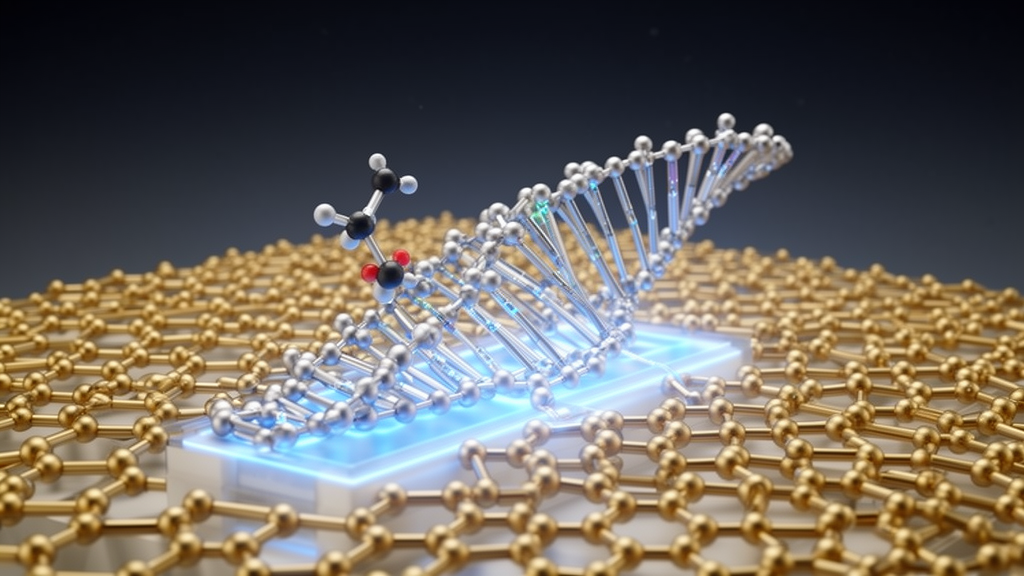
Beyond amplification-based methods, graphene field-effect transistor systems known as CRISPR-Chip demonstrate how nanoelectronics enable amplification-free mutation screening. Fabricated on silicon substrates with patterned source-drain electrodes and liquid-gated channels, these devices functionalize graphene surfaces through pyrene-NHS or diazonium chemistry. This surface coating immobilizes catalytically deactivated Cas complexes guided by sequence-specific RNAs. Target binding alters interfacial charge distribution, shifting the Dirac point and modulating electrical conductance under fixed gate bias without enzymatic turnover. By tuning ionic buffer strength to extend the effective Debye length, these field-effect systems detect single-nucleotide polymorphisms across pharmacogenomic targets such as CYP450 genes, carrier screening loci, and cancer-associated variants within minutes. Time-resolved current measurements further capture binding kinetics, distinguishing mutant from wild-type sequences with single-base sensitivity.
Diagnostic platforms also broaden clinical utility through multi-analyte liquid biopsy workflows that evaluate diverse cancer-specific biomarkers from blood and urine. Biosensors integrate CRISPR-Cas recognition with nanomaterial-driven signal transduction to profile mutational hotspots in circulating tumor DNA, including TP53, KRAS, EGFR, and PIK3CA. Simultaneously, these platforms assess post-transcriptional microRNA regulators such as miR-21, miR-155, and miR-210, as well as epigenetic DNA methylation signatures including SEPT9, MGMT, and APC. Nanopore-integrated CRISPR architectures enhance these assessments by measuring ionic current fluctuations during Cas binding or cleavage events, delivering real-time, label-free single-molecule resolution. In decentralized testing, hybrid sensor configurations concurrently measure these nucleic acid signatures alongside established protein biomarkers like PSA, HER2, and CA15-3, minimizing reliance on invasive tissue biopsies.
The clinical translation of nucleic acid biosensors draws on proven commercial device precedents while advancing along a structured developmental timeline. Benchmarks include the Abbott i-STAT point-of-care platform and commercially validated continuous monitors like the Dexcom G7 and Abbott FreeStyle Libre, which illustrate viable pathways for regulatory acceptance and clinical integration. Near-term development focuses on the lyophilization of Cas enzymes, guide RNAs, and reporter molecules into room-temperature, shelf-stable formulations that eliminate reagent cold-chain requirements. Concurrently, establishing standardized reference materials and inter-laboratory validation protocols will facilitate rigorous benchmarking against gold-standard PCR assays. Over a three-to-seven-year horizon, progress in automated oligonucleotide staple synthesis and chemical backbone modifications is projected to lower manufacturing costs for DNA origami and DNAzymes, accelerating their transition from proof-of-concept demonstrations to scalable diagnostic tools.
Subject of Research: Advances in CRISPR-integrated nucleic acid biosensing and nanotechnology for personalized diagnostics.
Article Title: Revolutionizing biosensing with nucleic acids: cutting-edge advances
Article References: Yolcu, Ç. D., Üstünkaya, K., Yazıcı, H., & Özcan, A. (2026). Revolutionizing biosensing with nucleic acids: cutting-edge advances. Bioscience Nanotechnology, 2(1), Article 14. https://doi.org/10.1186/s44331-026-00020-y
Image Credits: AI Generated
DOI: 10.1186/s44331-026-00020-y
Keywords: CRISPR-Cas, Nucleic Acid Biosensors, Nanotechnology, DNA Origami, DNAzymes, Quantum Dots, Biosensing, Diagnostics, Personalized Medicine, Point-of-Care, Artificial Intelligence, Wearable Biosensors, Implantable Sensors, Liquid Biopsy, Synthetic Biology, Molecular Recognition, Infectious Disease Diagnostics, Oncology, Regulatory Standardization
News Source: Juliet Wilcox. (November 16, 2026). CRISPR and Nanotechnology Converge for Next-Generation Intelligent Biosensing Platforms. Scienmag.