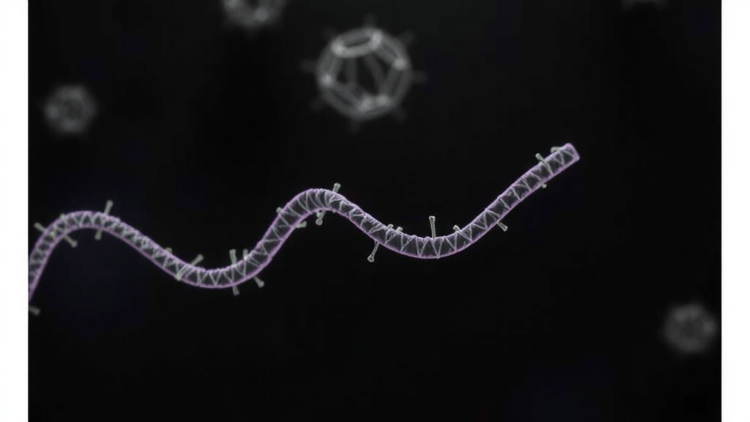
Inside every bacterial cell, RNA molecules carry far more information than their sequence of bases alone. After transcription, the four nitrogenous bases of RNA can be chemically altered by specialized enzymes, and these modifications influence how stable the molecules are, how efficiently they are translated into protein, and how the cell copes with stress. The complete collection of these chemical tags is known as the epitranscriptome, and although more than 170 distinct RNA modifications have been catalogued to date, the vast majority were first discovered on the highly abundant ribosomal RNA and transfer RNA, which together make up as much as 95 percent of the RNA in a bacterial cell. Messenger RNA, the template for every protein the cell produces, accounts for only a few percent of total RNA and has remained stubbornly difficult to interrogate, particularly in bacteria.
A new study published in MicrobiologyOpen has now combined two cutting-edge technologies, CRISPR interference and nanopore native RNA sequencing, to systematically probe the epitranscriptome of Escherichia coli. The research, led by Miranda E. Pitt of the University of Technology Sydney and Lachlan J. M. Coin of the University of Melbourne, together with colleagues, demonstrates a workflow in which individual RNA modification enzymes are switched off in living bacteria, and the resulting loss of chemical marks is read out directly at the single-molecule level. The approach not only confirmed several well-known modification sites on ribosomal RNA but also revealed candidate modification sites scattered across bacterial messenger RNA, a frontier that has remained largely unmapped.
The technical challenge the team faced is formidable. Traditional methods for detecting RNA modifications, such as immunoprecipitation or chemical treatments like bisulfite conversion, are laborious, require highly purified and concentrated RNA, and generally capture only one modification type at a time. Bacterial RNA adds further complications: rigorous lysis procedures and complex cell membranes accelerate RNA degradation, and bacterial transcripts have notoriously short half-lives, in many cases under one minute. Enzymes called RNases can rapidly destroy extracted RNA unless inhibited immediately. Direct RNA sequencing, released by Oxford Nanopore Technologies in 2017, offers a faster alternative because it reads native RNA molecules as they pass through protein nanopores, preserving the chemical modifications that conventional methods destroy when RNA is converted to complementary DNA. However, the chemistry was originally incompatible with bacterial transcripts, which lack the polyadenylated tails found in eukaryotic messenger RNA.
The researchers overcame this barrier by artificially adding poly(A) tails to bacterial transcripts before sequencing, a technique they had refined in previous work. To create the perturbations needed to detect modifications, they turned to CRISPR interference, or CRISPRi. Unlike standard CRISPR gene editing, which cuts DNA, CRISPRi uses a catalytically inactive form of the Cas9 protein, dCas9, that binds to a target gene guided by a matching guide RNA and simply blocks its transcription. This knocks down, rather than knocks out, gene expression, avoiding the toxicity and off-target DNA disruption associated with genome cutting while allowing inducible, tunable silencing. The team used a plasmid system optimized for E. coli, in which dCas9 expression is triggered by the small molecule anhydrotetracycline.
Five genes encoding known ribosomal RNA modification enzymes were targeted: rlmF and rlmJ, both responsible for N6-methyladenosine marks on 23S ribosomal RNA; rsmF, which deposits 5-methylcytosine on 16S ribosomal RNA; rsmG, which installs 7-methylguanosine on 16S ribosomal RNA; and rluD, a pseudouridine synthase that modifies three positions in a functionally critical stem-loop of the 23S subunit. A sixth gene, add, encoding adenosine deaminase, was included to explore whether it might carry previously unrecognized RNA editing activity. The knockdown system was tested across multiple E. coli reference strains, including the type strain ATCC 11775, ATCC 8739, ATCC 25922, and a multidrug-resistant isolate, ATCC BAA-2452. Quantitative reverse transcription PCR confirmed that most target genes were repressed by more than 80 percent, although rsmG proved harder to silence, reaching only about 54 percent reduction, and the resistant isolate could not be transformed with the plasmid without a severe fitness cost.
With knockdown strains in hand, the researchers sequenced both total RNA and ribosomal RNA-depleted, messenger RNA-enriched samples on nanopore flow cells, using computational tools to compare ionic current signals between knockdown and control conditions. The software nanocompore, which does not require prior training and is agnostic to modification type, compared each perturbed sample against two controls: the unmodified original isolate and a plasmid control expressing dCas9 without a guide RNA. For rluD, all three known pseudouridine sites in the 23S ribosomal RNA were detected with strong statistical significance, and the sequence motifs surrounding those sites matched published reports. The rsmG knockdown likewise produced a clear signal at the known 7-methylguanosine position in 16S ribosomal RNA. In contrast, the sites modified by rlmF, rlmJ, and rsmF yielded weak signals that were difficult to distinguish from noise, echoing the findings of earlier benchmarking studies showing that certain modification types, particularly 5-methylcytosine and some N6-methyladenosine sites, are inherently harder to detect with current nanopore basecalling and current-difference tools.
Extending the analysis to messenger RNA, the team identified significant modification-site changes on several bacterial transcripts shared across strains. Genes harboring candidate modification sites included ompC, which encodes an outer membrane porin; lpp1; salPB; cspC; dbhA and dbhB; and secY, which encodes a core component of the protein secretion machinery. For the rluD and rsmG knockdowns, which had produced the strongest ribosomal RNA signals, the researchers searched messenger RNA for sequence motifs matching those seen at the known ribosomal sites. Strikingly, a significant change was found on the well-characterized pseudouridine motif in the gene encoding elongation factor Tu, the workhorse protein of translation, as well as on transcripts of lpp1, gapA, and fusA. For rsmG, significant sites matching the known 7-methylguanosine motif appeared in hupA, lpp1, rplT, rpsA, and ompC. Because these messenger RNA sites were detected in more than one strain background, they represent plausible, though not yet chemically verified, targets of bacterial modification enzymes acting beyond the ribosome.
The study also examined the downstream consequences of losing these modifications, measuring bacterial growth and profiling the proteome by quantitative mass spectrometry. Growth effects varied by strain: activation of dCas9 itself imposed a measurable burden in ATCC 11775, which carries an extra plasmid, while ATCC 8739 tolerated the system well. Statistically significant growth delays were observed for knockdowns of rluD and rsmF in one strain and rlmF, rluD, and rsmF in another, consistent with prior reports that the phenotypic impact of ribosomal RNA modification loss depends heavily on genetic background. Proteomic analysis detected roughly 1,800 to 2,400 proteins per strain and revealed modest but reproducible changes, including alterations in citrate lyase, the trehalose-specific phosphotransferase component TreB, the xylose-binding protein XylF, the sodium/proline symporter PutP, formate hydrogenlyase subunit HycB, and the oligopeptide transporter OppC. The authors note these changes require further validation and may only become pronounced under stress conditions such as antibiotic exposure or temperature shifts, which previous work has shown can reshape the bacterial epitranscriptome.
The broader significance of the work lies in its implications for antimicrobial resistance and bacterial virulence. RNA modifications are already known to help pathogens evade entire antibiotic classes, including aminoglycosides, chloramphenicol, and macrolides, and to contribute to antibiotic tolerance in organisms such as Vibrio cholerae. Loss of tRNA modification enzymes can impair a bacterium’s ability to infect and cause disease in a host. A reliable, rapid, genome-wide method for mapping modification dynamics in bacteria could therefore illuminate how pathogens respond to clinical interventions at the level of their RNA. The authors caution that fine-tuning is still needed, particularly for messenger RNA modification detection across diverse bacterial species and under varying growth conditions, and newer nanopore chemistry promises higher accuracy and greater yield. Yet as a proof of principle, pairing CRISPR interference with native RNA sequencing offers a scalable blueprint for interrogating the bacterial epitranscriptome, one silenced enzyme and one molecule of RNA at a time.
Subject of Research: Mapping RNA modifications in the Escherichia coli epitranscriptome using CRISPR interference gene knockdown and nanopore direct RNA sequencing
Article Title: Interrogating the Escherichia coli Epitranscriptome Via CRISPR Interference and Nanopore Native RNA Sequencing
Article References: Pitt, M. E., Zhang, J., Nguyen, A. N. T., Hall, M. B., Jebeli, L., Featherstone, L. A., Myers, G. S. A., Scott, N. E., & Coin, L. J. M. (2026). Interrogating the Escherichia coli Epitranscriptome Via CRISPR Interference and Nanopore Native RNA Sequencing. MicrobiologyOpen, 15(5), Article e70413. https://doi.org/10.1002/mbo3.70413
Image Credits: AI Generated
DOI: 10.1002/mbo3.70413
Keywords: epitranscriptome, E. coli, CRISPR interference, nanopore sequencing, direct RNA sequencing, RNA modifications, ribosomal RNA, messenger RNA, pseudouridine, m6A, antimicrobial resistance, MicrobiologyOpen
Cite Scienmag News
APA
MLA
Chicago
Juliet Wilcox. (September 22, 2026). CRISPR and Nanopore Sequencing Reveal Hidden RNA Tags in E. coli. Scienmag. https://scienmag.com/crispr-and-nanopore-sequencing-reveal-hidden-rna-tags-in-e-coli/
Juliet Wilcox. “CRISPR and Nanopore Sequencing Reveal Hidden RNA Tags in E. coli.” Scienmag, 22 September 2026, https://scienmag.com/crispr-and-nanopore-sequencing-reveal-hidden-rna-tags-in-e-coli/. Accessed 22 September 2026.
Juliet Wilcox. “CRISPR and Nanopore Sequencing Reveal Hidden RNA Tags in E. coli.” Scienmag. September 22, 2026. https://scienmag.com/crispr-and-nanopore-sequencing-reveal-hidden-rna-tags-in-e-coli/
Copy citation
Download RIS
Tags: advanced methods for bacterial mRNA analysisAntimicrobial Resistancebacterial epitranscriptome analysisbacterial RNA stability and translation regulationCRISPR interferenceCRISPR interference for RNA studiesCRISPR-based bacterial RNA modification detectiondirect RNA sequencingE. coliepitranscriptomelong-read sequencing for bacterial transcriptomem6Amessenger RNAMicrobiologyOpennanopore native RNA sequencing in E. colinanopore sequencingnanopore sequencing technology in microbiologypseudouridineribosomal RNARNA chemical modifications in bacteriaRNA modificationsRNA modifications impact on bacterial stress responsesystematic epitranscriptome profiling in E. coliuncovering hidden RNA tags in bacteria