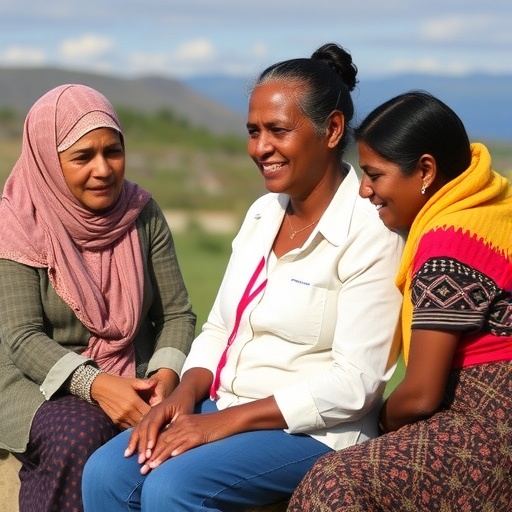
A web-based cardiac rehabilitation program designed specifically for women has shown promising results among patients living in rural and remote South Australia, where distance, limited services and competing responsibilities can make recovery after a heart event difficult. Known as CREW, or Cardiac Rehabilitation Especially for Women, the program was developed through the Flinders University-led Country Heart Attack Prevention Project, or CHAP Project. In a mixed-method study, researchers examined whether the program could be delivered successfully, accepted by women with cardiovascular disease and integrated into the work of cardiac rehabilitation clinicians serving communities far from major hospitals.
Cardiac rehabilitation is a structured form of secondary prevention offered after conditions such as heart attack, coronary artery disease or other cardiovascular events. It typically combines physical activity, education, risk-factor management, medication support and psychological care. The goal is not only to help patients recover their physical capacity but also to reduce the likelihood of another cardiovascular event. Yet women are often less likely than men to begin or complete cardiac rehabilitation, and those living outside metropolitan areas can face additional barriers, including long travel distances, limited public transport, workforce shortages and a lack of programs designed around women’s experiences.
“The lack of women-focused programs are major barriers,” says Flinders University researcher Dr Joyce Ramos. “But home-based cardiac rehabilitation using telehealth and gender-tailored approaches may help address these challenges.” The CREW program was designed around this principle. Rather than requiring participants to attend repeated face-to-face sessions, it used a web-based format that allowed women to access educational material and rehabilitation support from home. Telehealth can reduce the practical burden of travel while maintaining contact with health professionals, an approach that may be particularly important in rural and remote regions where specialist services are widely dispersed.
The study included 40 women from rural or remote South Australia who had been referred to cardiac rehabilitation through the integrated Cardiovascular Clinical Network, known as iCCNet. Participants entered the study between November 2023 and November 2024 and were invited to use the CREW program. Its digital content consisted of four educational modules intended to strengthen self-management and help participants understand the factors influencing cardiovascular health. Completion was monitored through digital records, allowing researchers to assess how many women began the program and how many completed it.
The results indicated that 82.5 per cent of participants initiated cardiac rehabilitation, while 60 per cent completed the program. These figures are important because participation often declines between referral, enrolment and completion. A referral alone does not guarantee that a patient will receive the full benefits of rehabilitation. Completion can be affected by fatigue, pain, anxiety, family responsibilities, work demands, digital access and uncertainty about how rehabilitation fits into everyday life. The relatively high initiation rate in the CREW study suggests that a flexible, women-focused model may help reduce some of the obstacles that prevent patients from taking the first step.
Participants also reported high satisfaction with most elements of the program. Although satisfaction does not by itself demonstrate that a program improves long-term survival or prevents future cardiovascular events, it is a significant measure of feasibility and acceptability. Patients are more likely to engage with a health intervention when its format is understandable, accessible and relevant to their circumstances. A web-based platform may also give participants greater control over when and where they complete educational activities, which can be valuable for women balancing recovery with caregiving, employment or household responsibilities.
“ These findings highlighted the value of a women-focused approach to support women engage with their heart health,” says Dr Ramos. “They should also increase clinician awareness about the importance of recognising and addressing women’s unique needs throughout the cardiac rehabilitation journey.” Gender-sensitive rehabilitation does not mean assuming that every woman has the same needs. Instead, it recognises that cardiovascular disease can be shaped by differences in symptoms, life circumstances, social roles, communication preferences and access to care. A tailored program can provide space to address issues that may be overlooked in a general rehabilitation pathway, including confidence with physical activity, emotional recovery and the practical demands of managing health at home.
Researchers also conducted interviews with participating women and with clinicians responsible for delivering cardiac rehabilitation. These interviews added context to the digital participation data and explored how the program functioned in real-world conditions. The analysis identified several themes. Women described the program as empowering, particularly when it helped them develop knowledge and confidence in managing their cardiovascular health. Telehealth was viewed as a way to support participation by reducing travel and making rehabilitation more compatible with life in rural and remote communities. Clinicians, meanwhile, highlighted the potential of the model to respond to workforce and resource pressures within health systems.
The findings suggest that digital cardiac rehabilitation could extend specialist support without requiring every appointment to take place in a hospital or clinic. However, the researchers also identified opportunities to improve the program. Recommendations emerging from the interviews included enhancing program content and refining delivery so that it better reflects the experiences of women and the operational realities of clinicians. Digital programs must also account for differences in internet connectivity, technology confidence, health literacy and access to devices. A web-based intervention can remove geographic barriers, but it cannot eliminate every form of inequality unless technical and clinical support are built into its design.
The study does not establish that CREW produces better clinical outcomes than conventional cardiac rehabilitation, and its relatively small sample means the results should be interpreted as evidence of feasibility rather than definitive proof of effectiveness. Further research will be needed to determine whether the program improves physical fitness, medication adherence, cardiovascular risk factors, quality of life and long-term participation. Larger studies could also assess whether the approach is effective across different rural populations and whether it can be incorporated sustainably into routine health services. Even so, the combination of digital completion data and interviews provides a useful picture of how a women-focused model may work beyond the metropolitan health system.
The research, titled “Feasibility and Acceptability of the Cardiac Rehabilitation Especially for Women (CREW) Web-Based Program in Rural and Remote Communities: A Mixed-Method Study,” was conducted by Orathai Suebkinorn, Alline Beleigoli, Robyn Clark, Lemlem Gebremichael, Norma Bulamu, Jeroen Hendriks, Jonathon Foote, Anita Lymn, Sherry Grace and Joyce Ramos on behalf of the Cardiac Rehabilitation Especially for Women Project Team. Published in Heart, Lung and Circulation on 3 August 2026, the study presents CREW as a promising response to persistent gender and geographic disparities in cardiac rehabilitation. Its central message is that recovery after cardiovascular disease may be strengthened when care is brought closer to patients’ homes and designed with women’s real-world needs in mind.
Subject of Research: People
Article Title: Feasibility and Acceptability of the Cardiac Rehabilitation Especially for Women (CREW) Web-Based Program in Rural and Remote Communities: A Mixed-Method Study
Web References: https://doi.org/10.1016/j.hlc.2026.06.021
References: Suebkinorn O, Beleigoli A, Clark R, Gebremichael L, Bulamu N, Hendriks J, Foote J, Lymn A, Grace S, Ramos J, on behalf of the Cardiac Rehabilitation Especially for Women (CREW) Project Team. “Feasibility and Acceptability of the Cardiac Rehabilitation Especially for Women (CREW) Web-Based Program in Rural and Remote Communities: A Mixed-Method Study.” Heart, Lung and Circulation. Published 3 August 2026. DOI: 10.1016/j.hlc.2026.06.021
Keywords: cardiac rehabilitation, women’s cardiovascular health, telehealth, digital health, rural healthcare, remote communities, cardiovascular disease, secondary prevention, gender-tailored care, CREW program
Tags: barriers to cardiac rehab in rural areascommunity-based cardiac supportdigital health interventions for cardiac recoveryFlinders University CHAP Projectgender-specific heart disease preventionimproving access to cardiac care in underserved populationsrural and remote healthcaresecondary prevention for cardiovascular diseasetelehealth for women’s healthweb-based cardiac recovery programsWomen’s cardiac rehabilitationwomen’s health in cardiology