In a landmark advancement poised to revolutionize HIV research, a team of scientists led by Liang, Z.J., Li, Z., and Jackson, N.J. has unveiled a pioneering method for generating synthetic multi-national longitudinal cohorts tailored for clinically grounded HIV investigations. Published in Nature Communications in 2026, their innovative approach leverages cutting-edge computational techniques and deep clinical insights to create vast, authentic datasets capable of overcoming traditional challenges faced in longitudinal HIV studies. This breakthrough promises to accelerate discovery, improve treatment strategies, and deepen understanding of HIV’s long-term clinical trajectories on a global scale.
Longitudinal cohort studies have long been a cornerstone of epidemiological research, providing critical insights by observing individuals over extended periods. However, in HIV research, such studies face immense hurdles. Challenges include data privacy concerns, limited patient recruitment across diverse geographies, and inconsistent reporting standards, which hamper efforts to assemble sufficiently large and representative cohorts. The researchers confronted these obstacles head-on by designing an advanced synthetic data framework that preserves the nuanced complexity of real patient histories while ensuring privacy and inclusivity.
At the heart of their methodology is a sophisticated generative modeling technique, grounded in probabilistic machine learning and reinforced by clinical domain expertise. Unlike traditional synthetic datasets that often sacrifice detail or reliability, this approach incorporates real-world clinical variables—such as viral load trajectories, medication adherence patterns, immune response markers, and socio-demographic influences—into a dynamic simulation environment. This generates synthetic patient profiles that not only mimic observed distributions but also capture the intricate correlations and causal relationships inherent to HIV progression and treatment responses.
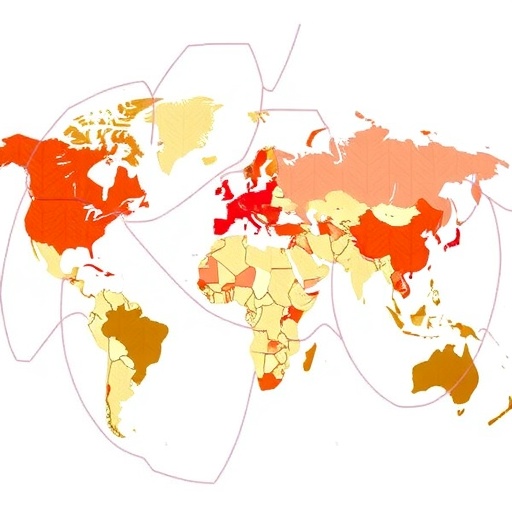
Critically, the cohort synthesis transcends single-nation datasets, incorporating multinational data to reflect the disease’s global diversity. HIV epidemics manifest differently across regions due to variations in healthcare infrastructure, viral subtypes, socio-economic factors, and cultural contexts influencing transmission and treatment. By integrating longitudinal data from multiple countries, the synthetic cohorts enable researchers to explore how these contextual differences impact long-term outcomes, thus facilitating more personalized and region-specific strategies for HIV management.
Analytically, the model operates by training on comprehensive datasets sourced from anonymized electronic health records, clinical trials, and surveillance registries. These input data streams undergo rigorous preprocessing to address biases and inconsistencies, ensuring the synthetic output remains both clinically credible and statistically robust. The team employed recent advances in differential privacy algorithms to guarantee patient confidentiality, a vital requirement given the sensitivity of HIV-related data, which further enhances the synthetic datasets’ utility for open scientific inquiry.
These synthetic cohorts offer several immediate advantages for the HIV research community. Researchers can simulate clinical trial scenarios or conduct epidemiological forecasts with unprecedented flexibility. Since the datasets are synthetic but grounded in real clinical phenomena, they allow hypothesis testing and algorithm development without the ethical and legal barriers typically associated with patient data. This fosters faster methodological innovation while safeguarding patient rights—an ethical win-win rarely achieved at this scale before.
Moreover, the longitudinal nature of these synthetic cohorts addresses a critical gap in HIV research: understanding long-term disease dynamics in the era of evolving antiretroviral therapies (ART). As ART regimens improve and patients live longer, chronic management and comorbidity burden become key concerns. By simulating decades of clinical trajectories, the model facilitates investigations into how treatment changes, adherence fluctuations, and aging-related factors shape outcomes. This longitudinal lens is invaluable for developing interventions that improve quality of life beyond viral suppression.
One notable demonstration of the framework’s potential involved replicating observed viral rebound patterns following treatment interruptions, a difficult phenomenon to study given ethical constraints on interrupting therapy in real patients. Synthetic patients exhibited statistically comparable rebound kinetics, validating the model’s ability to capture subtle nuances of viral replication and host response. This validation builds confidence that the synthetic cohorts can reliably inform clinical strategies such as structured treatment interruptions or cure-directed therapies.
In addition, the multi-national cohorts provided illuminating comparisons of HIV progression across different healthcare settings. For example, synthetic patients from resource-rich countries displayed distinct trajectories in immune recovery markers compared to counterparts in lower-resource regions, reflecting disparities in care and access. Such insights can guide global health policies by pinpointing region-specific challenges and identifying interventions that may reduce outcome inequities.
Technically, the research team developed a bespoke software platform that integrates state-of-the-art generative adversarial networks (GANs), variational autoencoders (VAEs), and Bayesian hierarchical modeling to synthesize patient-level data with temporal dependencies. This hybrid approach balances generative fidelity against computational efficiency, enabling large-scale synthetic cohort generation within practicable runtimes. The platform is scalable and adaptable, laying groundwork for extension to other infectious diseases or chronic conditions beyond HIV.
Importantly, the authors emphasize the synthetic data’s role as a complement—not replacement—to real patient data. The synthetic cohorts excel in hypothesis generation, algorithm training, and exploratory analyses, while clinical validation remains paramount. To facilitate adoption, the team plans to release detailed protocols and open-source tools, fostering transparency and allowing researchers to customize synthetic data generation according to specific study designs or populations.
Looking forward, this synthetic cohort generation technique opens tantalizing possibilities for personalized medicine. By integrating genomic, behavioral, and environmental data streams into future iterations, the approach could yield individualized disease progression models that predict patient-specific risks and optimal treatment pathways. Such precision insights could transform HIV care by tailoring interventions to an individual’s unique longitudinal profile, maximizing efficacy and minimizing adverse effects.
The study also highlights broader implications for global health research, where data scarcity and privacy concerns often constrain innovation. Synthetic multi-national longitudinal cohorts represent a paradigm shift toward democratizing data access while preserving ethical standards. This can catalyze collaborations across borders and disciplines, accelerating the collective fight against HIV and potentially other pandemics.
As the field grapples with emerging challenges such as drug resistance, vaccine rollout optimization, and the long-term impact of COVID-19 co-infections in HIV populations, the availability of high-fidelity synthetic cohorts will be a critical resource. They equip researchers with the tools to conduct rapid scenario testing and model complex interactions that are otherwise infeasible to study empirically.
In sum, Liang and colleagues’ pioneering work on generating synthetic multi-national longitudinal cohorts is a landmark contribution that pushes the boundaries of HIV research methodology. By harmonizing advanced computational modeling with deep clinical grounding, this innovation offers not just a dataset but a new paradigm for understanding and ultimately conquering one of the world’s most persistent epidemics. The ripple effects of this breakthrough are poised to be felt across infectious disease research and public health for years to come.
Subject of Research: Generating synthetic, clinically grounded longitudinal cohorts for HIV research across multiple nations using advanced computational modeling.
Article Title: Generating synthetic multi-national longitudinal cohorts for clinically grounded HIV research.
Article References:
Liang, Z.J., Li, Z., Jackson, N.J. et al. Generating synthetic multi-national longitudinal cohorts for clinically grounded HIV research. Nat Commun (2026). https://doi.org/10.1038/s41467-026-74492-0
Image Credits: AI Generated
Tags: advanced synthetic data frameworks for epidemiologycomputational techniques in HIV studiesgenerative modeling in clinical dataglobal HIV epidemiological researchimproving HIV treatment strategies with synthetic datalongitudinal clinical trajectories of HIVlongitudinal HIV cohort studies challengesmachine learning for synthetic health datamulti-national HIV patient data synthesisovercoming data privacy in HIV researchprivacy-preserving synthetic datasetssynthetic multi-national cohorts for HIV research