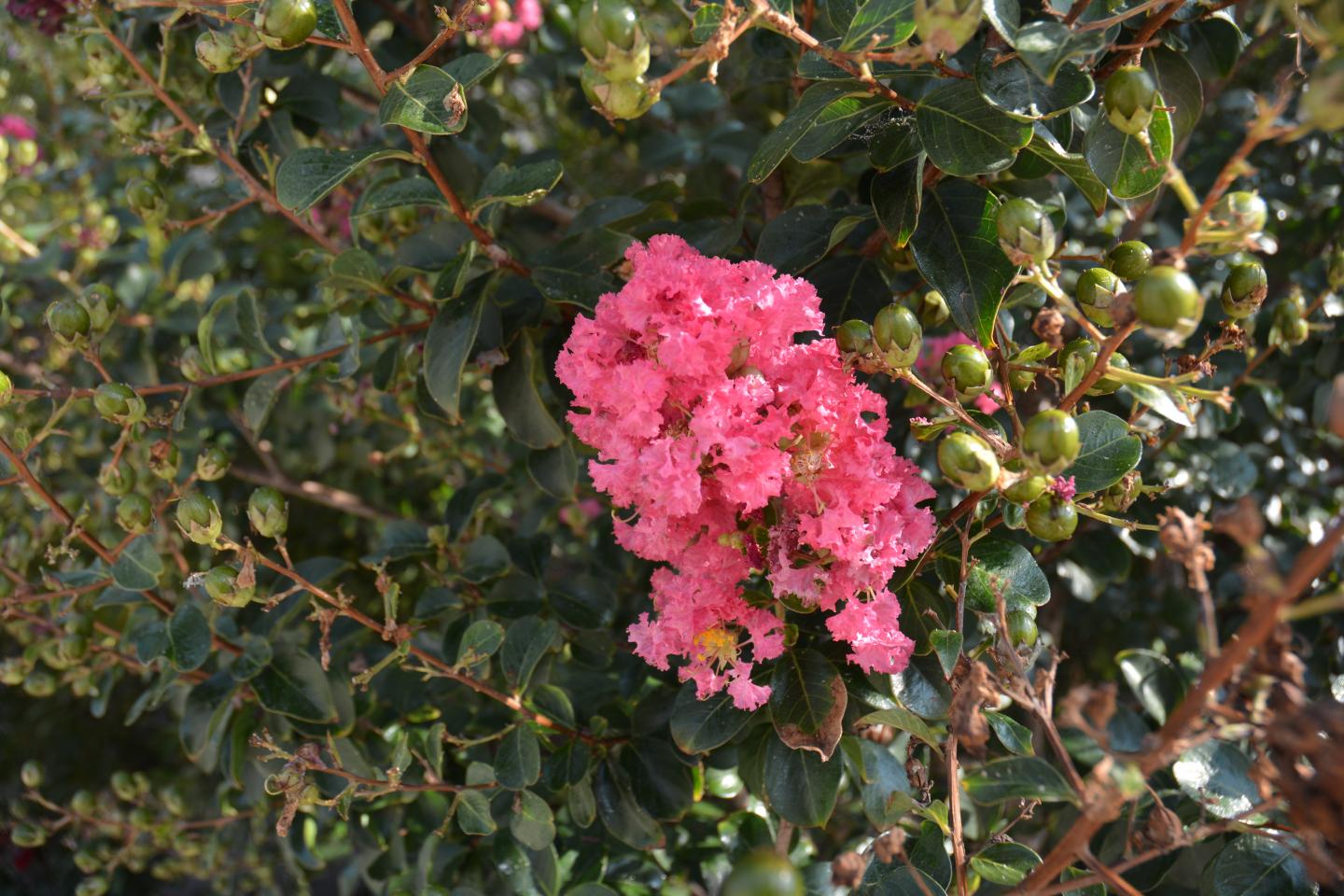
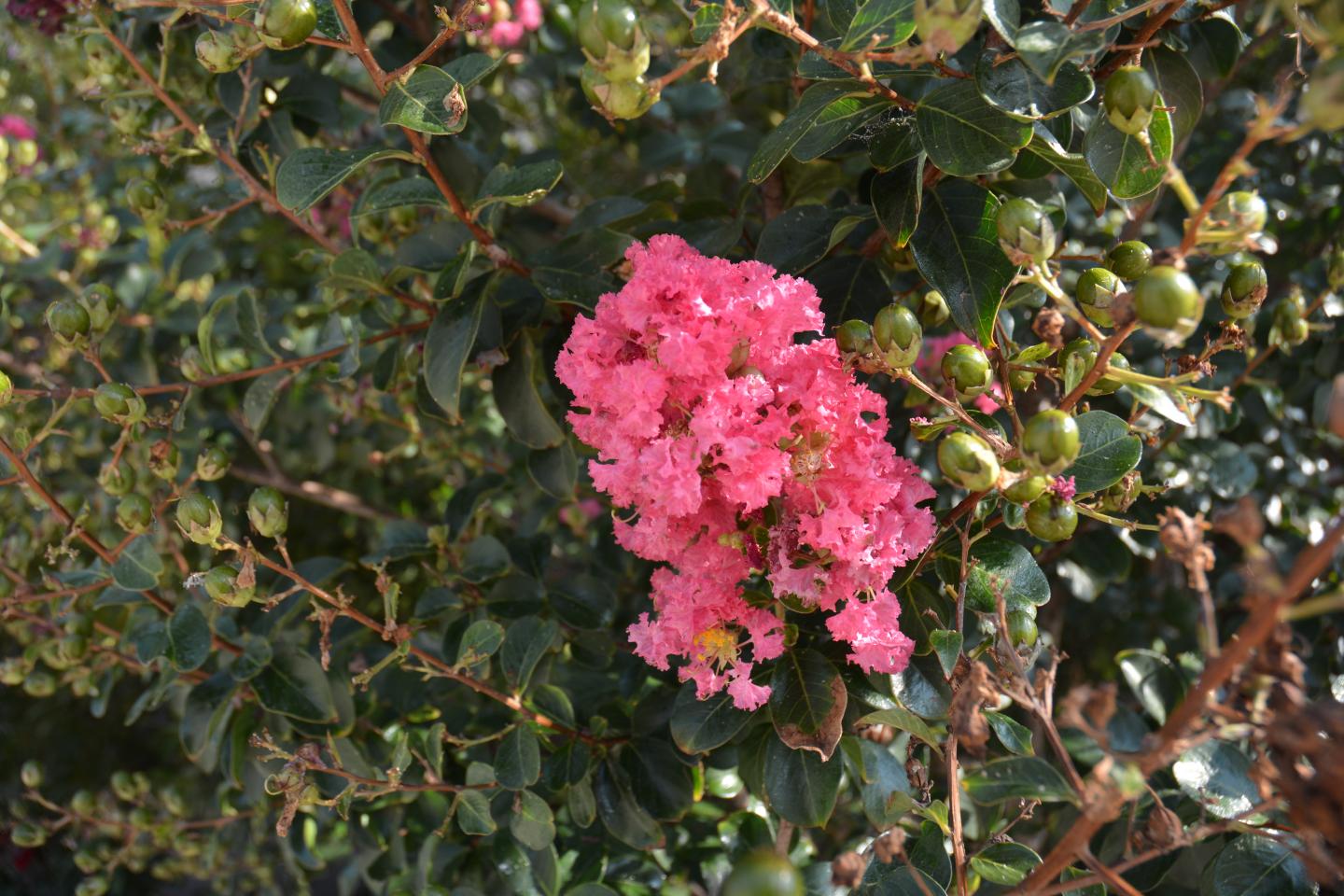
Credit: (Texas A&M AgriLife Extension Service photo by Kathleen Phillips)
COLLEGE STATION — The most popular flowering shrub in the U.S. has a new ally in a fight against a new, devastating exotic pest.
A $3.3 million grant will fund the study "Systematic Strategies to Manage Crapemyrtle Bark Scale" to be led by Dr. Mengmeng Gu, associate professor and ornamental horticulturist for Texas A&M AgriLife Extension Service, College Station.
The study is one of 12 totaling $35 million by the U.S. Department of Agriculture's National Institute of Food and Agriculture for science-based solutions and new technology for the specialty crop industry.
Gu said crapemyrtles had a wholesale value of $66 million in 2014, the latest year for which figures are available. But the bark scale could take a serious bite out of that.
"Crapemyrtle bark scale is severely impacting this industry, and poses a unique risk to other major crops including soybean, apple and pomegranate," she said. "Its newly reported infestation on the native American beautyberry may pose a threat to the native plant community and ecosystem."
Bark scale originated in Asia, and no one knows how it came to the U.S., Gu said.
"Crapemyrtle bark scale feeds on the plant's vascular system — the stems, branches, flower stems and leaves — sucking out plant sap," Gu said. "That affects the overall plant health so it doesn't grow or flower. And in the pomegranate, that stops the fruit production and yield."
She said honeydew secretion from scale feeding also causes black sooty mold on trunks and branches, which significantly reduces the aesthetic value of trees in landscapes.
If a solution is not found, Gu said, the landscape industry likely would stop using them, and that would be a severe economic hit.
She said now that it has been reported on American beautyberry, which is a totally different plant family, it is very likely that the scale may start to attack other plants as well. It has been already documented on plants in six genus in 11 families, she said.
In Asia, crapemyrtle bark scale has been controlled by using both insecticides and biological control on crapemyrtles and pomegranates. This study will look at these control methods as well as new approaches, she said.
First, the team will evaluate non-chemical control methods such as biological, cultural and mechanical, Gu said. They also will evaluate chemical efficacy and the potential impact on beneficial insects and pollinators, based on the established understanding of crapemyrtle bark scale biology.
"We also will evaluate alternative hosts and feeding preference for future plant selection and development," she said.
And ultimately, the study will seek ways to improve the understanding of consumer and industry preferences and how that impacts crapemyrtle sales, Gu said.
"We are going to develop a two-way information pipeline for monitoring this pest by training volunteers and commercial/professional stakeholders, having a Best Management Practices training curriculum and creating an outreach network," she added.
Gu said it's important to map where the crapemyrtle bark scale infestation is, including where it is on other plants, so volunteers will be encouraged to learn about the pest and how to report their sightings.
An infestation map has already been developed at http://bit.ly/2f8Fpbi, and learning where outbreaks are will help the industry be on the lookout and "nip problems in the bud" more quickly, Gu noted.
"The overall goal to manage this pest will contribute to the long-term profitability and sustainability of crapemyrtle production and landscape uses," she said. "And it will help protect against future risks to other commodities from this pest."
###
Media Contact
Kathleen Phillips
[email protected]
979-845-2872
@texasagwriter
Home