• HOME
  • NEWS
  • EXPLORE
    • CAREER
      • Companies
      • Jobs
    • EVENTS
    • iGEM
      • News
      • Team
    • PHOTOS
    • VIDEO
    • WIKI
  • BLOG
  • COMMUNITY
    • FACEBOOK
    • INSTAGRAM
    • TWITTER
Sunday, October 4, 2026
BIOENGINEER.ORG
No Result
View All Result
  • Login
  • HOME
  • NEWS
  • EXPLORE
    • CAREER
      • Companies
      • Jobs
        • Lecturer
        • PhD Studentship
        • Postdoc
        • Research Assistant
    • EVENTS
    • iGEM
      • News
      • Team
    • PHOTOS
    • VIDEO
    • WIKI
  • BLOG
  • COMMUNITY
    • FACEBOOK
    • INSTAGRAM
    • TWITTER
  • HOME
  • NEWS
  • EXPLORE
    • CAREER
      • Companies
      • Jobs
        • Lecturer
        • PhD Studentship
        • Postdoc
        • Research Assistant
    • EVENTS
    • iGEM
      • News
      • Team
    • PHOTOS
    • VIDEO
    • WIKI
  • BLOG
  • COMMUNITY
    • FACEBOOK
    • INSTAGRAM
    • TWITTER
No Result
View All Result
Bioengineer.org
No Result
View All Result
Home NEWS Science News Health

Cranium of a four-million-year-old hominin shows similarities to that of modern humans

Bioengineer by Bioengineer
June 25, 2018
in Health
Reading Time: 2 mins read
0
Share on FacebookShare on TwitterShare on LinkedinShare on RedditShare on Telegram
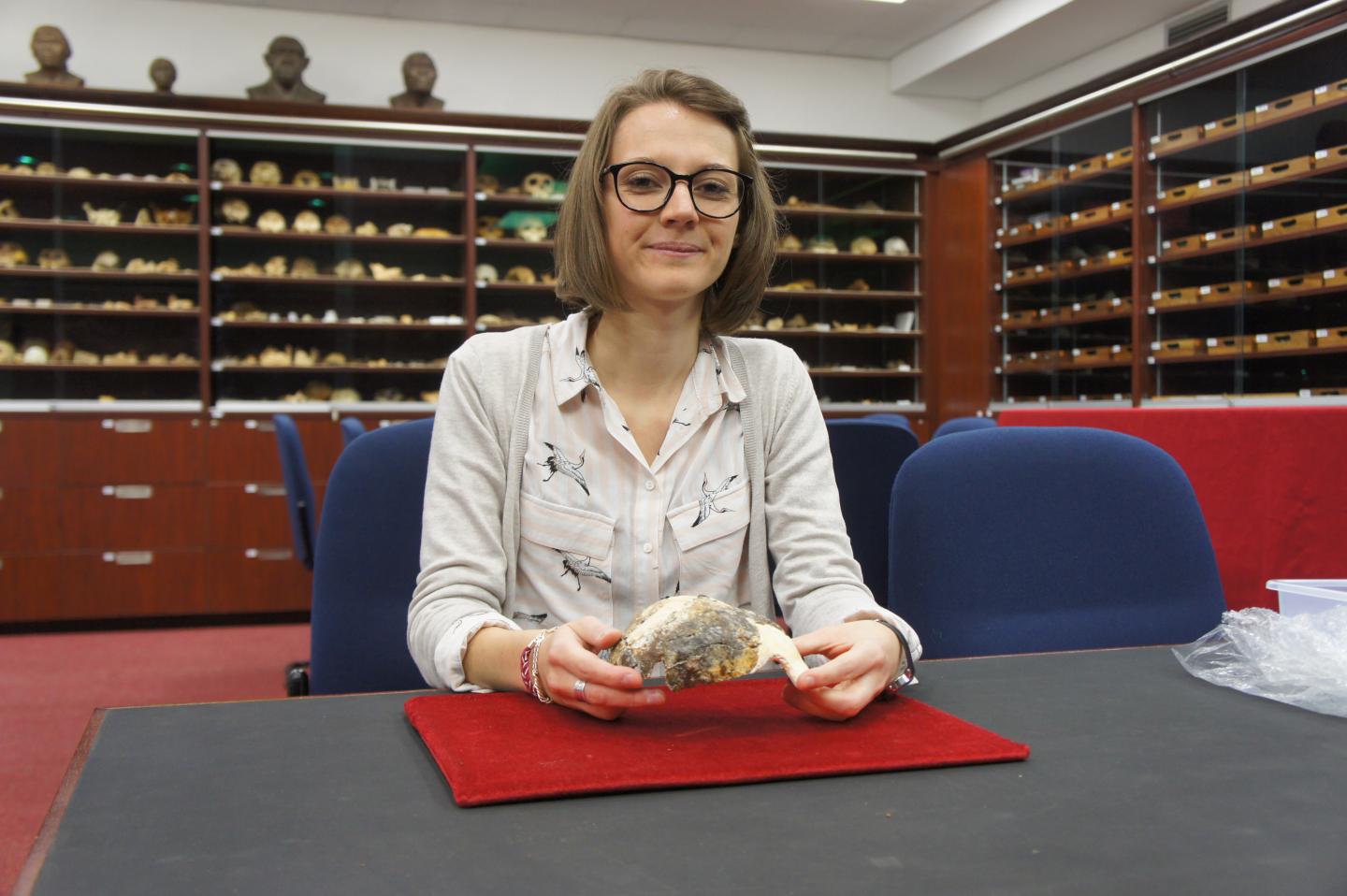
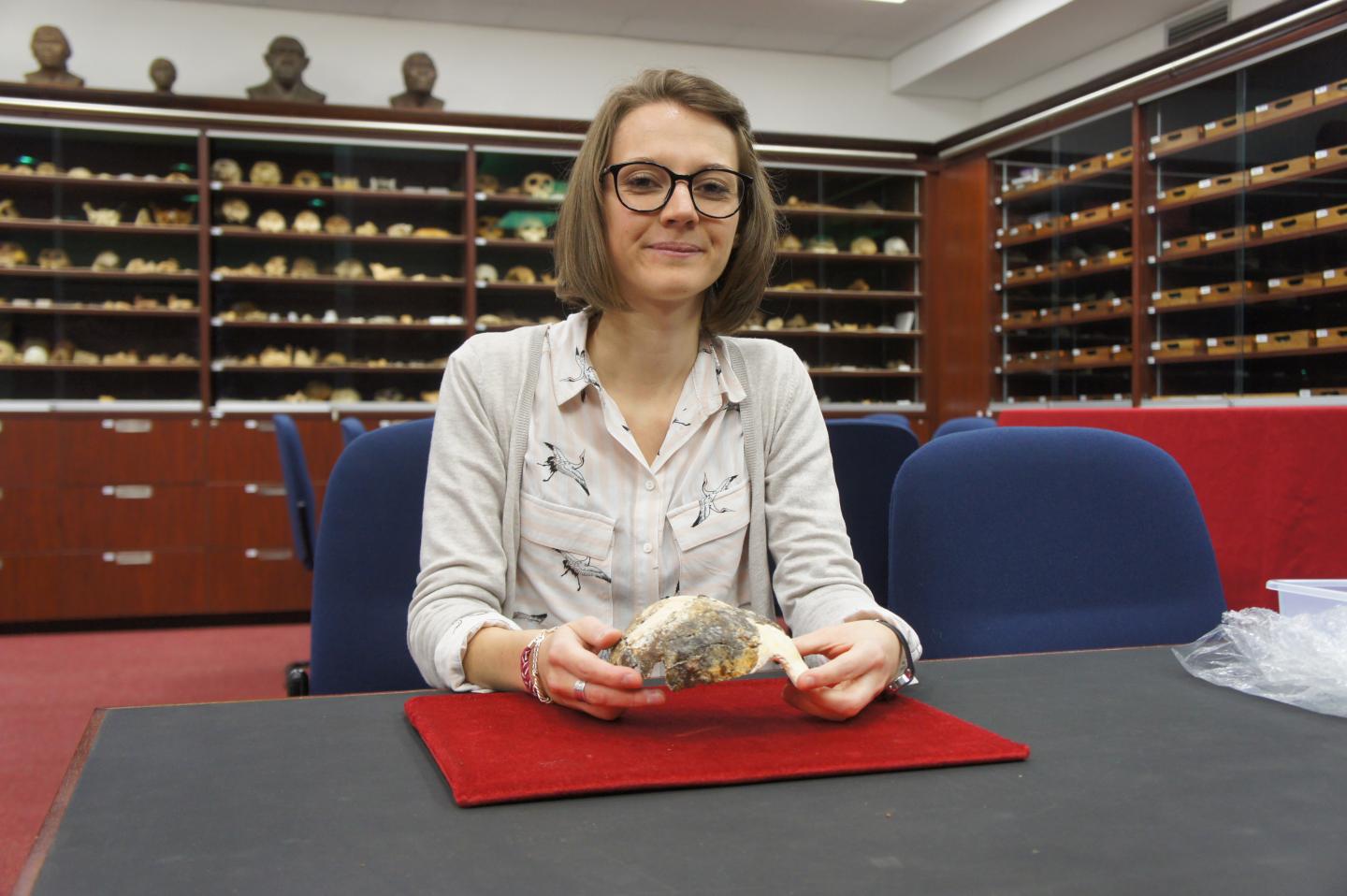
IMAGE

Credit: Wits University

A cranium of a four-million-year-old fossil, that, in 1995 was described as the oldest evidence of human evolution in South Africa, has shown similarities to that of our own, when scanned through high resolution imaging systems.

The cranium of the extinct Australopithecus genus was found in the lower-lying deposits of the Jacovec Cavern in the Sterkfontein Caves, about 40km North-West of Johannesburg in South Africa. Dr Amelie Beaudet from the School of Geography, Archaeology and Environmental Studies of the University of the Witwatersrand and her colleagues from the Sterkfontein team scanned the cranium at the Evolutionary Studies Institute, based at the University of the Witwatersrand, in 2016 and applied advanced imaging techniques in "virtual paleontology" to further explore the anatomy of the cranium. Their research was funded by the Centre of Excellence in Palaeosciences, the Claude Leon Foundation and the French Institute of South Africa and was published in the Journal of Human Evolution.

"The Jacovec cranium represents a unique opportunity to learn more about the biology and diversity of our ancestors and their relatives and, ultimately, about their evolution," says Beaudet. "Unfortunately, the cranium is highly fragmentary and not much could be said about the identity nor the anatomy of the Jacovec specimen before."

Through high resolution scanning, the researchers were able to quantitatively and non-invasively explore fine details of the inner anatomy of the Jacovec specimen and to report previously unknown information about the genus Australopithecus.

"Our study revealed that the cranium of the Jacovec specimen and of the Ausralopithecus specimens from Sterkfontein in general was thick and essentially composed of spongy bone," says Beaudet. "This large portion of spongy bone, also found in our own cranium, may indicate that blood flow in the brain of Australopithecus may have been comparable to us, and/or that the braincase had an important role in the protection of the evolving brain."

In comparing this cranium to that of another extinct group of our family tree, Paranthropus, that lived in South Africa along with the first humans less than two-million-years ago, their study revealed an intriguing and unexpected aspect of the cranial anatomy in this genus.

"We also found that the Paranthropus cranium was relatively thin and essentially composed of compact bone. This result is of particular interest, as it may suggest a different biology," says Beaudet.

Situated in the Cradle of humankind, a Unesco World Heritage Site, the South African paleontological sites have played a pivotal role in the exploration of our origins. In particular, the Sterkfontein Caves site has been one of the most prolific fossil localities in Africa, with over 800 hominin remains representing 3 genera of hominin recovered since 1936, including the first adult Australopithecus, the iconic "Mrs Ples" and "Little Foot", the most complete single skeleton of an early hominin yet found.

"The Jacovec cranium exemplifies the relevance of the Sterkfontein fossil specimens for our understanding of human evolution," says Beaudet. "Imaging techniques open unique perspectives for revisiting the South African fossil assemblage."

###

Media Contact

Schalk Mouton
[email protected]
27-827-399-637
@Wits_News

http://www.wits.ac.za

Share12Tweet8Share2ShareShareShare2

Related Posts

GLP-1 Drug Prescriptions Rise Among Postpartum Women in New US Study

GLP-1 Drug Prescriptions Rise Among Postpartum Women in New US Study

October 4, 2026
Private Equity Quietly Reshapes India's Hospital Landscape, Landmark Study Reveals

Private Equity Quietly Reshapes India’s Hospital Landscape, Landmark Study Reveals

October 4, 2026

Thyroid Cancer After Childhood Cancer: Small Tumors, Surprising Spread, Hidden Genes

October 4, 2026

Junk Food May Age the Ovary Before the Egg Reserve Runs Dry

October 4, 2026
Please login to join discussion

POPULAR NEWS

  • Alloys That Shrink Their Own Grains: New PIX Mechanism Refines Metals With Heat Alone

    Alloys That Shrink Their Own Grains: New PIX Mechanism Refines Metals With Heat Alone

    29 shares
    Share 12 Tweet 7
  • Endurance Exercise Reshapes the Liver in Males and Females Through Distinct Molecular Routes

    29 shares
    Share 12 Tweet 7
  • Single Transcription Factor PU.1 Rapidly Converts Fibroblasts into Macrophage-Lineage Cells

    29 shares
    Share 12 Tweet 7
  • New Scale Measures How Ready Nurse Educators Really Are for the AI Era

    29 shares
    Share 12 Tweet 7

About

We bring you the latest biotechnology news from best research centers and universities around the world. Check our website.

Follow us

Recent News

Alloys That Shrink Their Own Grains: New PIX Mechanism Refines Metals With Heat Alone

Endurance Exercise Reshapes the Liver in Males and Females Through Distinct Molecular Routes

Single Transcription Factor PU.1 Rapidly Converts Fibroblasts into Macrophage-Lineage Cells

Subscribe to Blog via Email

Success! An email was just sent to confirm your subscription. Please find the email now and click 'Confirm' to start subscribing.

Join 85 other subscribers
  • Contact Us

Bioengineer.org © Copyright 2023 All Rights Reserved.

Welcome Back!

Login to your account below

Forgotten Password?

Retrieve your password

Please enter your username or email address to reset your password.

Log In
No Result
View All Result
  • Homepages
    • Home Page 1
    • Home Page 2
  • News
  • National
  • Business
  • Health
  • Lifestyle
  • Science

Bioengineer.org © Copyright 2023 All Rights Reserved.