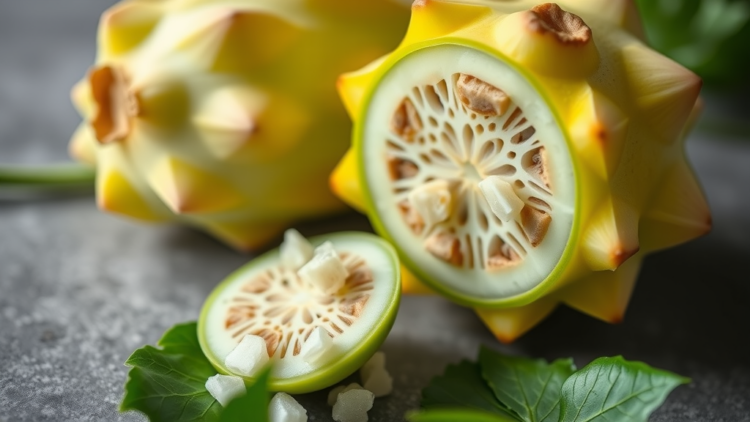
A discarded food industry byproduct may be quietly becoming one of the more surprising players in diabetes research. In a new study published in the Journal of Agriculture and Food Research, scientists in China report that collagen peptides extracted from cowhide, when combined with an extract of bitter melon (Momordica charantia), showed markedly stronger blood-sugar-lowering effects in diabetic mice than the peptides alone. The work, led by Long He and colleagues at Gansu Agricultural University, weaves together molecular binding studies, simulated digestion experiments, and a whole-animal model of type 2 diabetes to argue that the right natural pairing can amplify the medicinal potential of food-derived proteins.
Collagen peptides are short chains of amino acids produced by enzymatically breaking down collagen from skin, bone, and cartilage. They have attracted attention for antioxidant, antihypertensive, and anti-aging properties, and previous work has shown that proline- and arginine-rich sequences at their C-terminal ends can inhibit dipeptidyl peptidase-IV (DPP-IV), an enzyme whose suppression prolongs the action of incretin hormones that stimulate insulin release. But the researchers argue that hitting DPP-IV alone is often not enough. Persistent hyperglycemia fuels overproduction of reactive oxygen species, and when antioxidant defenses falter, the resulting oxidative stress damages pancreatic beta cells, muddles insulin signaling, and derails glucose handling in the liver, accelerating the progression of type 2 diabetes.
To find a suitable partner for the peptides, the team screened four plant extracts, from blue plum, tremella, mulberry leaf, and bitter melon, alongside the cowhide collagen peptides themselves. In radical-scavenging assays, bitter melon extract stood out: its DPPH radical scavenging activity was nearly five times that of the collagen peptides, and its hydroxyl radical scavenging capacity exceeded the peptides by more than 85 percent. It also showed a stronger, though statistically not significant, tendency to inhibit alpha-amylase, the digestive enzyme that cleaves dietary starch into sugars. That dual profile, antioxidant power plus suppression of carbohydrate breakdown, made bitter melon the natural candidate for a combination formulation.
The interaction between the two components turned out to be a genuine molecular partnership rather than a simple mixture. Fluorescence spectroscopy showed that as bitter melon extract concentration rose, the peptides’ fluorescence was progressively quenched, and Stern-Volmer analysis indicated static quenching, meaning the two had formed non-fluorescent complexes. Thermodynamic calculations revealed positive enthalpy and entropy changes and negative free energy, signatures of a spontaneous, endothermic binding process driven primarily by hydrophobic interactions. Molecular docking of two representative collagen peptides, GPVGPPG and GPVG, against momordicine I, a key bioactive constituent of the extract, confirmed that hydrogen bonds and hydrophobic pi-alkane and pi-sigma contacts stabilize the assembly. Infrared spectroscopy and calorimetry backed this up: the amide I and amide II bands of the peptides shifted after binding, and the complex melted at higher temperatures, indicating enhanced thermal stability. Microscopy even showed the fragments reassembling into larger, flake-like structures.
What matters most for an oral supplement, however, is survival in the gut. The researchers subjected both the plain peptides and the complex to simulated gastric and intestinal digestion. Both withstood pepsin admirably, retaining over 80 percent of their activities. But trypsin in the intestinal phase proved far more destructive, significantly degrading the bioactivity of the plain peptides. The bitter melon complex, by contrast, retained significantly higher alpha-amylase inhibition and antioxidant capacity after intestinal digestion, suggesting the molecular partnership shields the peptides from enzymatic attack. Notably, DPP-IV inhibition was no different between the two after digestion, likely because continued hydrolysis of the proline-rich peptides keeps generating new DPP-IV-inhibiting fragments regardless.
Then came the animal trial. The team induced type 2 diabetes in mice with a high-sugar, high-fat diet followed by streptozocin injections, then treated the diabetic animals for four weeks with collagen peptides, the peptide-bitter melon combination, or metformin as a positive control. After four weeks, fasting blood glucose fell by nearly 38 percent in the peptide group and about 39 percent in the combination group, compared with roughly 52 percent for metformin. Glucose tolerance improved in both treatment groups, again with a slight edge for the combination, as measured by a standard oral glucose tolerance test.
The combination also tackled oxidative stress more effectively. Diabetic mice showed depressed total antioxidant capacity and reduced activities of glutathione peroxidase and superoxide dismutase in the liver, along with elevated malondialdehyde, a marker of lipid damage. Peptide supplementation partially reversed these changes, and the combination pushed them further toward normal, consistent with the in vitro radical-scavenging results. The liver told a similar story structurally: diabetic mice had depleted hepatic glycogen stores, swollen and vacuolated hepatocytes, and disrupted kidney tubules, all of which improved after treatment, with the combination group showing the clearest restoration of glycogen deposition and tissue architecture.
Mechanistically, the benefits appear to route through a well-known metabolic control axis. AMP-activated protein kinase, or AMPK, is a master sensor of cellular energy status whose activation suppresses hepatic gluconeogenesis, the liver’s internal production of new glucose. In the diabetic mice, the phosphorylation ratio of AMPK was significantly depressed. Both treatments restored it, with the combination showing the strongest effect, while simultaneously reducing the expression of FoxO1, a transcription factor that drives gluconeogenic genes, and PEPCK, the rate-limiting enzyme of that process. In other words, the supplement combination seems to flip the liver from a glucose-producing state toward a glucose-storing one.
The study also ventured into the gut microbiome, sequencing bacterial DNA from cecal contents and profiling cecal metabolites by untargeted metabolomics. Diabetic mice exhibited an elevated ratio of Firmicutes to Bacteroidetes, reduced microbial diversity, and shifts in genera such as Candidatus Arthromitus and Anaerostipes. The combination treatment partially reversed these dysbiotic patterns and shifted the overall community composition toward that of healthy controls. Metabolomics revealed 89 significantly altered metabolites, including stress-related steroid hormones like cortisol and aldosterone, which rose with diabetes and fell back toward normal with treatment, along with antioxidant compounds like ascorbate that were depleted in disease and partially restored. Association analysis linked these metabolic shifts to specific microbial phyla, hinting that the gut ecosystem participates in the formulation’s effects.
The authors are careful to frame the microbiota findings as correlational, offering mechanistic clues rather than proof of a causal host-microbe pathway, and the work remains at the mouse-model stage, with human efficacy, dosing, and safety still untested. Yet the study makes a compelling case that food-derived ingredients can be engineered into something greater than the sum of their parts. By pairing waste-stream collagen with a traditional medicinal plant, and letting noncovalent chemistry, digestive stability, AMPK signaling, and gut ecology all pull in the same direction, the researchers suggest that the future of glycemic management may partly lie not in a single magic molecule, but in thoughtfully assembled natural complexes. If subsequent studies confirm these effects in humans, cowhide, one of the meat industry’s most abundant leftovers, could find itself at the center of a new generation of functional foods for blood sugar control.
Subject of Research: Antihyperglycemic effects of cowhide collagen peptides combined with Momordica charantia extract in type 2 diabetes
Article Title: Enhanced antihyperglycemic effects of cowhide collagen peptides by the combination with Momordica charantia extract: AMPK–FoxO1 pathway engagement and gut microbiota remodeling
Article References: He, L., Wang, X., He, J., Gao, Y., Yu, Q., & Zhang, L. (2026). Enhanced antihyperglycemic effects of cowhide collagen peptides by the combination with Momordica charantia extract: AMPK–FoxO1 pathway engagement and gut microbiota remodeling. Journal of Agriculture and Food Research, 31, Article 103298. https://doi.org/10.1016/j.jafr.2026.103298
Image Credits: AI Generated
DOI: 10.1016/j.jafr.2026.103298
Keywords: collagen peptides, bitter melon, Momordica charantia, type 2 diabetes, AMPK, FoxO1, gut microbiota, antioxidant, DPP-IV, alpha-amylase, hepatic gluconeogenesis, functional foods
Cite Scienmag News
APA MLA Chicago
Alan Morgan. (September 25, 2026). Cowhide Collagen Peptides Team Up With Bitter Melon to Fight High Blood Sugar. Scienmag. https://scienmag.com/cowhide-collagen-peptides-team-up-with-bitter-melon-to-fight-high-blood-sugar/
Alan Morgan. “Cowhide Collagen Peptides Team Up With Bitter Melon to Fight High Blood Sugar.” Scienmag, 25 September 2026, https://scienmag.com/cowhide-collagen-peptides-team-up-with-bitter-melon-to-fight-high-blood-sugar/. Accessed 25 September 2026.
Alan Morgan. “Cowhide Collagen Peptides Team Up With Bitter Melon to Fight High Blood Sugar.” Scienmag. September 25, 2026. https://scienmag.com/cowhide-collagen-peptides-team-up-with-bitter-melon-to-fight-high-blood-sugar/
Copy citation Download RIS
Tags: alpha-amylaseAMPKantioxidantbioactive peptides from food industry byproductsbitter melonbitter melon extract for blood sugar regulationcollagen peptidescollagen peptides antioxidant propertiescowhide collagen peptidesDPP-IVDPP-IV inhibition by natural compoundsfood-derived proteins for diabetes managementFOXO1functional foodsgut microbiotahepatic gluconeogenesismolecular mechanisms of blood sugar controlMomordica charantianatural pairing for enhanced medicinal effectsnatural remedies for type 2 diabetesoxidative stress in diabetesplant-based extracts in diabetes researchsynergistic effects of bitter melon and collagen peptidesType 2 diabetes