Many people who recover from COVID-19 experience long-term symptoms, such as brain fog or heart problems. Increasing evidence suggests that the virus can also impair fertility. Now, researchers reporting in ACS Omega have analyzed protein levels in semen of men who have recovered from COVID-19. The pilot study suggests that even mild or moderate illness could change the levels of proteins related to male reproductive function, the researchers say.
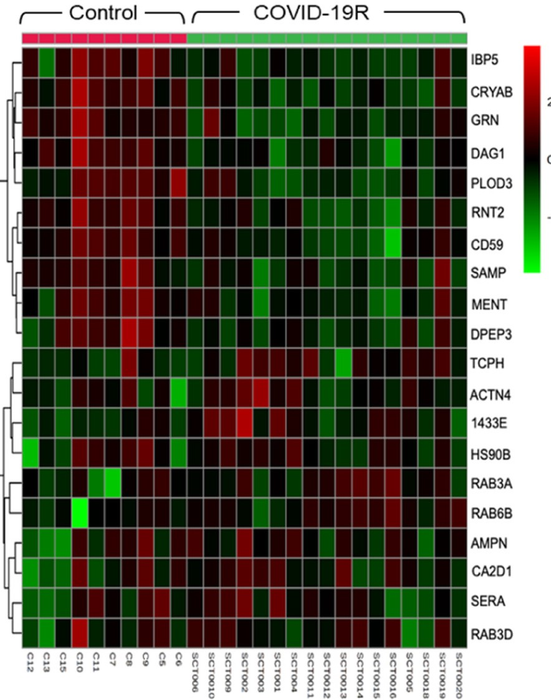
Credit: Adapted from ACS Omega 2022, DOI: 10.1021/acsomega.1c06551
Many people who recover from COVID-19 experience long-term symptoms, such as brain fog or heart problems. Increasing evidence suggests that the virus can also impair fertility. Now, researchers reporting in ACS Omega have analyzed protein levels in semen of men who have recovered from COVID-19. The pilot study suggests that even mild or moderate illness could change the levels of proteins related to male reproductive function, the researchers say.
Although SARS-CoV-2 mainly affects the respiratory system, the virus — and the body’s response to it — also damages other tissues. Recent evidence indicates that COVID-19 infection can reduce male fertility, and the virus has been detected in male reproductive organs. Firuza Parikh and Rajesh Parikh at Jaslok Hospital, Sanjeeva Srivastava at the Indian Institute of Technology and colleagues wondered if COVID-19 infection could have long-term impacts on the male reproductive system. To find out, they decided to compare levels of proteins in the semen of healthy men and those who previously had mild or moderate cases of COVID-19.
The researchers analyzed semen samples from 10 healthy men and 17 men who had recently recovered from COVID-19. None of the men, who ranged in age from 20 to 45, had a prior history of infertility. The team found that the recovered men had significantly reduced sperm count and motility, and fewer normally shaped sperm, than men who hadn’t had COVID-19. When the researchers analyzed semen proteins using liquid chromatography-tandem mass spectrometry, they found 27 proteins at higher levels and 21 proteins at lower levels in COVID-19-recovered men compared with the control group. Many of the proteins were involved in reproductive function. Two of the fertility-related proteins, semenogelin 1 and prosaposin, were present at less than half their levels in the semen of the COVID-19-recovered group than in the semen of controls. These findings suggest that SARS-CoV-2 has direct or indirect effects on male reproductive health that linger after recovery, the researchers say. The work might also reveal insights into the pathophysiology of human reproduction in recovered men, they add. However, they note that larger studies should be done to confirm these findings, and a control group of men who recently recovered from other flu-like illnesses should be included to ensure that the findings are specific for COVID-19.
The authors acknowledge funding from Jaslok Hospital.
The American Chemical Society (ACS) is a nonprofit organization chartered by the U.S. Congress. ACS’ mission is to advance the broader chemistry enterprise and its practitioners for the benefit of Earth and all its people. The Society is a global leader in promoting excellence in science education and providing access to chemistry-related information and research through its multiple research solutions, peer-reviewed journals, scientific conferences, eBooks and weekly news periodical Chemical & Engineering News. ACS journals are among the most cited, most trusted and most read within the scientific literature; however, ACS itself does not conduct chemical research. As a leader in scientific information solutions, its CAS division partners with global innovators to accelerate breakthroughs by curating, connecting and analyzing the world’s scientific knowledge. ACS’ main offices are in Washington, D.C., and Columbus, Ohio.
To automatically receive news releases from the American Chemical Society, contact [email protected] .
Journal
ACS Omega
DOI
10.1021/acsomega.1c06551
Article Title
Semen Proteomics of COVID-19 Convalescent Men Reveals Disruption of Key Biological Pathways Relevant to Male Reproductive Function
Article Publication Date
7-Mar-2022