


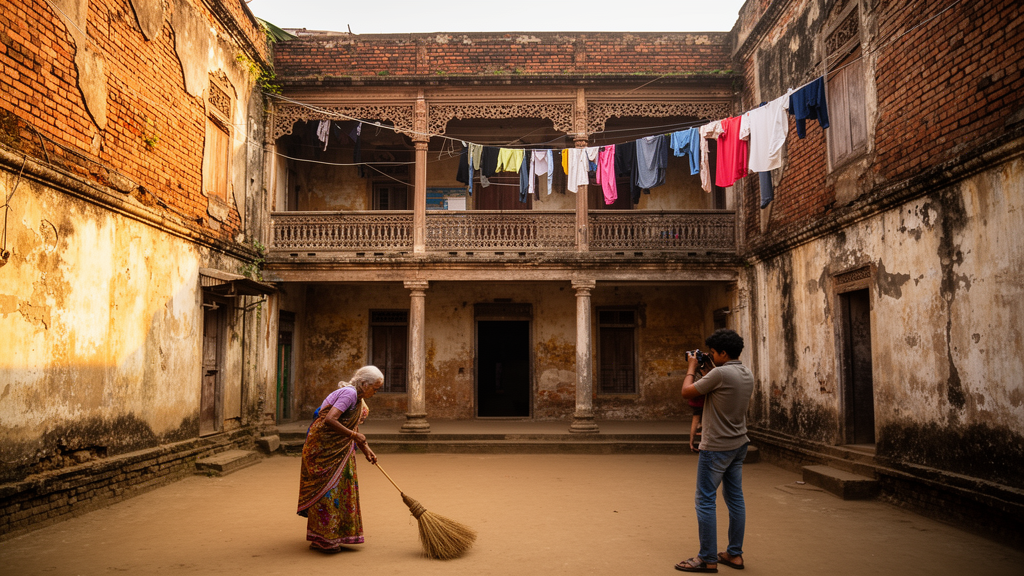
Ordinary houses rarely make the heritage headlines, yet in rapidly urbanising secondary cities they form the bulk of the historic fabric most at risk of disappearing. A new research article published in Built Heritage examines five residential heritage sites in Pabna Municipality, Bangladesh, and asks a deceptively simple question: what actually determines whether an old house can take on a new life? The answer, according to the study, is not architectural beauty alone but an entangled mix of spatial configuration, physical condition, ownership, and governance.
The research team, led by Jannat Ara Ferdousi and Audity Biswas, focused deliberately on non-monumental residential buildings, a category they argue has been largely neglected by adaptive reuse scholarship. Adaptive reuse frameworks, the authors note, have historically privileged monuments, listed buildings, industrial structures, and economically visible assets. Ordinary homes, by contrast, are governed by more unstable and socially embedded conditions, including fragmented occupancy, tenure complexity, affordability pressures, incremental modification, and changing domestic practices, all of which complicate any attempt to assess their reuse potential.
To build the evidence base, the researchers combined field surveys, photographic documentation, archival materials, planning documents, secondary literature, Google Earth satellite imagery, and on-site measurements. These materials were converted into AutoCAD-based drawings used to examine plot structure, plan organisation, spatial hierarchy, circulation, enclosure, material condition, current use, and morphological change. Residential typologies were then identified through comparative analysis of recurring spatial logic and historical-functional continuity, ensuring the classification reflected enduring architectural and socio-spatial patterns rather than temporary functional states.
The five selected cases span three distinct residential typologies: large palatial zamindari compounds, exemplified by Tarash Bhaban; semi-palatial elite merchant residences, represented by Shitlai Jomidar Bari and Lahiri Bari; and compact late colonial to postcolonial urban houses, including Mannan Manzil and the Zaidi Residence. The cases were chosen to cover a spectrum of reuse conditions, from formal functional conversion and informal continuity to latent potential, fragmented underuse, and outright failed institutional conversion. Religious and institutional heritage structures were excluded because their conservation mechanisms, legal protections, and symbolic functions differ substantially from those of residential heritage.
Each case was evaluated against seven criteria using a qualitative-ordinal framework rated High, Medium, or Low: spatial configuration, circulation and access, structural logic and integrity, spatial flexibility, historical function and transformation, contextual exposure, and ownership and governance context. The authors stress that this framework deliberately avoids collapsing criteria into a single score, as quantitative multi-criteria models do. Instead, it preserves the asymmetry between spatial strengths and institutional weaknesses, which proved crucial in a context where reuse potential may be limited less by architectural form than by land rights ambiguity, regulatory weakness, or institutional fragmentation.
The findings reveal a recurring mismatch between historical continuity and administrative support. Tarash Rajbari and Shitlai Bari received High ratings for historical function and transformation, yet ownership and governance context ranged only from Medium to Low across all cases, indicating that heritage significance does not necessarily translate into effective administrative conditions. A strong relationship also emerged between spatial configuration and structural integrity: cases with coherent courtyard-based organisation, clear space hierarchy, and legible circulation generally exhibited greater structural stability and broader reuse opportunities, with Tarash Rajbari and Shitlai Bari as the clearest examples.
Case histories sharpen this pattern. Tarash Rajbari, built in the early eighteenth century by zamindar Rai Bahadur Banamali Roy and declared a protected archaeological site in January 1998, retains strong internal spatial autonomy but remains partially dilapidated amid encroachment and poor maintenance. Shitlai Jomidar Bari, an Indo-European palace built in 1900 with roughly thirty rooms, was purchased in 1948 by the founders of Edrok Ltd. and served as a pharmaceutical manufacturing facility, demonstrating that private custodianship can sustain use and maintenance, though economically driven adaptation may compromise heritage values without regulatory oversight. Lahiri Bari, built between 1870 and 1875, shows informal continuity through ongoing occupation, while Mannan Manzil, built in 1892, suffers fragmented underuse after the original owners migrated to India following the 1965 riots.
The Zaidi Residence illustrates the steepest decline. Originally a private two-storey residence, it gained significance during the 1967 movement against the Pakistani administration and was converted in 1970 into Pabna Law College, later renamed Shahid Aminuddin Law College. Today the study records it as the most advanced case of physical and functional collapse among the five sites: the original compound boundary is no longer legible, vegetation and neglect indicate abandonment, and the facade, entrance, interior, and rear portions survive only as fragmented evidence. The authors argue this shows how the absence of long-term occupancy and maintenance can gradually erode the benefits of earlier institutional adaptation.
The SCOT analysis adds a second interpretive layer, translating category assessments into strengths, constraints, opportunities, and threats. It confirms that courtyard organisation, modular layouts, and robust masonry systems offer substantial reuse capacity, particularly in palatial and semi-palatial residences, but only when supported by coordinated institutional frameworks and conservation-sensitive management. Compact urban houses require more cautious strategies, including stabilisation, improved access, low-intensity reuse, and negotiated ownership arrangements. The authors are explicit that the SCOT does not assess cost, structural safety, or implementation feasibility, so the findings are diagnostic rather than predictive.
The study’s limitations are acknowledged candidly: it covers five sites in a single secondary city, relies on qualitative criteria rather than quantitative scoring, and is constrained by the availability and resolution of archival materials and satellite imagery. The findings are therefore analytically transferable rather than statistically generalisable. Even so, the central conclusion carries weight far beyond Pabna: adaptive reuse in secondary cities should be understood as a governance-mediated process rather than a purely architectural one. Across all five cases, ownership and institutional arrangements emerged as decisive factors that can either enable or neutralise reuse potential, suggesting that municipalities need typology-informed documentation, differentiated reuse guidelines, and organisational mechanisms suited to local capacity if ordinary residential heritage is to survive the pressures of rapid urbanisation.
Subject of Research: Adaptive reuse potential of non-monumental residential heritage buildings in a Bangladeshi secondary city
Article Title: Typology-mediated adaptive reuse of residential heritage: evidence from a secondary city in Bangladesh
Article References: Ferdousi, J. A., Biswas, A., Islam, M. R., Mosharof, M. P., Mim, N. J., Hasan, F., Khalel, E., Faisal, M., Haq, G. B., & Shamim, S. B. (2026). Typology-mediated adaptive reuse of residential heritage: evidence from a secondary city in Bangladesh. Built Heritage, 10(1), Article 57. https://doi.org/10.1186/s43238-026-00299-z
Image Credits: AI Generated
DOI: 10.1186/s43238-026-00299-z
Keywords: adaptive reuse, residential heritage, Pabna, Bangladesh, urban conservation, zamindari compounds, courtyard houses, heritage governance, typology, secondary cities, SCOT analysis, spatial configuration
News Source: Courtney Benton. (October 30, 2026). Courtyards and ownership decide fate of ordinary heritage homes in Bangladesh. Scienmag.



