• HOME
  • NEWS
  • EXPLORE
    • CAREER
      • Companies
      • Jobs
    • EVENTS
    • iGEM
      • News
      • Team
    • PHOTOS
    • VIDEO
    • WIKI
  • BLOG
  • COMMUNITY
    • FACEBOOK
    • INSTAGRAM
    • TWITTER
Sunday, October 25, 2026
BIOENGINEER.ORG
No Result
View All Result
  • Login
  • HOME
  • NEWS
  • EXPLORE
    • CAREER
      • Companies
      • Jobs
        • Lecturer
        • PhD Studentship
        • Postdoc
        • Research Assistant
    • EVENTS
    • iGEM
      • News
      • Team
    • PHOTOS
    • VIDEO
    • WIKI
  • BLOG
  • COMMUNITY
    • FACEBOOK
    • INSTAGRAM
    • TWITTER
No Result
View All Result
Bioengineer.org
No Result
View All Result
Home NEWS Science News Health

Cost, Distance and Shortages Block Nuclear Medicine Access in Nigerian Study

by
October 25, 2026
in Health
Reading Time: 2 mins read
0
Cost, Distance and Shortages Block Nuclear Medicine Access in Nigerian Study

Cost, Distance and Shortages Block Nuclear Medicine Access in Nigerian Study

Share on FacebookShare on TwitterShare on LinkedinShare on RedditShare on Telegram

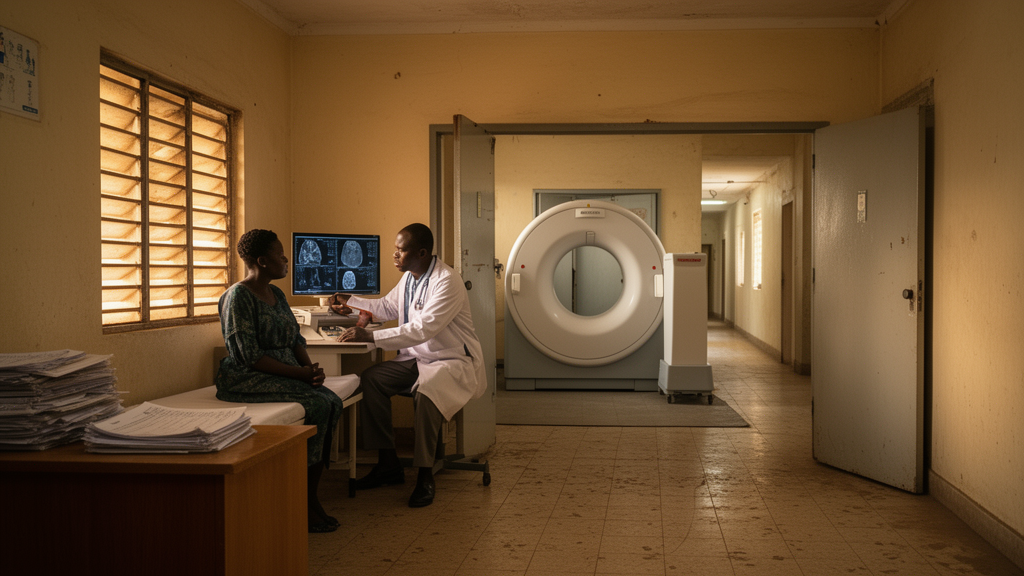
Patients seeking nuclear medicine services at University College Hospital (UCH) in Ibadan, Nigeria, face severe obstacles rooted in money, geography and scarce service capacity, according to a qualitative study published in BMC Health Services Research. The research, led by Aderonke Omotayo Aliu with Akintunde Orunmuyi and Ayodele Samuel Jegede, examined the barriers and facilitators affecting patient access to the advanced diagnostic and therapeutic technologies that nuclear medicine offers for cancer and other non-communicable diseases, which remain limited in Nigeria and concentrated in urban centers.

The team adopted a descriptive phenomenological qualitative design, using Max Weber’s Social Action Theory as its theoretical framework. The evidence base combined 36 in-depth interviews with patients, 16 case studies, and 11 key informant interviews with healthcare providers and administrators, all analysed thematically with MaxQDA software. From these accounts, three major barriers emerged. Financial constraints proved overwhelming: patients reported paying between ₦80,000 and ₦750,000 for radioiodine therapy alone, excluding accommodation, transportation and subsistence costs. Geographic accessibility posed a second challenge, as patients had to travel long distances from across Nigeria because the services are concentrated in Ibadan. Third, limited service availability, including shortages of radiopharmaceuticals and equipment, further constrained access.

Against these barriers, one facilitator stood out. Social support networks, particularly family and community contributions, emerged as the primary mechanism enabling patients to overcome financial barriers through collective resource mobilisation. The authors conclude that patient access to nuclear medicine services at UCH is severely constrained by financial, geographic and systemic barriers, and that there may be heavy reliance on informal social support networks in reaching care. As a qualitative, single-center study drawing on patients and providers at one hospital in southwestern Nigeria, the findings describe the lived experience of access at that site rather than measuring access nationwide.

The policy implications the researchers draw are direct. They argue that interventions should prioritise expanding health insurance coverage for cancer care, expanding nuclear medicine services, and strengthening healthcare financing systems, so that access to these technologies does not rest so heavily on what families and communities can mobilise together.

Subject of Research: Barriers and facilitators to patient access to nuclear medicine services in Ibadan, Nigeria

Article Title: Social science perspective on barriers and facilitators to patient access to nuclear medicine services in Ibadan, Nigeria: a qualitative study

Article References: Aliu, A. O., Orunmuyi, A., & Jegede, A. S. (2026). Social science perspective on barriers and facilitators to patient access to nuclear medicine services in Ibadan, Nigeria: a qualitative study. BMC Health Services Research. https://doi.org/10.1186/s12913-026-15879-z

Image Credits: AI Generated

DOI: 10.1186/s12913-026-15879-z

Keywords: nuclear medicine, Nigeria, qualitative study, radioiodine therapy, out-of-pocket payments, social support networks, health financing, cancer care, radiopharmaceutical shortages, University College Hospital Ibadan, health access, health policy

News Source: Ophelia Keating. (October 25, 2026). Cost, Distance and Shortages Block Nuclear Medicine Access in Nigerian Study. Scienmag.


Tags: cancer carehealth accesshealth financingHealth PolicyNigerianuclear medicineout-of-pocket paymentsqualitative studyradioiodine therapyradiopharmaceutical shortagessocial support networksUniversity College Hospital Ibadan
Share12Tweet7Share2ShareShareShare1

Related Posts

Invisible wounds: Faroese breast cancer survivors describe life after treatment

Invisible wounds: Faroese breast cancer survivors describe life after treatment

October 25, 2026
Virtual Reality Rehabilitation Eases Neck Pain in Meta-Analysis of 11 Trials

Virtual Reality Rehabilitation Eases Neck Pain in Meta-Analysis of 11 Trials

October 25, 2026

Medical AI: are Osler’s principles lost in translation?

October 25, 2026

iPSC retinal pigment epithelium advances context-specific toxicity testing

October 25, 2026

POPULAR NEWS

  • Invisible wounds: Faroese breast cancer survivors describe life after treatment

    Invisible wounds: Faroese breast cancer survivors describe life after treatment

    29 shares
    Share 12 Tweet 7
  • Virtual Reality Rehabilitation Eases Neck Pain in Meta-Analysis of 11 Trials

    29 shares
    Share 12 Tweet 7
  • Genetically Higher Bone Mineral Density Linked to Lumbar Spinal Stenosis Risk

    29 shares
    Share 12 Tweet 7
  • Blocking a Protein-Cleaving Enzyme Extends Lifespan and Health in Aging Mice

    29 shares
    Share 12 Tweet 7

About

We bring you the latest biotechnology news from best research centers and universities around the world. Check our website.

Follow us

Recent News

Invisible wounds: Faroese breast cancer survivors describe life after treatment

Virtual Reality Rehabilitation Eases Neck Pain in Meta-Analysis of 11 Trials

Genetically Higher Bone Mineral Density Linked to Lumbar Spinal Stenosis Risk

Subscribe to Blog via Email

Enter your email address to subscribe to this blog and receive notifications of new posts by email.

Join 85 other subscribers
  • Contact Us

Bioengineer.org © Copyright 2023 All Rights Reserved.

Welcome Back!

Login to your account below

Forgotten Password?

Retrieve your password

Please enter your username or email address to reset your password.

Log In
No Result
View All Result
  • Homepages
    • Home Page 1
    • Home Page 2
  • News
  • National
  • Business
  • Health
  • Lifestyle
  • Science

Bioengineer.org © Copyright 2023 All Rights Reserved.