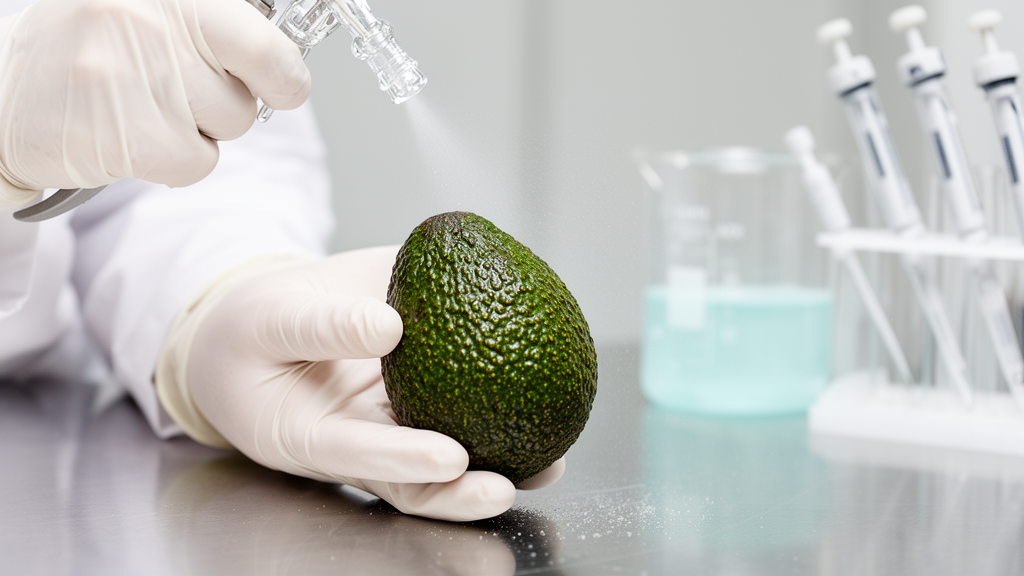
Researchers at the National Research Center and Cairo University in Egypt developed a bio-nanocomposite edible coating that significantly improved the storage life of Hass avocado fruit during cold storage. The study, published in Food Safety and Risk, investigated the effects of combining chitosan, Arabic gum, and copper oxide nanoparticles on the physical, biochemical, and enzymatic properties of avocados. By testing various concentrations of copper oxide nanoparticles, the team determined that the coating formulation with the highest nanoparticle content provided the most effective preservation of fruit quality over a 75-day period.
The motivation for this research stems from the limited shelf life of avocados, which are prone to rapid postharvest decay due to high respiration rates and ethylene production. Postharvest losses not only reduce economic value but also contribute to environmental impact, as wasted food results in significant carbon dioxide emissions. Edible coatings offer a sustainable alternative to plastic packaging by creating a semi-permeable barrier that modifies the internal atmosphere of the fruit, thereby reducing moisture loss and oxidative stress.
The study utilized chitosan and Arabic gum as the primary biopolymer matrix. Chitosan is a biodegradable, biocompatible polymer with known antimicrobial properties, while Arabic gum is a water-soluble polysaccharide derived from the Acacia tree. To enhance the mechanical and barrier properties of these biopolymers, the researchers incorporated copper oxide nanoparticles, which have been approved by the Food and Drug Administration for their antimicrobial activity and high specific surface area. The nanoparticles were synthesized using the sol-gel method and characterized using transmission electron microscopy, which revealed spherical particles with a size range of 8 to 15 nanometers.
Four distinct coating formulations were prepared to evaluate the impact of nanoparticle concentration. The formulations, designated F1 through F4, contained 0%, 0.5%, 1%, and 2% copper oxide nanoparticles by weight relative to the chitosan content, respectively. A control group of uncoated fruits was also included for comparison. The coatings were applied by immersing the avocados in the solution for five minutes, followed by air-drying at 25 degrees Celsius. The fruits were then stored at 7 degrees Celsius with 90% relative humidity for up to 75 days, with quality assessments recorded every 15 days.
Characterization of the coating films revealed that the incorporation of copper oxide nanoparticles improved thermal stability and oxygen barrier properties. The oxygen transmission rate decreased significantly in the films containing nanoparticles, with the F4 formulation showing the lowest rate at 13 cc/m2.day, compared to 25.8 cc/m2.day for the blend without nanoparticles. This reduction suggests that the nanoparticles create a more tortuous path for gas diffusion, effectively limiting the exchange of oxygen and carbon dioxide.
During the 75-day storage period, the physical quality of the avocados was monitored through measurements of weight loss, firmness, decay, and respiration rate. The uncoated control fruits exhibited a gradual increase in weight loss and a decrease in firmness, consistent with natural ripening and senescence. In contrast, the coated fruits showed significantly reduced weight loss and maintained higher firmness levels. The F4 coating, containing the highest concentration of copper oxide nanoparticles, produced the lowest significant percentage of fruit weight loss and the highest firmness at the end of the storage period.
The incidence of fruit decay was also significantly lower in the coated groups compared to the control. The bio-nanocomposite coatings F3 and F4 demonstrated the lowest decay percentages, suggesting that the antimicrobial properties of the copper oxide nanoparticles effectively inhibited pathogen growth. The respiration rate of the avocados was similarly affected, with the coated fruits showing lower respiration rates than the control. The F3 and F4 formulations were particularly effective in reducing respiration, which is a key driver of postharvest deterioration in climacteric fruits like avocados.
Chemical quality parameters, including titratable acidity, ascorbic acid content, and total soluble solids, were also evaluated. The coated fruits maintained higher levels of titratable acidity and ascorbic acid compared to the control, indicating a slower rate of nutrient degradation. The total soluble solids content, which typically increases as starch converts to sugar during ripening, was lower in the coated fruits, suggesting a delay in the ripening process. The skin color of the avocados was also preserved, with the coated fruits retaining higher lightness and yellowness values and lower redness values, indicating a delay in the development of the dark skin associated with ripening.
Enzymatic analysis provided further insight into the mechanisms of preservation. The activity of antioxidant enzymes, including catalase and peroxidase, was significantly higher in the coated fruits, particularly in the F4 group. Conversely, the activity of polyphenol oxidase, an enzyme associated with browning, and the level of malondialdehyde, a marker of lipid peroxidation, were lower in the coated fruits. This suggests that the copper oxide nanoparticles activated the fruit’s inherent defense mechanisms, thereby reducing oxidative stress and preserving fruit quality.
The study concludes that the bio-nanocomposite coating based on chitosan, Arabic gum, and copper oxide nanoparticles is an effective strategy for extending the shelf life of Hass avocados. The formulation with 2% copper oxide nanoparticles provided the best overall preservation of physical, chemical, and enzymatic quality during cold storage. This approach offers a sustainable and functional alternative to conventional packaging methods, potentially reducing postharvest losses and environmental impact. The findings highlight the potential of integrating nanoparticles into biopolymer coatings to enhance their protective properties for fresh produce.
Beyond assessing postharvest preservation, the researchers conducted detailed spectroscopic and structural analyses to confirm the synthesis and purity of the engineered copper oxide nanoparticles. Using a sol-gel method, the team reacted copper chloride hexahydrate with glacial acetic acid and neutralized the heated mixture with sodium hydroxide until reaching a neutral pH, marked by an immediate black precipitation. While transmission electron microscopy showed spherical particles measuring 8 to 15 nanometers with most under 10 nanometers, dynamic light scattering recorded a larger hydrodynamic diameter of approximately 20 nanometers. This discrepancy reflected Brownian motion, the surrounding solvation layer, and minor particle aggregation. X-ray diffraction patterns revealed distinctive peaks at 32.2, 38.4, 48.7, 51.2, and 72.6 degrees, verifying the monoclinic crystalline geometry of copper oxide. Furthermore, ultraviolet-visible spectrophotometry registered a characteristic absorption peak at 292 nanometers, confirming successful nanoparticle fabrication.
The microscopic structure and blending procedures of the protective matrices also clarified why composite coatings outperformed single-polymer films. To prepare the matrices, a two percent chitosan solution dissolved in dilute acetic acid was blended with an aqueous four percent Arabic gum solution before adding glycerol plasticizer and designated nanoparticle masses of 0.01, 0.02, or 0.04 grams. Under scanning electron microscopy, standalone Arabic gum films exhibited an irregular, rough, and granular texture containing channels that facilitate water vapor passage, whereas pure chitosan films showed relatively smooth surfaces. Combining both polysaccharides in the F1 blend produced a visibly smoother morphology, attributed to intermolecular hydrogen bonding between functional groups. When fortified with nanoparticles in the F4 formulation, the matrix displayed a uniform granular texture without agglomeration, which energy-dispersive X-ray spectroscopy confirmed as a balanced elemental distribution of carbon, nitrogen, oxygen, and 6.26 weight percent copper.
Thermal analysis further explained how structural bonding within the bio-nanocomposites bolstered physical resilience against degradation. Thermogravimetric curves showed an initial 9 to 15 percent mass loss commencing around 120 degrees Celsius caused by evaporating moisture, followed by extensive thermal decomposition between 180 and 450 degrees Celsius, where depolymerization and polysaccharide cleavage eliminated 45 to 65 percent of sample weight. Differential scanning calorimetry revealed that adding copper oxide nanoparticles restricted polymer chain mobility, shifting the glass transition temperature upward from approximately 95 degrees Celsius in unfortified F1 to 98 degrees in F2, 105 degrees in F3, and 110 degrees in F4. Melting endotherms similarly stabilized between 235 and 245 degrees Celsius across all formulations, while secondary degradation transitions emerged between 290 and 310 degrees Celsius. By interacting with hydroxyl and amine groups, the nanofillers restricted chain motion, delayed volatilization, and elevated residual mass.
Comparative barrier measurements highlighted notable differences between individual biopolymers and formulated composite barriers. Standalone Arabic gum exhibited poor barrier qualities, recording the highest water vapor transmission rate of 2,675 grams per square meter per day and an oxygen transmission rate of 35 cubic centimeters per square meter per day. Conversely, pure chitosan proved substantially less permeable, registering 1,862 grams and 8.9 cubic centimeters, respectively. Combining both biopolymers in F1 cut water vapor transmission to 1,060 grams. Introducing copper oxide nanoparticles altered vapor transmission nonlinearly: values initially rose to 1,388 grams in F2 due to minor matrix disruption, but dropped back to 1,131 grams in F4 as a denser nanoparticle network created tortuous diffusion pathways.
The trials also maintained rigorous postharvest controls and revealed nuanced biochemical trajectories across storage. Harvested in October 2023 from an orchard in Egypt’s El Behera Governorate, each group utilized 60 avocados averaging 150 grams with 20 percent dry matter and initial firmness of 29 kilograms per cubic centimeter. Evaluations across three replicates in a two-way factorial design analyzed variance at a five percent significance threshold. The authors stated that experimental data remain available upon request.
Subject of Research: Postharvest preservation of Hass avocado using chitosan, Arabic gum, and copper oxide nanoparticle edible coatings
Article Title: Bio-nanocomposite edible coating based on chitosan, Arabic gum and CuO-NPs to improve the storage life of Hass avocado
Article References: Abd El-Aziz, M. E., Rashedy, A. A., Youssef, A. M., Abd-Allah, A. S. E., Hamed, H. H., Hamed, S. R., & Abd El-Moniem, E. A. A. (2025). Bio-nanocomposite edible coating based on chitosan, Arabic gum and CuO-NPs to improve the storage life of Hass avocado. Food Safety and Risk, 13(1), Article 5. https://doi.org/10.1186/s40550-025-00123-z
Image Credits: AI Generated
DOI: 10.1186/s40550-025-00123-z
Keywords: Hass avocado, edible coatings, copper oxide nanoparticles, chitosan, Arabic gum, postharvest preservation, cold storage, fruit quality, biopolymers, nanocomposites, respiration rate, fruit decay, antioxidant enzymes, lipid peroxidation, oxygen transmission rate, thermal stability, crystallinity index, food safety, sustainable packaging, postharvest physiology
News Source: Alan Morgan. (November 13, 2026). Copper Nanoparticle Coatings Extend Hass Avocado Storage Life. Scienmag.