• HOME
  • NEWS
  • EXPLORE
    • CAREER
      • Companies
      • Jobs
    • EVENTS
    • iGEM
      • News
      • Team
    • PHOTOS
    • VIDEO
    • WIKI
  • BLOG
  • COMMUNITY
    • FACEBOOK
    • INSTAGRAM
    • TWITTER
Wednesday, February 11, 2026
BIOENGINEER.ORG
No Result
View All Result
  • Login
  • HOME
  • NEWS
  • EXPLORE
    • CAREER
      • Companies
      • Jobs
        • Lecturer
        • PhD Studentship
        • Postdoc
        • Research Assistant
    • EVENTS
    • iGEM
      • News
      • Team
    • PHOTOS
    • VIDEO
    • WIKI
  • BLOG
  • COMMUNITY
    • FACEBOOK
    • INSTAGRAM
    • TWITTER
  • HOME
  • NEWS
  • EXPLORE
    • CAREER
      • Companies
      • Jobs
        • Lecturer
        • PhD Studentship
        • Postdoc
        • Research Assistant
    • EVENTS
    • iGEM
      • News
      • Team
    • PHOTOS
    • VIDEO
    • WIKI
  • BLOG
  • COMMUNITY
    • FACEBOOK
    • INSTAGRAM
    • TWITTER
No Result
View All Result
Bioengineer.org
No Result
View All Result
Home NEWS Science News Chemistry

Cooling speeds up electrons in bacterial nanowires

Bioengineer by Bioengineer
May 11, 2022
in Chemistry
Reading Time: 3 mins read
0
Bacteria producing nanowires made up of cytochrome OmcS
Share on FacebookShare on TwitterShare on LinkedinShare on RedditShare on Telegram

The ground beneath our feet and under the ocean floor is an electrically-charged grid, the product of bacteria “exhaling” excess electrons through tiny nanowires in an environment lacking oxygen. Yale University researchers have been studying ways to enhance this natural electrical conductivity within nanowires 1/100,000th width of a human hair by identifying the mechanism of electron flow. In a new study published in Science advances, a team led by graduate student Peter Dahl with Nikhil Malvankar, Assistant Professor of Molecular Biophysics and Biochemistry in the Microbial Sciences Institute, and Victor Batista, Professor of Chemistry, found that nanowires move 10 billion electrons per second without any energy loss. These studies explain the remarkable capacity of these bacteria to send electrons over long distances. The team also found that cooling the environment around the nanowires of Geobacter from room temperature to freezing increases conductivity 300-fold. This is very surprising because cooling typically freezes electrons and slows them down in organic materials. By combining experiments with theory, the researchers found that the colder temperatures restructure hydrogen bonds and flatten heme proteins within nanowires, thus enhancing the flow of electricity. Leveraging this naturally occurring electrical grid might one day lead to the development of living and self-repairing electrical circuits, new sources of electricity and bioremediation strategies.  
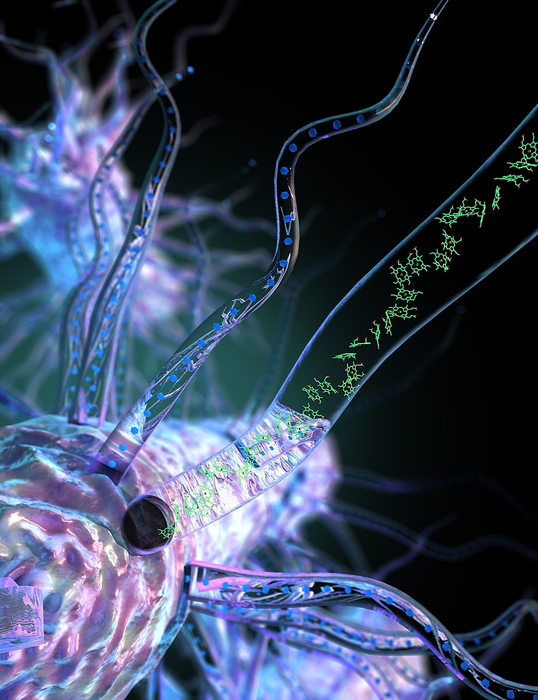
Bacteria producing nanowires made up of cytochrome OmcS

Credit: Ella Maru Studio

The ground beneath our feet and under the ocean floor is an electrically-charged grid, the product of bacteria “exhaling” excess electrons through tiny nanowires in an environment lacking oxygen. Yale University researchers have been studying ways to enhance this natural electrical conductivity within nanowires 1/100,000th width of a human hair by identifying the mechanism of electron flow. In a new study published in Science advances, a team led by graduate student Peter Dahl with Nikhil Malvankar, Assistant Professor of Molecular Biophysics and Biochemistry in the Microbial Sciences Institute, and Victor Batista, Professor of Chemistry, found that nanowires move 10 billion electrons per second without any energy loss. These studies explain the remarkable capacity of these bacteria to send electrons over long distances. The team also found that cooling the environment around the nanowires of Geobacter from room temperature to freezing increases conductivity 300-fold. This is very surprising because cooling typically freezes electrons and slows them down in organic materials. By combining experiments with theory, the researchers found that the colder temperatures restructure hydrogen bonds and flatten heme proteins within nanowires, thus enhancing the flow of electricity. Leveraging this naturally occurring electrical grid might one day lead to the development of living and self-repairing electrical circuits, new sources of electricity and bioremediation strategies.  

Other authors include Sophia Yi, Yangqi Gu, Catharine Shipps, Jens Neu, Patrick O’Brien, Dennis Vu and Sibel Ebru Yalcin from the Malvankar Lab, and Atanu Acharya, Uriel Morzan, and Subhajyoti Chaudhuri from the Batista Lab.


Journal

Science Advances

DOI

10.1126/sciadv.abm7193

Article Title

300-fold conductivity increase in microbial cytochrome nanowires due to temperature-induced restructuring of hydrogen bonding networks

Article Publication Date

11-May-2022

Share12Tweet8Share2ShareShareShare2

Related Posts

Dense 1D Ionic Wire Arrays Pave the Way for Enhanced Osmotic Energy Conversion

Dense 1D Ionic Wire Arrays Pave the Way for Enhanced Osmotic Energy Conversion

February 11, 2026
UCLA Scientists Revitalize Thomas Edison’s Overlooked Battery Design

UCLA Scientists Revitalize Thomas Edison’s Overlooked Battery Design

February 10, 2026

The Surprising Physics Behind Your Body’s Electrical System Keeping It Flowing Smoothly

February 10, 2026

Rising Levels of New Synthetic Opioids Detected in Wastewater During Major New Orleans Events

February 10, 2026

POPULAR NEWS

  • Digital Privacy: Health Data Control in Incarceration

    64 shares
    Share 26 Tweet 16
  • Mapping Tertiary Lymphoid Structures for Kidney Cancer Biomarkers

    51 shares
    Share 20 Tweet 13
  • Spider Webs, Dust Reveal Indoor Pollutant Exposure

    47 shares
    Share 19 Tweet 12
  • Breakthrough in RNA Research Accelerates Medical Innovations Timeline

    53 shares
    Share 21 Tweet 13

About

We bring you the latest biotechnology news from best research centers and universities around the world. Check our website.

Follow us

Recent News

Introducing DAYU3D: A Cutting-Edge Tool for Thermal-Hydraulic Design and Accident Analysis in HTGRs

Excessive Saturated Fat Intake Could Be More Detrimental Than High Refined Carbohydrate Consumption, Study Finds

Shandong Agricultural University Scientists Redefine Green Revolution Genes to Enhance Wheat Yield Potential

Subscribe to Blog via Email

Enter your email address to subscribe to this blog and receive notifications of new posts by email.

Join 74 other subscribers
  • Contact Us

Bioengineer.org © Copyright 2023 All Rights Reserved.

Welcome Back!

Login to your account below

Forgotten Password?

Retrieve your password

Please enter your username or email address to reset your password.

Log In
No Result
View All Result
  • Homepages
    • Home Page 1
    • Home Page 2
  • News
  • National
  • Business
  • Health
  • Lifestyle
  • Science

Bioengineer.org © Copyright 2023 All Rights Reserved.