• HOME
  • NEWS
  • EXPLORE
    • CAREER
      • Companies
      • Jobs
    • EVENTS
    • iGEM
      • News
      • Team
    • PHOTOS
    • VIDEO
    • WIKI
  • BLOG
  • COMMUNITY
    • FACEBOOK
    • INSTAGRAM
    • TWITTER
Monday, November 9, 2026
BIOENGINEER.ORG
No Result
View All Result
  • Login
  • HOME
  • NEWS
  • EXPLORE
    • CAREER
      • Companies
      • Jobs
        • Lecturer
        • PhD Studentship
        • Postdoc
        • Research Assistant
    • EVENTS
    • iGEM
      • News
      • Team
    • PHOTOS
    • VIDEO
    • WIKI
  • BLOG
  • COMMUNITY
    • FACEBOOK
    • INSTAGRAM
    • TWITTER
No Result
View All Result
Bioengineer.org
No Result
View All Result
Home NEWS Science News Health

Cooled radiofrequency ablation eases SI joint back pain in 153-patient study

by
October 30, 2026
in Health
Reading Time: 2 mins read
0
Cooled radiofrequency ablation eases SI joint back pain in 153-patient study

Cooled radiofrequency ablation eases SI joint back pain in 153-patient study

Share on FacebookShare on TwitterShare on LinkedinShare on RedditShare on Telegram

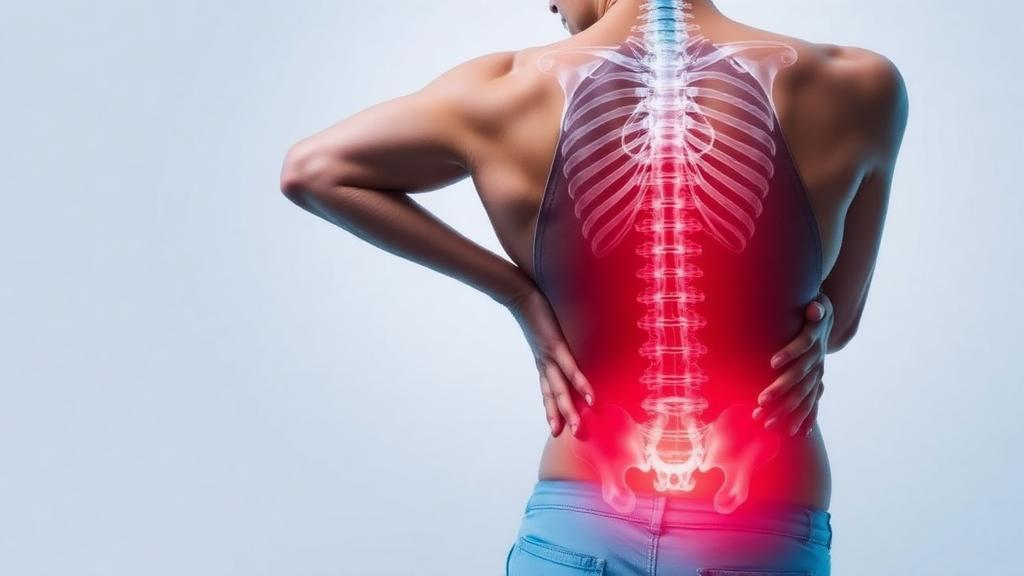
People with chronic low back pain driven by the sacroiliac joint may gain lasting relief from cooled radiofrequency ablation, according to a prospective cohort study of 153 patients published in BMC Musculoskeletal Disorders. The procedure, which uses cooled radiofrequency energy to create larger lesions along the lateral branch nerves that supply the sacroiliac joint, was associated with statistically significant improvements in pain, physical function, and health-related quality of life that persisted for a full year after treatment.

Researchers assessed participants at baseline, six weeks, three months, six months, and one year using a battery of patient-reported measures: the Visual Analogue Scale for back and leg pain, the Oswestry Disability Index, the Roland–Morris Disability Questionnaire, and the EQ-5D-5L index and health VAS. Back pain scores fell from a mean of 6.72 at baseline to 5.36 at six weeks and 4.54 at one year. Leg pain improved more markedly, dropping from 6.22 to 4.02 at six weeks and 3.54 at one year, with both trajectories reaching statistical significance.

Function followed a similar course. The Oswestry Disability Index, a standard measure of how back pain limits daily life, declined from 48.8 at baseline to 37.7 at six months and 37.2 at one year. The Roland–Morris Disability Questionnaire improved from 13.69 at baseline to 10.06 at six weeks and 8.9 at one year. On the EQ-5D-5L health VAS, patients rated their overall health at 50.25 before the procedure and 67.15 a year afterward. Domain-level responses suggested the Pain/Discomfort domain improved most, falling from 3.61 at baseline to 2.86 at one year, while the Usual Activities domain improved from 3.28 to 2.66.

The study also reported a favorable safety profile, with no serious procedure-related complications observed. The authors conclude that cooled radiofrequency ablation was associated with clinically meaningful multidimensional improvements, supporting its role as a promising minimally invasive option for well-selected patients with sacroiliac joint–mediated pain. As a single-arm prospective cohort study without a control group, the findings reflect associations in treated patients rather than proof of efficacy over sham or alternative treatments, and longer-term follow-up in broader populations would help confirm the durability of these outcomes.

Subject of Research: Cooled radiofrequency ablation outcomes for sacroiliac joint–mediated low back pain

Article Title: Short- and long-term outcomes of cooled radiofrequency ablation for SI joint–mediated low back pain: a prospective study of 153 patients using multidimensional patient-reported measures

Article References: Li, W., Petersingham, G., Jamali, H., & Rao, P. J. (2026). Short- and long-term outcomes of cooled radiofrequency ablation for SI joint–mediated low back pain: a prospective study of 153 patients using multidimensional patient-reported measures. BMC Musculoskeletal Disorders. https://doi.org/10.1186/s12891-026-10196-2

Image Credits: AI Generated

DOI: 10.1186/s12891-026-10196-2

Keywords: cooled radiofrequency ablation, sacroiliac joint, low back pain, chronic pain, patient-reported outcomes, Oswestry Disability Index, EQ-5D-5L, minimally invasive treatment, prospective cohort study, pain management, Short-, long-term

News Source: Ophelia Keating. (October 30, 2026). Cooled radiofrequency ablation eases SI joint back pain in 153-patient study. Scienmag.


Tags: Chronic paincooled radiofrequency ablationEQ-5D-5LLong-termlow back painminimally invasive treatmentOswestry Disability IndexPain ManagementPatient-reported outcomesprospective cohort studysacroiliac jointshort
Share12Tweet7Share2ShareShareShare1

Related Posts

Protein Sources Linked to Cognitive Health in Review of Older Adults

Protein Sources Linked to Cognitive Health in Review of Older Adults

November 9, 2026
Somali children with severe neck infections show vacuum therapy linked to deeper disease

Somali children with severe neck infections show vacuum therapy linked to deeper disease

November 9, 2026

Research report: Balloon flotation pacing for severe post-reperfusion syndrome in adult liver transplantation: a four-patient case series

November 9, 2026

Sarcopenia Linked to Greater Relative Leg Muscle Mass Deficit in Hospitalized Older Adults

November 9, 2026

POPULAR NEWS

  • Ulinastatin Shortens ICU Stays in Post-Traumatic Sepsis Trial

    Ulinastatin Shortens ICU Stays in Post-Traumatic Sepsis Trial

    29 shares
    Share 12 Tweet 7
  • Simulation Study Reveals Bias in Self-Controlled Drug Safety Designs

    29 shares
    Share 12 Tweet 7
  • Metabolic Enzyme and Protein Lactylation Markers Signal Laryngeal Cancer Progression

    29 shares
    Share 12 Tweet 7
  • Marine Compounds Identified as Potential GLP-1 Receptor Agonists

    29 shares
    Share 12 Tweet 7

About

We bring you the latest biotechnology news from best research centers and universities around the world. Check our website.

Follow us

Recent News

Researchers Characterize Gold Nanoparticles Stabilized by Cysteine Derivative

Protein Sources Linked to Cognitive Health in Review of Older Adults

AI Framework Detects Hidden Grouting Defects and Maps 3D Porosity in Prefabricated Building Sleeves

Subscribe to Blog via Email

Enter your email address to subscribe to this blog and receive notifications of new posts by email.

Join 86 other subscribers
  • Contact Us

Bioengineer.org © Copyright 2023 All Rights Reserved.

Welcome Back!

Login to your account below

Forgotten Password?

Retrieve your password

Please enter your username or email address to reset your password.

Log In
No Result
View All Result
  • Homepages
    • Home Page 1
    • Home Page 2
  • News
  • National
  • Business
  • Health
  • Lifestyle
  • Science

Bioengineer.org © Copyright 2023 All Rights Reserved.