• HOME
  • NEWS
  • EXPLORE
    • CAREER
      • Companies
      • Jobs
    • EVENTS
    • iGEM
      • News
      • Team
    • PHOTOS
    • VIDEO
    • WIKI
  • BLOG
  • COMMUNITY
    • FACEBOOK
    • INSTAGRAM
    • TWITTER
Friday, May 1, 2026
BIOENGINEER.ORG
No Result
View All Result
  • Login
  • HOME
  • NEWS
  • EXPLORE
    • CAREER
      • Companies
      • Jobs
        • Lecturer
        • PhD Studentship
        • Postdoc
        • Research Assistant
    • EVENTS
    • iGEM
      • News
      • Team
    • PHOTOS
    • VIDEO
    • WIKI
  • BLOG
  • COMMUNITY
    • FACEBOOK
    • INSTAGRAM
    • TWITTER
  • HOME
  • NEWS
  • EXPLORE
    • CAREER
      • Companies
      • Jobs
        • Lecturer
        • PhD Studentship
        • Postdoc
        • Research Assistant
    • EVENTS
    • iGEM
      • News
      • Team
    • PHOTOS
    • VIDEO
    • WIKI
  • BLOG
  • COMMUNITY
    • FACEBOOK
    • INSTAGRAM
    • TWITTER
No Result
View All Result
Bioengineer.org
No Result
View All Result
Home NEWS Science News Biology

Converging ocean currents bring floating life and garbage together

Bioengineer by Bioengineer
May 4, 2023
in Biology
Reading Time: 3 mins read
0
Converging ocean currents bring floating life and garbage together
Share on FacebookShare on TwitterShare on LinkedinShare on RedditShare on Telegram

The North Pacific “Garbage Patch” is home to an abundance of floating sea creatures, as well as the plastic waste it has become famous for, according to a study by Rebecca Helm from Georgetown University, US, and colleagues, publishing April 27th in the open access journal PLOS Biology.
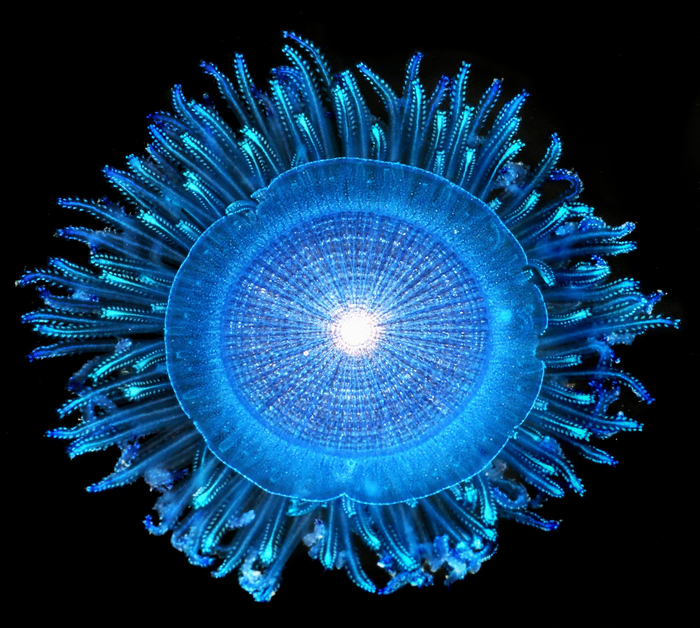
Converging ocean currents bring floating life and garbage together

Credit: Denis Riek, The Global Ocean Surface Ecosystem Alliance (GO-SEA) Field Guide (CC-BY 4.0, https://creativecommons.org/licenses/by/4.0/)

The North Pacific “Garbage Patch” is home to an abundance of floating sea creatures, as well as the plastic waste it has become famous for, according to a study by Rebecca Helm from Georgetown University, US, and colleagues, publishing April 27th in the open access journal PLOS Biology.

There are five main oceanic gyres — vortexes of water where multiple ocean currents meet — of which the North Pacific Subtropical Gyre (NPSG) is the largest. It is also known as the North Pacific “Garbage Patch”, because converging ocean currents have concentrated large amounts of plastic waste there. However, many floating ocean creatures, such as jellyfish (cnidarians), snails, barnacles and crustaceans, may also use currents to travel through the open ocean, but little is known about where they live.

The researchers took advantage of an 80-day long-distance swim through the NPSG in 2019 to investigate these floating lifeforms, by asking the sailing crew accompanying the expedition to collect samples of surface sea creatures and plastic waste. The expedition’s route was planned using computer simulations of ocean surface currents to predict areas with high concentrations of marine debris. The team collected daily samples of floating life and waste in the eastern NPSG, and found that sea creatures were more abundant inside the NPSG than on the periphery. The occurrence of plastic waste was positively correlated with the abundance of three groups of floating sea creatures: sea rafts (Velella sp), blue sea buttons (Porpita sp) and violet sea snails (Janthina sp).

The same ocean currents that concentrate plastic waste at oceanic gyres may be vital to the life cycles of floating marine organisms, by bringing them together to feed and mate, the authors say. However, human activities could negatively impact these high sea meeting grounds and the wildlife that depends on them.

Helm adds, “The ‘garbage patch’ is more than just a garbage patch. It is an ecosystem, not because of the plastic, but in spite of it.”

#####

In your coverage, please use this URL to provide access to the freely available paper in PLOS Biology: http://journals.plos.org/plosbiology/article?id=10.1371/journal.pbio.3001646

Citation: Chong F, Spencer M, Maximenko N, Hafner J, McWhirter AC, Helm RR (2023) High concentrations of floating neustonic life in the plastic-rich North Pacific Garbage Patch. PLoS Biol 21(4): e3001646. https://doi.org/10.1371/journal.pbio.3001646

Author Countries: United Kingdom, United States

Funding: see manuscript


Journal

PLoS Biology

DOI

10.1371/journal.pbio.3001646

Method of Research

Observational study

Subject of Research

Animals

COI Statement

Competing interests: The authors have declared that no competing interests exist.

Share12Tweet8Share2ShareShareShare2

Related Posts

Successful Birth Following Uterus Transplant Marks Medical Breakthrough — Biology

Successful Birth Following Uterus Transplant Marks Medical Breakthrough

May 1, 2026
Cockatoos Mimic Peers to Sharpen Adaptation Skills, Study Finds — Biology

Cockatoos Mimic Peers to Sharpen Adaptation Skills, Study Finds

May 1, 2026

Gut Microbe’s Sulfated Bile Acid Eases Pediatric Sepsis

May 1, 2026

AI Breakthrough Solves One of Science’s Most Challenging Math Problems

May 1, 2026

POPULAR NEWS

  • Research Indicates Potential Connection Between Prenatal Medication Exposure and Elevated Autism Risk

    831 shares
    Share 332 Tweet 208
  • New Study Reveals Plants Can Detect the Sound of Rain

    713 shares
    Share 285 Tweet 178
  • Scientists Investigate Possible Connection Between COVID-19 and Increased Lung Cancer Risk

    67 shares
    Share 27 Tweet 17
  • Salmonella Haem Blocks Macrophages, Boosts Infection

    61 shares
    Share 24 Tweet 15

About

We bring you the latest biotechnology news from best research centers and universities around the world. Check our website.

Follow us

Recent News

Mount Sinai Introduces the Marilyn Monroe Mental Health Initiative for Arts Professionals

Innovative Nanoparticle Technique Advances Early Detection of Pancreatic Cancer

New Study Reveals Dangers of Driving After Consuming Cannabis Edibles and Alcohol

Subscribe to Blog via Email

Enter your email address to subscribe to this blog and receive notifications of new posts by email.

Join 82 other subscribers
  • Contact Us

Bioengineer.org © Copyright 2023 All Rights Reserved.

Welcome Back!

Login to your account below

Forgotten Password?

Retrieve your password

Please enter your username or email address to reset your password.

Log In
No Result
View All Result
  • Homepages
    • Home Page 1
    • Home Page 2
  • News
  • National
  • Business
  • Health
  • Lifestyle
  • Science

Bioengineer.org © Copyright 2023 All Rights Reserved.