Millions of people with type 2 diabetes inject a long-acting form of insulin every day, trusting that their basal insulin regimen is keeping their blood glucose safely in range between medical visits. But a new real-world study from Spain suggests that far more is going wrong beneath the surface than routine clinic measurements ever reveal. Using two full weeks of blinded continuous glucose monitoring in ordinary primary care practices, researchers found that hypoglycemia — the dangerous dips in blood sugar that can cause confusion, falls, seizures, and, in severe cases, death — is dramatically more common among these patients than previously appreciated, while at the same time most patients still spend large portions of their day with glucose levels well above recommended targets.
The research, known as the GPDetect study, was published in the journal Diabetes Therapy as a prospective, multicenter, observational investigation conducted entirely within Spanish primary care settings. Its central aim was deceptively simple: to determine, with objective data rather than patient recall, what proportion of adults with type 2 diabetes treated with basal insulin-supported oral therapy — specifically insulin glargine 100 units per milliliter, one of the most widely used basal insulins in the world — experience clinically significant hypoglycemia in their daily lives. The answer, according to the study’s findings, was sobering: 38.5% of participants spent more than 1% of their monitored time below 70 mg/dL, the threshold that international consensus guidelines define as level 1 hypoglycemia, and 12.9% crossed into the more dangerous level 2 territory of glucose below 54 mg/dL.
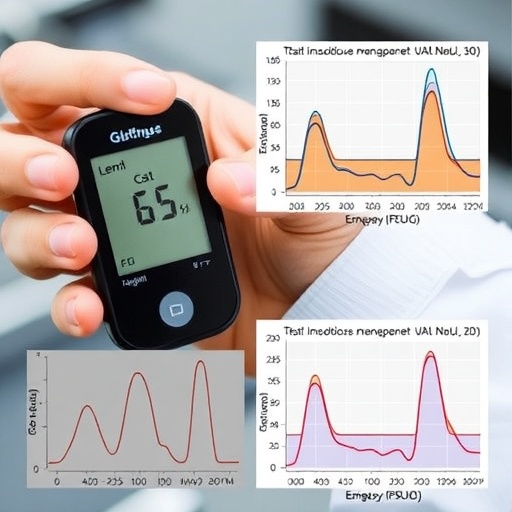
What makes these numbers striking is the methodological shift they represent. For decades, the true prevalence of hypoglycemia in routine diabetes care has been notoriously difficult to pin down. Patients frequently fail to recognize hypoglycemic episodes, particularly during sleep, and a substantial fraction never report them to their physicians even when they occur while awake. Symptoms such as fatigue, irritability, or mild dizziness are easily attributed to other causes, and severe episodes that impair cognition may leave no memory at all. Blinded continuous glucose monitoring sidesteps these problems entirely. In the GPDetect study, participants wore the FreeStyle Libre Pro iQ system for 14 consecutive days — an interstitial glucose sensor that records readings continuously without displaying them to the wearer, ensuring that the data captured reflects unaltered, real-world glycemic behavior rather than glucose patterns modified by the knowledge of being watched.
The technology behind modern CGM is worth understanding, because it is what allows a study like this to exist. A tiny flexible filament inserted just beneath the skin measures glucose in the interstitial fluid — the fluid surrounding the body’s cells — rather than in blood directly. Because glucose diffuses from capillaries into interstitial space with a lag of roughly five to fifteen minutes, interstitial readings track blood glucose closely but not instantaneously, a nuance that becomes clinically important during rapidly falling glucose levels. The sensor used in GPDetect recorded glucose values at frequent intervals around the clock, producing more than a thousand data points per participant over the two-week window. From this dense stream of measurements, researchers calculated the metrics that now form the backbone of modern glycemic assessment: time in range (TIR, the percentage of time with glucose between 70 and 180 mg/dL), time below range (TBR), time above range, and the coefficient of variation, a measure of glycemic variability.
Those metrics told a story of a double burden. On the hypoglycemic side, more than a third of patients spent excessive time below 70 mg/dL — a proportion far higher than what would be estimated from symptomatic reports alone in routine practice. Yet simultaneously, glycemic control overall remained poor. Only 55.9% of participants achieved the internationally recommended target of spending at least 70% of their day within the 70–180 mg/dL range. Hyperglycemia dominated the glucose profiles: on average, 28.7% of the day was spent above 250 mg/dL, a level associated over time with elevated risks of microvascular complications affecting the eyes, kidneys, and nerves, and a further 25% of the day fell between 181 and 250 mg/dL. In other words, many patients in the study were living simultaneously at risk from both extremes — their glucose curves swinging across a range that neither patients nor their physicians had fully mapped.
The study also probed how comorbid conditions shape these glycemic patterns, and here the findings carry important implications for personalized treatment. Participants with chronic kidney disease displayed distinctly different glycemic profiles, a finding consistent with the well-established physiology of renal impairment: the kidneys play a significant role in insulin clearance and in gluconeogenesis, so declining renal function prolongs insulin action and reduces the body’s capacity to produce glucose during fasting periods, heightening vulnerability to hypoglycemia. Conversely, patients treated with sodium–glucose cotransporter 2 inhibitors — the oral antidiabetic class that blocks glucose reabsorption in the kidney — showed lower mean glucose and lower scores on the enhanced hypoglycemia severity metric used in the analysis, suggesting these agents may help improve glycemic profiles without adding hypoglycemic risk, since their mechanism is insulin-independent.
Cognitive status emerged as another critical variable. Participants with cognitive impairment, assessed using the Mini-Mental State Examination, showed patterns that raise particular concern. Cognitive impairment and hypoglycemia are locked in a potentially vicious relationship: the aging brain, and even more the diabetic brain, is exquisitely sensitive to glucose deprivation, and recurrent hypoglycemic episodes are associated with accelerated cognitive decline. At the same time, patients with impaired cognition are less able to perceive hypoglycemia symptoms, less able to take corrective action such as consuming fast-acting carbohydrates, and less able to manage their insulin regimens accurately. For this vulnerable population, the study’s findings argue that objective CGM screening in primary care may be one of the few reliable ways to detect dangerous glycemic excursions before they translate into falls, emergency visits, or stepwise cognitive deterioration.
The clinical context in which these patients were treated makes the findings especially relevant for everyday practice. Insulin glargine 100 U/mL is a basal insulin analog engineered to release slowly and steadily over roughly 24 hours, mimicking the liver’s constant background glucose output and designed to minimize peak-related hypoglycemia. Basal insulin-supported oral therapy — in which patients continue taking oral agents such as metformin while adding a once-daily basal injection — is the most common way type 2 diabetes is intensified when oral therapy alone no longer suffices, and the vast majority of these patients are managed not by endocrinologists but by primary care physicians. Yet precisely because these patients are often seen infrequently, with glycemic assessment based on intermittent fasting glucose checks and HbA1c measurements, the day-to-day reality of their glucose control remains largely invisible. HbA1c, the standard three-month average of glycemia, is mathematically blind to hypoglycemia: a patient whose glucose oscillates wildly between 50 and 300 mg/dL can register a deceptively reassuring average.
This is the gap that GPDetect was designed to illuminate, and its results suggest that the gap is wide indeed. The authors frame their findings as a call to reconsider how basal insulin therapy is monitored and titrated in primary care. International consensus documents, including the metrics endorsed by major diabetes organizations, now recommend that time below range be treated as a core quality metric — with less than 4% of time below 70 mg/dL and less than 1% below 54 mg/dL as targets. By those standards, the roughly 38.5% of patients exceeding even the milder threshold represents a substantial population whose basal insulin doses may warrant downward adjustment, whose timing of injection might be reconsidered, or whose oral regimen could be optimized to flatten the glucose curve. The finding that SGLT2 inhibitor users fared better points toward one potential avenue, while the association of chronic kidney disease and cognitive impairment with adverse patterns identifies patients in whom clinicians may need heightened vigilance and lower glycemic targets.
The broader significance of the study lies in its demonstration that the tools for this kind of surveillance already exist, are increasingly affordable, and can be deployed at scale in ordinary primary care. Professional, blinded CGM — worn briefly and analyzed retrospectively — offers a low-cost diagnostic window that does not require patients to alter behavior or learn new technology, making it feasible as a periodic screening instrument much like an ambulatory blood pressure monitor. As sensor technology continues to proliferate and guidelines increasingly incorporate time-in-range metrics alongside HbA1c, studies like GPDetect provide the real-world baseline data against which future interventions — structured titration protocols, technology-assisted dose adjustment, and early switch to modern drug classes — can be measured. For now, the message for the millions on basal insulin is clear: what you cannot see in your glucose control can still hurt you, and two weeks under a small sensor may reveal risks that years of routine checkups have missed.
Subject of Research: People
Subject of Research: Medicine
Article Title: Continuous Glucose Monitoring Reveals Glycemic Patterns in Insulin-Treated Type 2 Diabetes
Article References: Bellido, V., Cebrián, A., Morales, C., de las Hazas, A. S., Soto-Gonzalez, A., Morer-Liñan, C., Borrachero, J. M., Cuatrecases, G., García, E. L., López-Fernández, J., Lozano-García, S., Bayón, Á. M., Niño-Azcarate, C. M., Laclaustra, O., & Fuentealba, P. (2026). Glycemic Patterns Assessed by Continuous Glucose Monitoring in People with Type 2 Diabetes Treated with Insulin Glargine 100 U/mL in Primary Care: The GPDetect Study. Diabetes Therapy, 17(9), 1385-1405. https://doi.org/10.1007/s13300-026-01903-2
Image Credits: AI Generated
DOI: 10.1007/s13300-026-01903-2
Keywords: basal insulin therapy in type 2 diabetes, glucose monitoring in primary healthcare, glycemic pattern analysis in primary care, glycemic variability in type 2 diabetes, hypoglycemia in insulin-treated diabetes, impact of continuous glucose monitoring on diabetes care, insulin glargine blood sugar control, insulin treatment safety in diabetes, patterns of hyperglycemia in type 2 diabetes, real-world diabetes management study, risks of hypoglycemia in insulin therapy, Type 2 diabetes continuous glucose monitoring
Cite Scienmag News
APA
MLA
Chicago
Ophelia Keating. (September 9, 2026). Continuous Glucose Monitoring Reveals Glycemic Patterns in Insulin-Treated Type 2 Diabetes. Scienmag. https://scienmag.com/continuous-glucose-monitoring-reveals-glycemic-patterns-in-insulin-treated-type-2-diabetes/
Ophelia Keating. “Continuous Glucose Monitoring Reveals Glycemic Patterns in Insulin-Treated Type 2 Diabetes.” Scienmag, 9 September 2026, https://scienmag.com/continuous-glucose-monitoring-reveals-glycemic-patterns-in-insulin-treated-type-2-diabetes/. Accessed 9 September 2026.
Ophelia Keating. “Continuous Glucose Monitoring Reveals Glycemic Patterns in Insulin-Treated Type 2 Diabetes.” Scienmag. September 9, 2026. https://scienmag.com/continuous-glucose-monitoring-reveals-glycemic-patterns-in-insulin-treated-type-2-diabetes/
Copy citation
Download RIS
Tags: basal insulin therapy in type 2 diabetesdaytime and nocturnal blood sugar patternsdetection of undetected hypoglycemiaglucose level fluctuations in primary careglucose monitoring in primary healthcareglycemic pattern analysis in primary careglycemic patterns in insulin-treated patientsglycemic variability in type 2 diabeteshypoglycemia in insulin-treated diabeteshypoglycemia risk in type 2 diabetesimpact of continuous glucose monitoring on diabetes careimpact of insulin therapy on glycemic controlinsulin glargine blood sugar controlinsulin glargine effectiveness and safetyinsulin treatment safety in diabeteslong-term glucose monitoring in type 2 diabetespatterns of hyperglycemia in type 2 diabetesprimary care management of diabetesreal-world diabetes management studyreal-world glucose monitoring studyrisks of hypoglycemia in insulin therapyType 2 diabetes continuous glucose monitoring