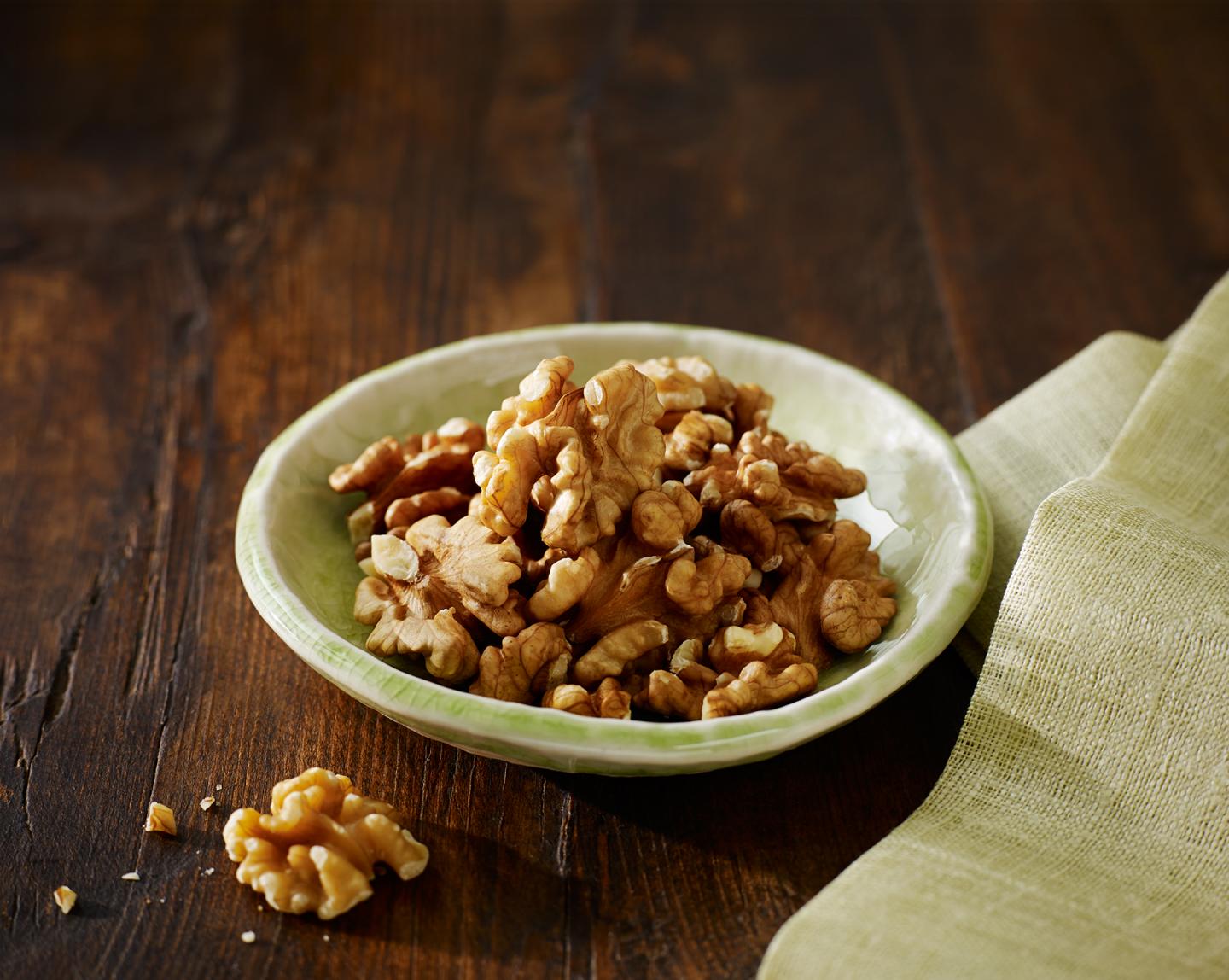
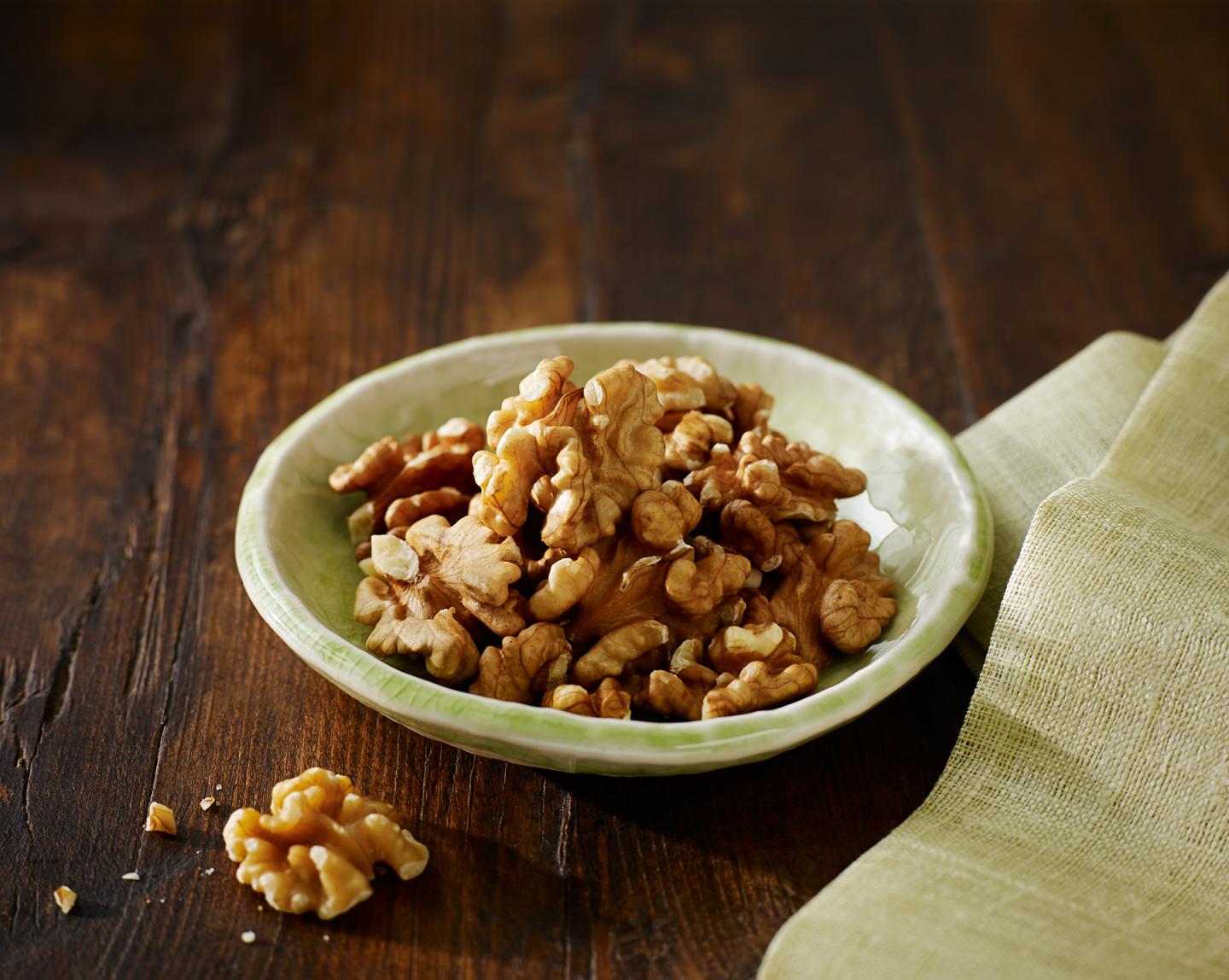
Credit: California Walnut Commission
FOLSOM, Calif., July 25, 2017 – Conclusions from a new animal study suggest that walnut consumption may be beneficial for digestive health by increasing the amount of good probiotic-type bacteria in the gut.(1) Walnuts do this by acting as a prebiotic to help nourish and grow the bacteria that keeps the digestive system healthy. In this study, researchers found that a diet with walnuts led to an overall significant increase in the diversity of bacteria in the gut.
"Gut health is an emerging research area, but we are seeing that greater bacterial diversity may be associated with better health outcomes, whereas low diversity has been linked to conditions such as obesity and inflammatory bowel disease," said lead researcher Lauri Byerley, PhD, RD Associate Professor of Research in the Physiology Department at Louisiana State University.
In this animal study, rats were randomly assigned to a diet containing ground walnuts, equivalent to about 2 ounces (1/2 cup) per day in humans, or a diet without walnuts for up to 10 weeks. Calorie and nutrient intake was similar between the two diet groups. Compared to those that did not consume walnuts, rats that ate a walnut-enriched diet saw an increase in beneficial bacteria including, Lactobacillus, Roseburia, and Ruminococcaceae.
"The health of the gut is related to overall health in the rest of the body," said Byerley. "Our study is showing that walnuts change the gut, which could help explain why there are other positive health benefits to eating walnuts such as heart and brain health."
The bioactive components of walnuts may be contributing factors in providing these health benefits. Walnuts are the only nut that contain a significant amount of alpha-linolenic acid (ALA), the plant-based omega-3 fatty acid (2.5 grams per one ounce) and also offer protein (4 grams per one ounce) and fiber (2 grams per one ounce). Animal research is provided as background and used to inform future studies needed to understand the effect on humans. The results of this study shed light on a new way that walnuts may be beneficial for health, but more research is needed to understand how these outcomes translate to humans.
###
Funding for this research was provided by the California Walnut Commission (CWC) and American Institute for Cancer Research. The CWC has supported health-related research on walnuts for more than 25 years. While the CWC does provide funds and/or walnuts for various projects, the actual studies are conducted independently by researchers who design the experiments, interpret the results and write the manuscripts.
About California Walnut Commission
The California Walnut Commission, established in 1987, is funded by mandatory assessments of the growers. The Commission is an agency of the State of California that works in concurrence with the Secretary of the California Department of Food and Agriculture (CDFA). The CWC is mainly involved in health research and export market development activities. For more industry information, health research and recipe ideas, visit http://www.walnuts.org.
Non-Discrimination Statement
The California Walnut Commission (CWC) prohibits discrimination in all programs and activities on the basis of race, color, national origin, age, disability, sex, marital status, familial status, parental status, religion, sexual orientation, genetic information, political beliefs, reprisal, or because all or part of an individual's income is derived from any public assistance programs. Persons with disabilities who require alternative means for communication of program information (Braille, large print, audiotape, etc.) should contact the CWC offices at (916) 922-5888. To file a complaint of discrimination, write to USDA, Director, Office of Civil Rights, 1400 Independence Avenue, S.W., Washington, D.C. 20250-9410, or call (800) 795-3272 (voice) or (202) 720-6382 (TDD). CWC is an equal opportunity employer and provider.
The California Walnut Commission offices are located at 101 Parkshore Dr., Ste. #250, Folsom, CA 95630
Reference:
1 Byerley LO, Samuelson D, Blanchard E, et al. Changes in the Gut Microbial Communities Following Addition of Walnuts to the Diet. J Nutr Biochem. 2017. DOI: https://doi.org/10.1016/j.jnutbio.2017.07.001.
Media Contact
Anna Hazen
[email protected]
206-268-2297