• HOME
  • NEWS
  • EXPLORE
    • CAREER
      • Companies
      • Jobs
    • EVENTS
    • iGEM
      • News
      • Team
    • PHOTOS
    • VIDEO
    • WIKI
  • BLOG
  • COMMUNITY
    • FACEBOOK
    • INSTAGRAM
    • TWITTER
Wednesday, July 8, 2026
BIOENGINEER.ORG
No Result
View All Result
  • Login
  • HOME
  • NEWS
  • EXPLORE
    • CAREER
      • Companies
      • Jobs
        • Lecturer
        • PhD Studentship
        • Postdoc
        • Research Assistant
    • EVENTS
    • iGEM
      • News
      • Team
    • PHOTOS
    • VIDEO
    • WIKI
  • BLOG
  • COMMUNITY
    • FACEBOOK
    • INSTAGRAM
    • TWITTER
  • HOME
  • NEWS
  • EXPLORE
    • CAREER
      • Companies
      • Jobs
        • Lecturer
        • PhD Studentship
        • Postdoc
        • Research Assistant
    • EVENTS
    • iGEM
      • News
      • Team
    • PHOTOS
    • VIDEO
    • WIKI
  • BLOG
  • COMMUNITY
    • FACEBOOK
    • INSTAGRAM
    • TWITTER
No Result
View All Result
Bioengineer.org
No Result
View All Result
Home NEWS Science News Biology

Conserving biodiverse ‘slow lanes’ in a rapidly changing world

Bioengineer by Bioengineer
June 1, 2020
in Biology
Reading Time: 3 mins read
0
IMAGE
Share on FacebookShare on TwitterShare on LinkedinShare on RedditShare on Telegram

UMass Amherst ecologist and team synthesize climate change refugia science developments to date
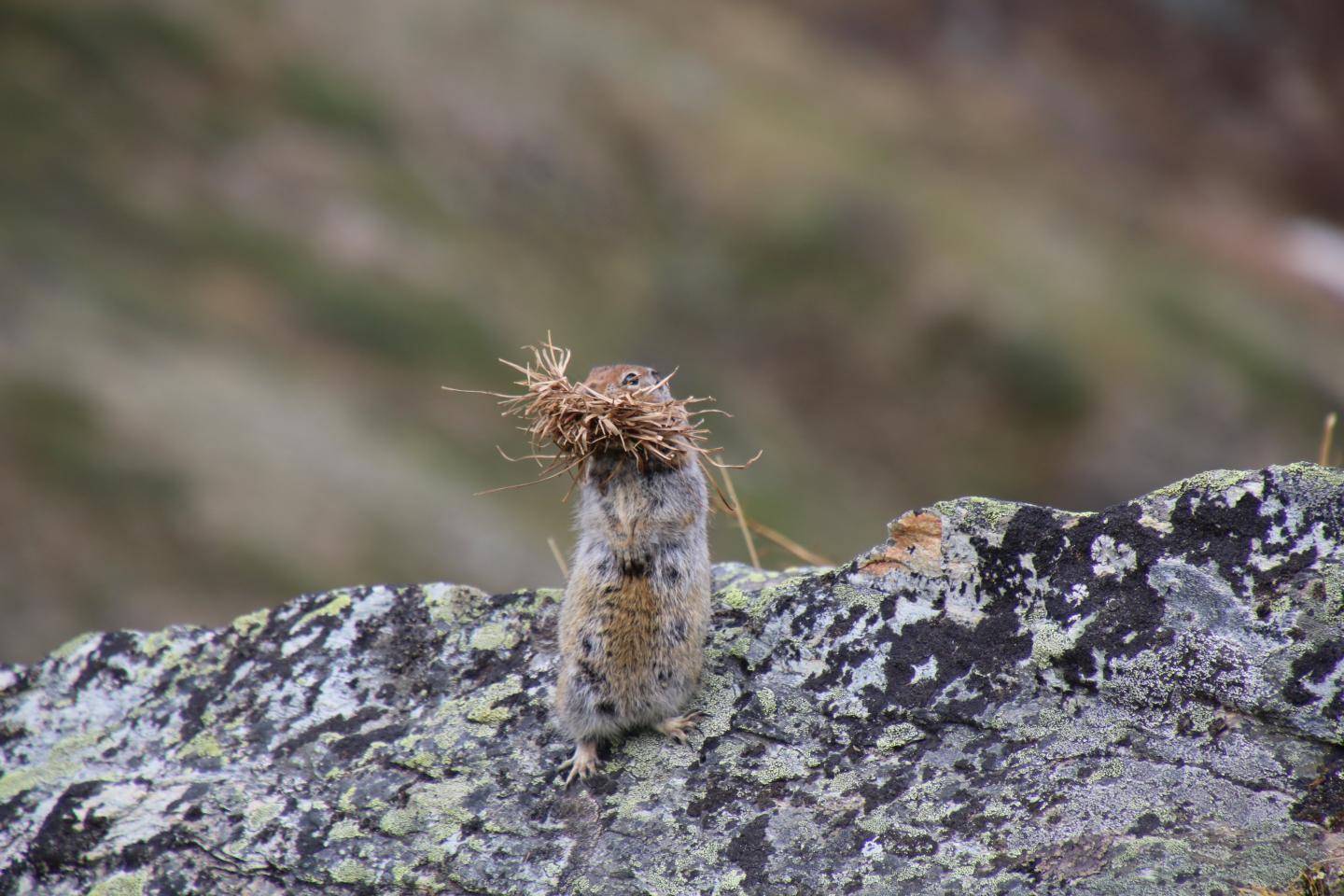
IMAGE

Credit: UMass Amherst/Toni Lyn Morelli

The notion of conserving climate change refugia – areas relatively buffered from current climate change that shelter valued wildlife, ecosystems, and other natural resources – is only about 10 years old, but the field has matured enough that a leading journal has prepared a special issue on the topic.

It offers “a look back at how far we’ve come and a view forward to the work that is still needed,” says editor Toni Lyn Morelli, a research ecologist at the U.S. Geological Survey’s Northeast Climate Adaptation Center (NE CASC) at the University of Massachusetts Amherst. “I believe this is the first time there has been a special issue devoted to climate-change refugia” she adds, “so we think it will spur conservation and innovation.”

The 100-page issue of Frontiers in Ecology and the Environment organized by Morelli features a new synthesis of developments in refugia science, plus eight articles by experts in the field and an editorial by paleo-ecologist and director of the Southwest and South Central Climate Adaptation Science Centers, Stephen Jackson.

Jackson says, “As in the case of the Covid-19 pandemic, our best hope is to render the climate change wave low and slow, reducing impacts and buying time to study, prepare, understand and adapt.” The introductory article outlines how climate-change refugia can serve as a “slow lane” to protect native species and ecosystems from the negative effects of climate change and as safe havens for biodiversity and ecosystems in the longer term.

The special issue covers a variety of topics, including refugia related to fish and wildlife, rivers and wetlands, mountains and forests – plus conceptual advances and examples of the successful application of refugia maps and data to management questions.

Author Diana Stralberg at the University of Alberta, Canada, points out, “We are trying to find those areas where things are moving a bit more slowly in terms of climate change and where plants and animals have more opportunity to survive, whether they are already living there or could shift into those areas.”

Morelli is a founding member of the Refugia Research Coalition (RRC), a network of scientists, resource managers, and others associated with the Climate Adaptation Science Centers, particularly the Northwest CASC hosted by the University of Washington and its Northeast counterpart hosted by UMass Amherst. (hyperlink: climaterefugia.org).

“We formed the RRC about five years ago to share ideas, hold workshops, engage with practitioners, and share our science,” Morelli recalls. The group’s diversity of research, expertise and approaches gave her the idea for a special issue.

“We wanted to synthesize the science around climate change refugia over the last 10 years, to identify gaps and opportunities for the future, and highlight successes in applications that have been developed for management and conservation,” she notes. “I was extremely fortunate to work with such a dynamic and accomplished group of co-authors,” Morelli adds.

###

Support for the special issue came from the Northeast, Northwest, and National Climate Adaptation Science Centers of the U.S. Geological Survey.

Media Contact
Janet Lathrop
[email protected]

Original Source

https://www.umass.edu/newsoffice/article/conserving-biodiverse-%E2%80%98slow-lanes%E2%80%99-rapidly

Related Journal Article

http://dx.doi.org/10.1002/fee.2065

Tags: BiodiversityBiologyClimate ChangeEcology/EnvironmentPopulation Biology
Share12Tweet8Share2ShareShareShare2

Related Posts

Here are a few rewritten headlines for a science magazine post, each with a slightly different tone: Intriguing & poetic: How do organs sculpt themselves? Sea stars hold the secret Direct & research-focused: Sea stars reveal the hidden rules of organ formation Metaphorical & inviting: Tiny architects beneath the waves: What sea stars teach us about building organs Short & punchy: Star-shaped clues to how our organs take shape Question-led: Could a sea star show us how organs form? Elegant & feature-style: The body’s blueprint, glimpsed in a sea star’s arm

July 6, 2026
Bacteria evolve faster with unconventional gene copies — Biology

Bacteria evolve faster with unconventional gene copies

July 6, 2026

Neighbours rewire soil feedback via root microbiome shifts

July 6, 2026

Evolution-Inspired Biosensors Revolutionize Lipid Tracking in Real Time

July 2, 2026
Please login to join discussion

POPULAR NEWS

  • Detection of EDCs in Breast Milk and Infant Urine Up to Six Months Highlights Early Exposure Risks

    77 shares
    Share 31 Tweet 19
  • New Drug Candidate Developed at McMaster Shows Potential for Treating Brain Cancer

    58 shares
    Share 23 Tweet 15
  • Saying Goodbye to PGY-6: Pediatric Fellowship Realities

    103 shares
    Share 41 Tweet 26
  • KTU Researchers Explore Ultrasound’s Role in Enhancing Blood Flow Beyond Diagnostics

    53 shares
    Share 21 Tweet 13

About

We bring you the latest biotechnology news from best research centers and universities around the world. Check our website.

Follow us

Recent News

Flame retardant BDE-209 targets molecularly linked to ulcerative colitis

Ultra-high frequency particle impacts mimic rockbursts to shatter hard rock

Kidney transplant outcomes in older adults studied by German researchers

Subscribe to Blog via Email

Success! An email was just sent to confirm your subscription. Please find the email now and click 'Confirm' to start subscribing.

Join 83 other subscribers
  • Contact Us

Bioengineer.org © Copyright 2023 All Rights Reserved.

Welcome Back!

Login to your account below

Forgotten Password?

Retrieve your password

Please enter your username or email address to reset your password.

Log In
No Result
View All Result
  • Homepages
    • Home Page 1
    • Home Page 2
  • News
  • National
  • Business
  • Health
  • Lifestyle
  • Science

Bioengineer.org © Copyright 2023 All Rights Reserved.