• HOME
  • NEWS
  • EXPLORE
    • CAREER
      • Companies
      • Jobs
    • EVENTS
    • iGEM
      • News
      • Team
    • PHOTOS
    • VIDEO
    • WIKI
  • BLOG
  • COMMUNITY
    • FACEBOOK
    • INSTAGRAM
    • TWITTER
Friday, May 22, 2026
BIOENGINEER.ORG
No Result
View All Result
  • Login
  • HOME
  • NEWS
  • EXPLORE
    • CAREER
      • Companies
      • Jobs
        • Lecturer
        • PhD Studentship
        • Postdoc
        • Research Assistant
    • EVENTS
    • iGEM
      • News
      • Team
    • PHOTOS
    • VIDEO
    • WIKI
  • BLOG
  • COMMUNITY
    • FACEBOOK
    • INSTAGRAM
    • TWITTER
  • HOME
  • NEWS
  • EXPLORE
    • CAREER
      • Companies
      • Jobs
        • Lecturer
        • PhD Studentship
        • Postdoc
        • Research Assistant
    • EVENTS
    • iGEM
      • News
      • Team
    • PHOTOS
    • VIDEO
    • WIKI
  • BLOG
  • COMMUNITY
    • FACEBOOK
    • INSTAGRAM
    • TWITTER
No Result
View All Result
Bioengineer.org
No Result
View All Result
Home NEWS Science News Biology

Conservation’s hidden costs take bite out of benefits

Bioengineer by Bioengineer
December 19, 2019
in Biology
Reading Time: 3 mins read
0
IMAGE
Share on FacebookShare on TwitterShare on LinkedinShare on RedditShare on Telegram

IMAGE

Credit: Hongbo Yang, Michigan State University


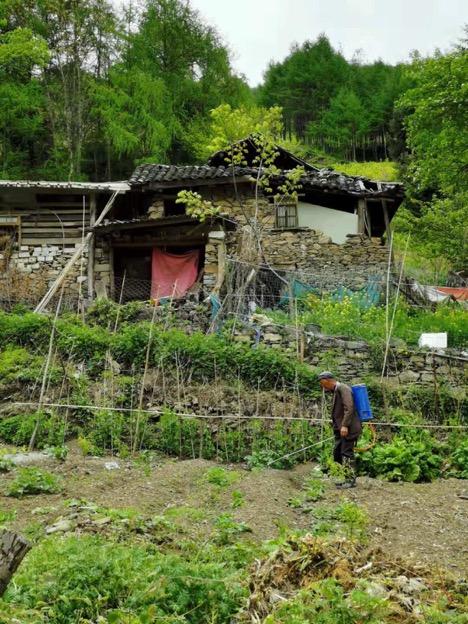
Returning croplands to forests is a sustainability gold standard to mitigate climate change impacts and promote conservation. That is, new research shows, unless you’re a poor farmer.

“Those sweeping conservation efforts in returning cropland to vegetated land might have done so with an until-now hidden consequence: it increased the wildlife damage to remaining cropland and thus caused unintended cost that whittled away at the program’s compensation for farmers,” said Hongbo Yang, lead author in a recent paper in the Ecological Economics journal.

Yang, who recently earned a PhD at from Michigan State University (MSU) and is currently a research associate at the Smithsonian Conservation Biology Institute and his colleagues analyzed the reforestation achieved via programs that encourage, and compensate, farmers to convert their cropland to forests via China’s enormous Grain-to-Green Program (GTGP).

The research found that even as newly regrown forests are sucking up greenhouse gases, they’re also sheltering critters bent on destroying crops. And while farmers were compensated, they ultimately took a financial beating. Not only did they find that converting a portion of their fields brought wildlife that much closer to their remaining crops, but they were also now farming smaller areas and thus recognizing lower yields.

Bottom line: The costs of conservation were being borne by poor people and those impacts have been slow to be revealed.

“Conservation policies only can endure, and be declared successful, when both nature and humans thrive,” said Jianguo “Jack” Liu, senior author and Rachel Carson Chair in Sustainability at MSU’S Center for Systems Integration and Sustainability. “Many of these trade-offs and inequities are difficult to spot unless you take a very broad, deep look at the situation, yet these balances are crucial to success.”

As a first attempt to quantify this previously hidden cost, the authors estimated the impact of converting cropland to forest under the GTGP, which is one of the world’s largest conservation programs, on crop raiding in a demonstration site.

They found that GTGP afforestation was responsible for 64% of the crop damage by wildlife on remaining cropland, and that cost was worth 27% of GTGP’s total payment to local farmers. That loss was not anticipated as the policy was designed and was in addition to the known loss of income from farming smaller plots, Yang said.

“The ignorance of this hidden cost might leave local communities under-compensated under the program and exacerbate poverty,” Yang said. “Such problems may ultimately compromise the sustainability of conservation. As losses due to human-wildlife conflicts increase, farmers may increasingly resent conservation efforts.”

###

In addition to Yang and Liu, “Hidden cost of conservation: A demonstration using losses from human-wildlife conflicts under a payments for ecosystem services program” was written by Frank Lupi and Jindong Zhang, both members of MSU-CSIS.

The research was funded by the National Science Foundation, Michigan AgBioResearch, Michigan State University, the National Natural Science Foundation of China and the Key Laboratory of Southwest China Wildlife Resources Conservation, China West Normal University.

Media Contact
Sue Nichols
[email protected]
517-282-1093

Original Source

https://www.canr.msu.edu/news/conservation-costs-bite-benefits

Related Journal Article

http://dx.doi.org/10.1016/j.ecolecon.2019.106462

Tags: BiologyEcology/Environment
Share12Tweet8Share2ShareShareShare2

Related Posts

Early Delivery Improves Outcomes for Mothers and Babies in Hypertensive Pregnancies — Biology

Early Delivery Improves Outcomes for Mothers and Babies in Hypertensive Pregnancies

May 21, 2026
How Atlantic Herring Rewired Their Reproductive Strategy to Thrive in Changing Oceans — Biology

How Atlantic Herring Rewired Their Reproductive Strategy to Thrive in Changing Oceans

May 20, 2026

Study Finds Young Fraser River Chinook Salmon Swimming in Chemical Mixture

May 20, 2026

Thousands of UK Beekeepers Contribute Honey to Advance Environmental Science

May 20, 2026
Please login to join discussion

POPULAR NEWS

  • blank

    New Study Reveals Plants Can Detect the Sound of Rain

    733 shares
    Share 292 Tweet 183
  • ESMO 2025: mRNA COVID Vaccines Enhance Efficacy of Cancer Immunotherapy

    304 shares
    Share 122 Tweet 76
  • Research Indicates Potential Connection Between Prenatal Medication Exposure and Elevated Autism Risk

    846 shares
    Share 338 Tweet 212
  • Breastmilk Balances E. coli and Beneficial Bacteria in Infant Gut Microbiomes

    58 shares
    Share 23 Tweet 15

About

We bring you the latest biotechnology news from best research centers and universities around the world. Check our website.

Follow us

Recent News

Innovative Reusable Brick Walls Revolutionize Construction Industry

Nonlinear Atomic Tunneling Enhanced by Bright Squeezed Vacuum

Label-Free Super-Resolution Imaging of Live Cells

Subscribe to Blog via Email

Success! An email was just sent to confirm your subscription. Please find the email now and click 'Confirm' to start subscribing.

Join 82 other subscribers
  • Contact Us

Bioengineer.org © Copyright 2023 All Rights Reserved.

Welcome Back!

Login to your account below

Forgotten Password?

Retrieve your password

Please enter your username or email address to reset your password.

Log In
No Result
View All Result
  • Homepages
    • Home Page 1
    • Home Page 2
  • News
  • National
  • Business
  • Health
  • Lifestyle
  • Science

Bioengineer.org © Copyright 2023 All Rights Reserved.