• HOME
  • NEWS
  • EXPLORE
    • CAREER
      • Companies
      • Jobs
    • EVENTS
    • iGEM
      • News
      • Team
    • PHOTOS
    • VIDEO
    • WIKI
  • BLOG
  • COMMUNITY
    • FACEBOOK
    • INSTAGRAM
    • TWITTER
Wednesday, January 14, 2026
BIOENGINEER.ORG
No Result
View All Result
  • Login
  • HOME
  • NEWS
  • EXPLORE
    • CAREER
      • Companies
      • Jobs
        • Lecturer
        • PhD Studentship
        • Postdoc
        • Research Assistant
    • EVENTS
    • iGEM
      • News
      • Team
    • PHOTOS
    • VIDEO
    • WIKI
  • BLOG
  • COMMUNITY
    • FACEBOOK
    • INSTAGRAM
    • TWITTER
  • HOME
  • NEWS
  • EXPLORE
    • CAREER
      • Companies
      • Jobs
        • Lecturer
        • PhD Studentship
        • Postdoc
        • Research Assistant
    • EVENTS
    • iGEM
      • News
      • Team
    • PHOTOS
    • VIDEO
    • WIKI
  • BLOG
  • COMMUNITY
    • FACEBOOK
    • INSTAGRAM
    • TWITTER
No Result
View All Result
Bioengineer.org
No Result
View All Result
Home NEWS Science News Biology

Conservationists concerned about illegal hunting and exploitation of porcupines in Indonesia

Bioengineer by Bioengineer
May 10, 2021
in Biology
Reading Time: 2 mins read
0
IMAGE
Share on FacebookShare on TwitterShare on LinkedinShare on RedditShare on Telegram

IMAGE

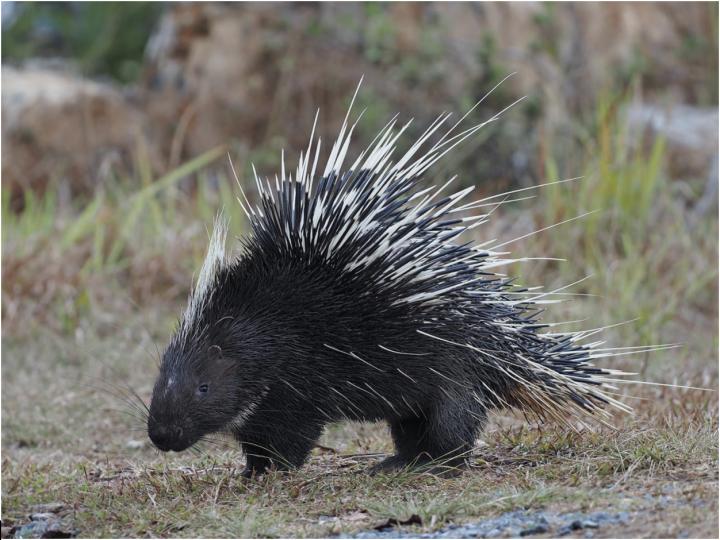
Credit: James Eaton

Porcupines are frequently traded across Asia, and Indonesia, home to five species, is no exception. They are targeted for a number of reasons: their meat as an alternative source of protein, their bezoars consumed as traditional medicine, and their quills used as talismans and for decorative purposes.

A new study examining seizure data of porcupines, their parts and derivatives in Indonesia found a total of 39 incidents from January 2013 to June 2020 involving an estimated 452 porcupines. The research was published in the open-access, peer-reviewed journal Nature Conservation.

There are no harvest quotas for any porcupine species in Indonesia, which makes all hunting and trade in porcupines illegal. Of the five species found in the country, only the Sunda porcupine (Hystrix javanica) is currently protected, with its protected status only introduced in 2018. Interestingly, prior to 2018, the Malayan porcupine (H. brachyura) was the only protected porcupine species in Indonesia, but then it was removed from the updated species protection list and replaced with the Sunda porcupine.

“The reasons for this are unclear, but certainly unwarranted, considering that the Malayan porcupine is the species most frequently identified as confiscated, and one can only assume the reason for its removal is due to its commercial value,” says Lalita Gomez, author of the study and Programme Officer of Monitor Conservation Research Society.

What clearly emerges from this study is that porcupines are being illegally hunted and exploited throughout their range in Indonesia for local subsistence and commercial trade. Porcupines are reportedly in decline in Indonesia, yet there seems to be little control or monitoring on uptake and trade. This is particularly concerning because four of the five porcupine species in Indonesia have a restricted range, and three of them are island endemics – the Sumatran porcupine (H. sumatrae), Sunda porcupine, and Thick-spined porcupine (H. crassispinis).

Illegal hunting and trade of porcupines in Indonesia is facilitated by poor enforcement and legislative weakness, and it is imperative that effective conservation measures are taken sooner rather than later to prevent further depletion of these species.

Gomez recommends that all porcupines be categorised as protected species under Indonesian wildlife laws and listed in Appendix II of the Convention on International Trade in Endangered Species of Wild Fauna and Flora (CITES). This would require any international trade to take place through a supervisory system, which would allow for regulation and make it easier to track and analyse trends, thus providing an early warning system in case wild populations begin to decline.

###

Original source:

Gomez L (2021) The illegal hunting and exploitation of porcupines for meat and medicine in Indonesia. Nature Conservation 43: 109-122. https://doi.org/10.3897/natureconservation.43.62750

Media Contact
Lalita Gomez MSc.
[email protected]

Related Journal Article

http://dx.doi.org/10.3897/natureconservation.43.62750

Tags: BiodiversityBiologyEcology/EnvironmentPopulation BiologyZoology/Veterinary Science
Share12Tweet8Share2ShareShareShare2

Related Posts

Astaxanthin’s Role in Easing Exercise Muscle Damage

Astaxanthin’s Role in Easing Exercise Muscle Damage

January 14, 2026
blank

Impact of Sex on Mortality in Sjögren’s Disease

January 14, 2026

Exploring PDR Gene Family and miRNAs in Wheat

January 14, 2026

Genetic Insights into Circadian Adaptation in Endangered Fish

January 13, 2026
Please login to join discussion

POPULAR NEWS

  • Enhancing Spiritual Care Education in Nursing Programs

    154 shares
    Share 62 Tweet 39
  • PTSD, Depression, Anxiety in Childhood Cancer Survivors, Parents

    147 shares
    Share 59 Tweet 37
  • Robotic Ureteral Reconstruction: A Novel Approach

    73 shares
    Share 29 Tweet 18
  • Study Reveals Lipid Accumulation in ME/CFS Cells

    52 shares
    Share 21 Tweet 13

About

BIOENGINEER.ORG

We bring you the latest biotechnology news from best research centers and universities around the world. Check our website.

Follow us

Recent News

Validating Blenkin Taylor vs London Atlas for Aussie Dental Aging

Astaxanthin’s Role in Easing Exercise Muscle Damage

Understanding Nurses’ Views on Dual-Diagnosis Care in Ghana

Subscribe to Blog via Email

Enter your email address to subscribe to this blog and receive notifications of new posts by email.

Join 71 other subscribers
  • Contact Us

Bioengineer.org © Copyright 2023 All Rights Reserved.

Welcome Back!

Login to your account below

Forgotten Password?

Retrieve your password

Please enter your username or email address to reset your password.

Log In
No Result
View All Result
  • Homepages
    • Home Page 1
    • Home Page 2
  • News
  • National
  • Business
  • Health
  • Lifestyle
  • Science

Bioengineer.org © Copyright 2023 All Rights Reserved.