Anti-oxidative enzymes are important for the longevity of the corpus luteum in lynx
Credit: Iberian lynx Ex-Situ Conservation Programme
Another piece of the puzzle about the longevity of the corpus luteum in lynxes has been uncovered. Scientists at the Leibniz Institute for Zoo and Wildlife Research (Leibniz-IZW) and the Leibniz Institute for Molecular Pharmacology (Leibniz-FMP) discovered that selected anti-oxidative enzymes, especially the enzyme superoxide dismutase (SOD2), may play an important role to maintain the unusual longevity of the corpus luteum in lynxes. It is highly likely that SOD2 not only detoxifies the reactive oxygen radicals in the cells, but also inhibits programmed cell death. The results were recently published in the scientific journal Scientific Reports of the Nature Group.
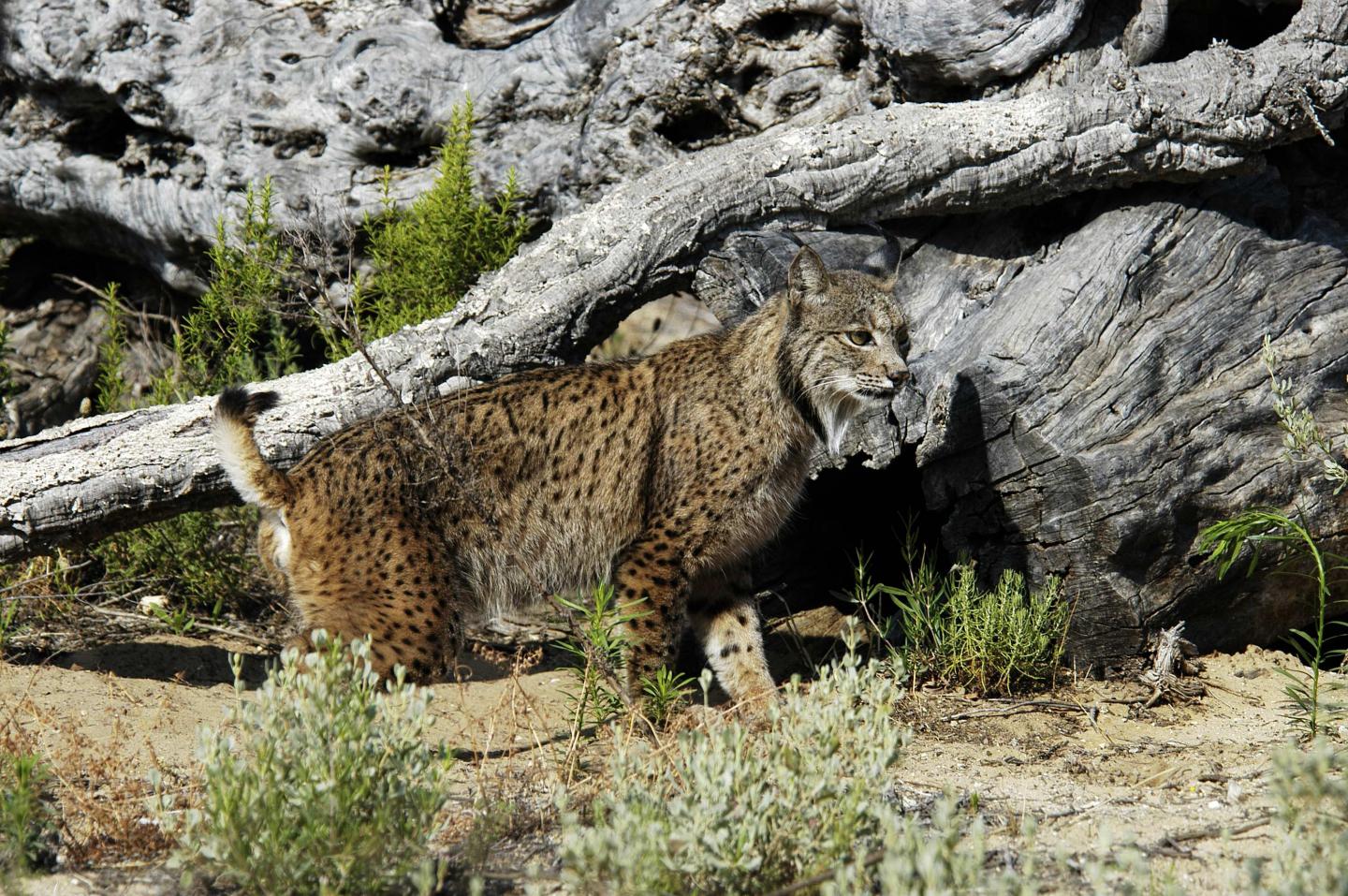
In contrast to other felids, Eurasian lynx, Canada lynx and Iberian lynx can only become pregnant once a year within a short period of conception. This restriction in terms of reproductive period is particularly observed in animals that live in strongly seasonal habitats, e.g. in the north with long winters or in southern Europe with hot and dry summers. The restriction ensures that the young are born at the optimal time of year, increasing their chances of survival. For endangered species such as the Iberian lynx this restriction of the reproductive season is a challenge for breeding in human care. In 2004, the Iberian lynx conservation breeding programme was established on the Iberian Peninsula to support the survival of the Iberian lynx. If a female Iberian lynx does not become pregnant or lose their young in the breeding programme, she can only contribute to the breeding programme one year later. It is therefore remarkable that husbandry and breeding success has been improved to such an extent that currently about 40 animals from the breeding programme are being released into the wild every year to support the decimated wild population of only a few hundred animals.
In order to understand why lynxes can only become pregnant once a year and how a new cycle is induced, it is necessary to study the mechanism of female reproduction. After the ovulation of egg cells, corpora lutea – hormone glands – are formed on the ovaries. They produce the hormone progesterone which prevents a new ovulation, an effect also used in the contraceptive pill. If a corpus luteum regresses at the end of the cycle or after birth, a new cycle can start. As the Leibniz-IZW reproduction team found out in previous studies, the lynx corpora lutea remain present and active for several years, they persist. “We suspect that the longevity of the corpus luteum and their release of progesterone are responsible for the strong seasonality of lynx reproduction,” explains Beate Braun, scientist of the Department of Reproduction Biology at Leibniz-IZW.
Until now it was unclear how the longevity of the corpus luteum comes about. The scientists have now succeeded in solving part of this mystery. “We could show that anti-oxidative enzymes, especially superoxide dismutase (SOD2), is likely to contribute in a significant way to the regulation of corpus luteum longevity,” says Beate Braun. The research team investigated ten anti-oxidative enzymes in fresh and older, at least one year old, corpora lutea of Iberian lynxes (Lynx pardinus) and Eurasian lynxes (Lynx lynx). The scientists recorded for different stages of the corpus luteum which enzyme was being produced, present and active. “The expression profiles of SOD2 showed remarkable differences between older corpora lutea of lynxes, fresh lynx corpora lutea and the corpora lutea of the domestic cat,” explains Braun. SOD2 was conspicuous in the older lynx corpus luteum with very high expression and enzyme activity, whereas it played a subordinate role in the domestic cat in all corpus luteum stages. “We suspect that SOD2 in the older, long-lived/persistent, lynx corpora lutea has a classic anti-oxidative effect by transforming poisonous reactive oxygen radicals,” says Katarina Jewgenow, head of the Department of Reproductive Biology. “During that process, SOD2 produces hydrogen peroxide, which is then broken down and converted into water by other enzymes. In addition, the hydrogen peroxide can function as a signaling molecule that protects the corpus luteum from programmed cell death and thus ensures its survival for several years,” adds Jewgenow.
These new findings contribute to a better understanding of lynx reproduction and provide an important basis for further investigations into the regulation of corpus luteum development and longevity. The aim is to elucidate the complex mechanisms of female reproduction in lynxes step by step and provide lasting support for the conservation breeding of lynxes in human care through the use of assisted reproduction techniques such as ovulation induction and artificial insemination.
###
Media Contact
Beate Braun
braun@izw-berlin.de
Original Source
https:/
Related Journal Article
http://dx.