• HOME
  • NEWS
  • EXPLORE
    • CAREER
      • Companies
      • Jobs
    • EVENTS
    • iGEM
      • News
      • Team
    • PHOTOS
    • VIDEO
    • WIKI
  • BLOG
  • COMMUNITY
    • FACEBOOK
    • INSTAGRAM
    • TWITTER
Thursday, June 25, 2026
BIOENGINEER.ORG
No Result
View All Result
  • Login
  • HOME
  • NEWS
  • EXPLORE
    • CAREER
      • Companies
      • Jobs
        • Lecturer
        • PhD Studentship
        • Postdoc
        • Research Assistant
    • EVENTS
    • iGEM
      • News
      • Team
    • PHOTOS
    • VIDEO
    • WIKI
  • BLOG
  • COMMUNITY
    • FACEBOOK
    • INSTAGRAM
    • TWITTER
  • HOME
  • NEWS
  • EXPLORE
    • CAREER
      • Companies
      • Jobs
        • Lecturer
        • PhD Studentship
        • Postdoc
        • Research Assistant
    • EVENTS
    • iGEM
      • News
      • Team
    • PHOTOS
    • VIDEO
    • WIKI
  • BLOG
  • COMMUNITY
    • FACEBOOK
    • INSTAGRAM
    • TWITTER
No Result
View All Result
Bioengineer.org
No Result
View All Result
Home NEWS Science News Science

Conflict in space doesn’t always look like ‘Star Wars’

Bioengineer by Bioengineer
March 20, 2019
in Science
Reading Time: 2 mins read
0
IMAGE
Share on FacebookShare on TwitterShare on LinkedinShare on RedditShare on Telegram

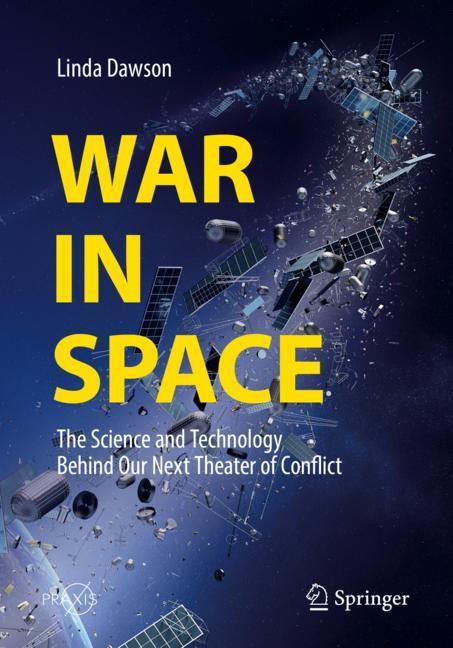
War in Space

IMAGE

Credit: Springer Nature Switzerland AG

Imagine driving on an unfamiliar route and suddenly your GPS navigation cuts out. Later it becomes clear that this was due to a blackout of a satellite. If scenarios as encountered in works of science fiction were to become a new reality, how would humans experience and react to that change? This book takes a closer look at the consequences of a full-scale satellite blackout, an event that would impact countless aspects of everyday life. War fought in space is becoming increasingly likely in a politically tense world, and this book explores how such a conflict could manifest itself. More optimistically the book also assesses which technology could prevent the destruction of the systems which keep the world as we know it running.

###

About the author:
Linda Dawson received her BS in Engineering Aeronautics and Astronautics from MIT and an Engineering Aeronautics and Astronautics MS from George Washington University at NASA Langley Research Center. She is a Senior Lecturer in Physical Science and Statistics at the University of Washington, Tacoma. Dawson served as Aerodynamics Officer for the Mission Control Center Ascent and Entry Flight Control Teams during the first space shuttle mission. During orbital phases, she served as an adviser on the impact of system failures on the orbiter’s re-entry trajectory and configuration.

Media Contact
Deborah Pirchner
[email protected]

Original Source

https://www.springer.com/gp/book/9783319930510

Tags: AstronomyAstrophysicsSatellite Missions/ShuttlesSpace/Planetary ScienceTechnology/Engineering/Computer Science
Share12Tweet8Share2ShareShareShare2

Related Posts

Five or more hours of smartphone usage per day may increase obesity

July 25, 2019
IMAGE

NASA’s terra satellite finds tropical storm 07W’s strength on the side

July 25, 2019

NASA finds one burst of energy in weakening Depression Dalila

July 25, 2019

Researcher’s innovative flood mapping helps water and emergency management officials

July 25, 2019
Please login to join discussion

POPULAR NEWS

  • Saying Goodbye to PGY-6: Pediatric Fellowship Realities

    103 shares
    Share 41 Tweet 26
  • Multi-Hospital Study Reveals Long Covid Burden Is Twice as High as Current Estimates

    92 shares
    Share 36 Tweet 23
  • Detection of EDCs in Breast Milk and Infant Urine Up to Six Months Highlights Early Exposure Risks

    77 shares
    Share 31 Tweet 19
  • New Drug Candidate Developed at McMaster Shows Potential for Treating Brain Cancer

    58 shares
    Share 23 Tweet 15

About

We bring you the latest biotechnology news from best research centers and universities around the world. Check our website.

Follow us

Recent News

Neural Design Enables Zero-Shot Drug-Binding Proteins

Genomic Insights into Human Skin Fungi Diversity

Energy-Saving Membrane Technology Developed by KAIST and Georgia Tech Enables Crude Oil Separation Without Boiling

Subscribe to Blog via Email

Enter your email address to subscribe to this blog and receive notifications of new posts by email.

Join 82 other subscribers
  • Contact Us

Bioengineer.org © Copyright 2023 All Rights Reserved.

Welcome Back!

Login to your account below

Forgotten Password?

Retrieve your password

Please enter your username or email address to reset your password.

Log In
No Result
View All Result
  • Homepages
    • Home Page 1
    • Home Page 2
  • News
  • National
  • Business
  • Health
  • Lifestyle
  • Science

Bioengineer.org © Copyright 2023 All Rights Reserved.