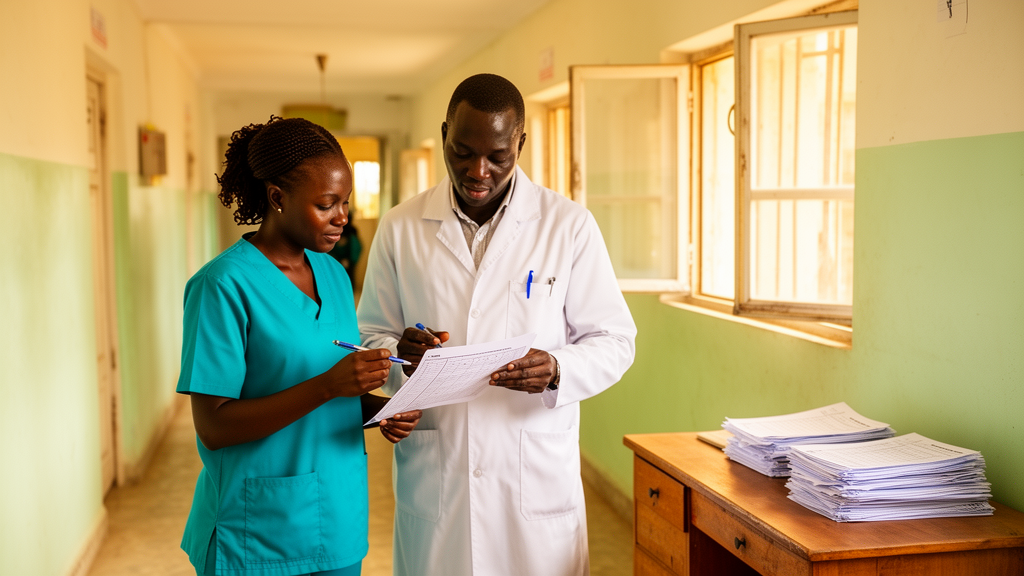
Most health workers in Guinea’s capital region view gender as rooted in biology rather than as a factor shaping their daily work, according to a cross-sectional survey published in BMC Health Services Research. The study, conducted in 2025 across 19 health centers in the five communes of Conakry, surveyed 412 staff members, including physicians, nurses, midwives, technicians, and other patient-facing personnel. The researchers used a structured questionnaire and analyzed responses with descriptive statistics to capture how primary care staff perceive gender and equity in their workplace.
The results showed that participants predominantly held a biological view of gender. Most respondents agreed that biological characteristics mainly determine gender and that men’s and women’s roles are naturally different. At the same time, a large proportion of the health workers did not perceive gender as influencing their daily work, their career progression, or the way patients are treated. This combination suggests that, for many staff in the surveyed centers, gender was understood as a fixed biological attribute rather than a dimension relevant to professional life and service delivery.
Perceptions of organizational equity told a more nuanced story. Respondents generally expressed positive views about fairness within their institutions, yet the visibility of formal gender-related policies and structures was limited. More than half of the participants reported the absence of a gender-equity policy or a designated gender focal point in their health center. In other words, even where staff felt their workplace was broadly equitable, the institutional mechanisms that would make gender responsiveness explicit and accountable were largely missing from view.
Demand for capacity building stood out as one of the clearest signals in the data. A strong majority of participants supported training and sensitization on gender and equity. The authors argue that this appetite for learning, combined with the limited institutionalization of gender-responsive mechanisms, points to concrete opportunities for reform: strengthening policies, establishing clear focal points, and linking training to practical implementation tools within Guinea’s primary health care system.
The study’s design shapes what its findings can and cannot show. As a descriptive cross-sectional survey restricted to the Conakry health region, it captures staff perceptions at a single point in time and does not measure how care is actually delivered, whether gender shapes patient outcomes, or how conditions compare with other regions of Guinea. The authors note that health workers’ perceptions can nonetheless influence how gender and equity are integrated into primary care services, affecting both the quality and the fairness of care delivery, which is why mapping these perceptions is a relevant step for health system planning.
The findings arrive against a broader backdrop in which gender and equity are recognized as critical determinants of health and healthcare access. Within the surveyed centers, the gap between generally positive perceptions of equity and the sparse presence of formal gender policies suggests that awareness and institutional structure may not move together. The study’s conclusions emphasize that recognizing gender’s influence in professional settings, and building the policy and training infrastructure to act on it, remain key opportunities for reinforcing gender and equity in Guinea’s primary health care system.
Subject of Research: Health worker perceptions of gender and equity in Conakry, Guinea
Article Title: Health center staff perceptions of gender and equity in the Conakry health region, Guinea (2025): a cross-sectional survey
Article References: Bah, H., Touré, A. F., Wann, A., Touré, A. A., Bavogui, J. S., Kaba, M. P., Traoré, Z., & Compaoré, M. P. (2026). Health center staff perceptions of gender and equity in the Conakry health region, Guinea (2025): a cross-sectional survey. BMC Health Services Research, 26(1), Article 1313. https://doi.org/10.1186/s12913-026-15497-9
Image Credits: AI Generated
DOI: 10.1186/s12913-026-15497-9
Keywords: gender equity, primary health care, Guinea, Conakry, health workers, cross-sectional survey, health services research, gender policies, capacity building, BMC Health Services Research, Health, center
News Source: Ophelia Keating. (October 26, 2026). Conakry health workers see gender as biological, survey finds. Scienmag.