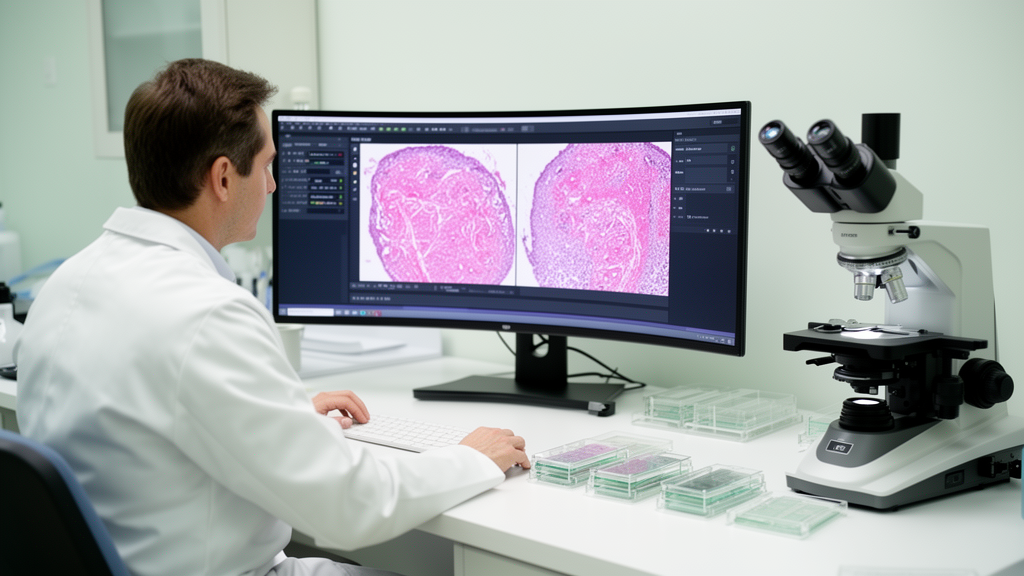
Histopathology serves as a cornerstone of modern cancer diagnosis, yet conventional microscopic review continues to face operational challenges stemming from interobserver variability and insufficient quantitative data integration. To address these diagnostic constraints, computational pathology increasingly applies machine learning algorithms to digitized tissue images. These automated analytical frameworks are engineered to perform diverse oncology tasks, including primary tumor detection and grading, inference of molecular biomarkers, prognostic assessment, and therapy-response evaluation across clinical settings.
A comprehensive review published in the Journal of Translational Medicine examines clinically relevant computational approaches, frameworks for assessing evidence maturity, and practical criteria governing translation into oncology workflows. The authors distinguish among multiple technical methodologies, including standard supervised learning, weakly supervised multiple-instance learning, emerging foundation models, and multimodal or spatial analytical architectures. Representative studies across these categories reveal varying stages of clinical translation and validate diverse clinical endpoints and cohorts.
While advanced foundation architectures and multimodal systems significantly improve representation learning and data efficiency in targeted tasks, the authors emphasize that they do not eliminate fundamental algorithmic risks. Digitized pathology pipelines remain vulnerable to performance drops driven by domain shift between institutions, hidden data leakage, calibration errors, demographic or institutional bias, and practical workflow mismatches within hospital laboratory environments.
To achieve safe and effective clinical deployment, computational pathology tools require rigorous developmental standards. These include testing against representative multicenter cohorts, implementing patient-level data partitioning, selecting task-appropriate validation metrics, and incorporating explicit uncertainty estimation and algorithmic abstention strategies. Furthermore, sustainable clinical adoption relies on continuous pathologist-in-the-loop oversight, comprehensive regulatory frameworks, and persistent post-deployment monitoring.
Ultimately, the review emphasizes that computational pathology must be treated as an emerging decision-support platform rather than an autonomous diagnostic system. The clinical value of automated pathology tools cannot simply be inferred from high retrospective discrimination metrics, but must be definitively established through prospective clinical trials.
Subject of Research: Clinical validation and translational requirements for computational pathology in precision oncology
Article Title: Computational pathology in precision oncology: evidence, validation, and clinical translation
Article References: Liu, S., Mu, S., Wang, W., Yan, W., Yin, P., Xu, Q., He, P., Cai, C., Zeng, S., Zhang, X., Shen, H., & Zhang, Y. (2026). Computational pathology in precision oncology: evidence, validation, and clinical translation. Journal of Translational Medicine. https://doi.org/10.1186/s12967-026-09146-2
Image Credits: AI Generated
DOI: 10.1186/s12967-026-09146-2
Keywords: computational pathology, precision oncology, machine learning, histopathology, foundation models, multimodal AI, multiple-instance learning, clinical translation, prospective validation, domain shift, data leakage, calibration error, decision support, pathologist-in-the-loop, biomarker inference, prognostic assessment
News Source: Nathaniel Bowman. (November 13, 2026). Computational Pathology Requires Prospective Validation for Oncology Clinical Adoption. Scienmag.