LA JOLLA, CA—La Jolla Institute for Immunology (LJI) is pleased to welcome biophysicist and immune system researcher Tal Einav, Ph.D., to the Institute’s faculty. His laboratory at LJI will develop new tools in computational biology and shed light on how human antibodies neutralize deadly viruses.
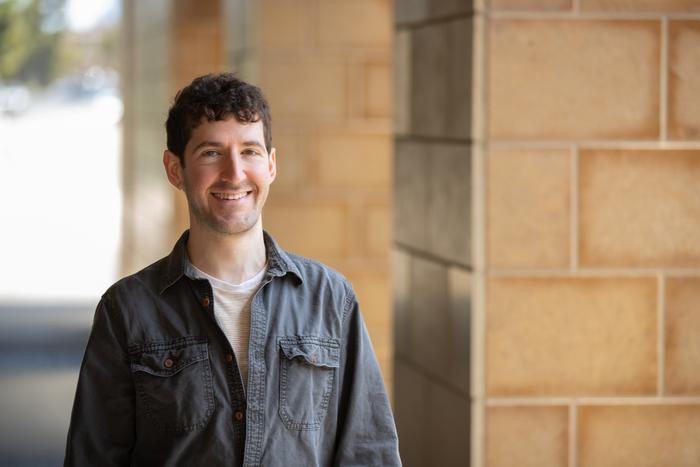
Credit: La Jolla Institute for Immunology
LA JOLLA, CA—La Jolla Institute for Immunology (LJI) is pleased to welcome biophysicist and immune system researcher Tal Einav, Ph.D., to the Institute’s faculty. His laboratory at LJI will develop new tools in computational biology and shed light on how human antibodies neutralize deadly viruses.
“Tal’s approach to research is all about combining datasets and combining expertise across scientific fields,” says LJI President and CEO Erica Ollmann Saphire, Ph.D. “His focus on collaboration will further LJI’s global leadership in vaccine immunology innovation.”
Einav joins LJI after completing his training in the laboratory of Jesse Bloom, Ph.D. at the Fred Hutch Cancer Center. While at the Fred Hutch, Einav’s accomplishments included the development of sophisticated computational methods to understand viral behavior and predict how individuals react to vaccination or infection. This research earned Einav a prestigious Damon Runyon Quantitative Biology Fellowship and emphasized the importance of pursuing machine learning to analyze big data in immunology.
“We have these tremendous datasets that we’re just barely tapping into,” says Einav. These data allow Einav to understand the immune response in different contexts, from the young to the elderly, from healthy people to individuals who are immunocompromised. All with the goal to discover key patterns that let us understand and harness our immunity. Einav’s work has already demonstrated that blending biophysics and computer science enables researchers to predict the antibody response against new viral variants.
This work paves the way for a fundamentally new form of personalized medicine. “Can we use these datasets to extract general principles about how we respond to vaccines, and then modify our current one-size-fits-all mode of vaccination to create personalized vaccines?” Einav asks. For example, Einav imagines tailoring an individualized vaccine strain or dosage based on a patient’s specific antibody repertoire to create a stronger response that lasts for years, if not their entire life.
At LJI, Einav initially plans to study the immune response to the influenza (or flu) virus. He aims to establish a laboratory containing experts from a range of disciplines who combine their skills to combat deadly diseases. “I am building a diverse lab, with physicists sitting next to biologists, mathematicians, and computer scientists, since key insights often require bridging between scientific domains.”
Einav comes from a multidisciplinary background himself. After majoring in theoretical physics and math as an undergraduate at Rice University, he joined the Caltech laboratory of biophysicist Rob Phillips, Ph.D. There, Einav showed that several dozen measurements can predict tens of thousands of future experiments. “These types of approaches are crucial since the number of biological systems we can create is far larger than the number of atoms in the universe,” says Einav. “To understand this vast space, we must use all available data and extrapolate out as much as possible.”
Einav applied this same type of thinking when he collaborated with Caltech biochemist Pamela J. Bjorkman, Ph.D., to design better antibodies against HIV. “Studying HIV-antibody interactions pushed my skills in biology, physics, and math to their limits. By the end of this project, I was hooked on immunology. This was a field where my specific skillset could make a unique impact,” says Einav.
When it comes to collaboration, Einav is looking forward to working with LJI’s renowned computational biology faculty, including Bjoern Peters, Ph.D., and Ferhat Ay, Ph.D., and partnering with virologists and immunologists such as Erica Ollmann Saphire, Sujan Shresta, Ph.D., Sonja Sharma, Ph.D., Alessandro Sette, Dr.Biol.Sci., and Shane Crotty, Ph.D.
“This is a spectacular group of people, working in an amazing city, doing great science,” says Einav.
###
About La Jolla Institute
The La Jolla Institute for Immunology is dedicated to understanding the intricacies and power of the immune system so that we may apply that knowledge to promote human health and prevent a wide range of diseases. Since its founding in 1988 as an independent, nonprofit research organization, the Institute has made numerous advances leading toward its goal: life without disease. Visit lji.org for more information.