• HOME
  • NEWS
  • EXPLORE
    • CAREER
      • Companies
      • Jobs
    • EVENTS
    • iGEM
      • News
      • Team
    • PHOTOS
    • VIDEO
    • WIKI
  • BLOG
  • COMMUNITY
    • FACEBOOK
    • INSTAGRAM
    • TWITTER
Monday, August 31, 2026
BIOENGINEER.ORG
No Result
View All Result
  • Login
  • HOME
  • NEWS
  • EXPLORE
    • CAREER
      • Companies
      • Jobs
        • Lecturer
        • PhD Studentship
        • Postdoc
        • Research Assistant
    • EVENTS
    • iGEM
      • News
      • Team
    • PHOTOS
    • VIDEO
    • WIKI
  • BLOG
  • COMMUNITY
    • FACEBOOK
    • INSTAGRAM
    • TWITTER
  • HOME
  • NEWS
  • EXPLORE
    • CAREER
      • Companies
      • Jobs
        • Lecturer
        • PhD Studentship
        • Postdoc
        • Research Assistant
    • EVENTS
    • iGEM
      • News
      • Team
    • PHOTOS
    • VIDEO
    • WIKI
  • BLOG
  • COMMUNITY
    • FACEBOOK
    • INSTAGRAM
    • TWITTER
No Result
View All Result
Bioengineer.org
No Result
View All Result
Home NEWS Science News

Complex bacterium writes new evolutionary story

Bioengineer by Bioengineer
February 1, 2017
in Science News
Reading Time: 2 mins read
0
Share on FacebookShare on TwitterShare on LinkedinShare on RedditShare on Telegram
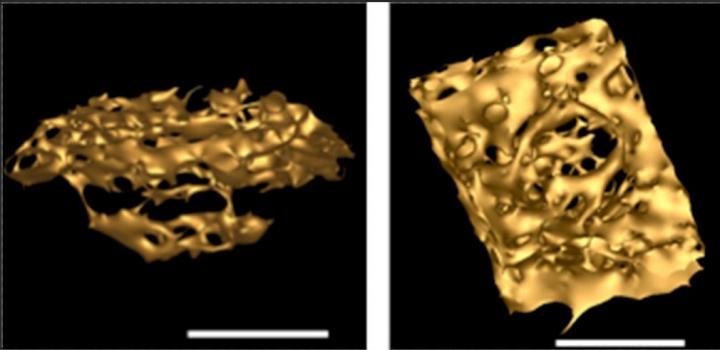
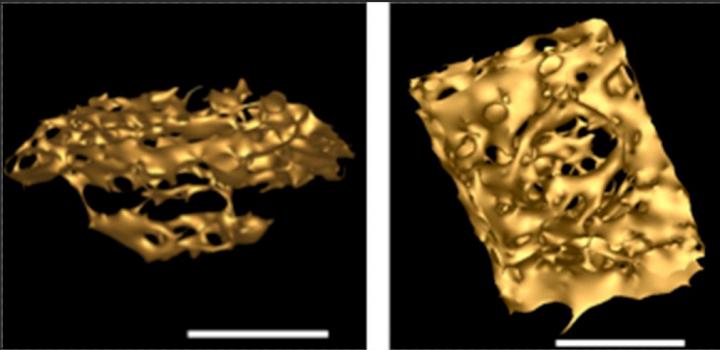
IMAGE

Credit: Image: courtesy Professor John Fuerst

A University of Queensland-led international study has discovered a new type of bacterial structure which has previously only been seen in more complex cells.

Research team leader UQ School of Chemistry and Molecular Biosciences microbiologist Emeritus Professor John Fuerst said the study had found pore-like structures in a bacterium called Gemmata obscuriglobus.

"The pore-like structures appeared embedded into the bacteria's internal membranes, and showed some structural features similar to those in more complex organisms," he said.

"This is a remarkable evolutionary finding, since most bacteria do not possess these structures.

"Finding nuclear pore-like structures in the bacterial species Gemmata obscuriglobus is significant for understanding how the cell nucleus and the pores embedded in its membrane envelope could have evolved – a major unsolved problem in evolutionary cell biology."

Professor Fuerst said the bacterium, which was first isolated from Maroon Dam in South-East Queensland in 1984 by UQ researchers Dr Peter Franzmann and Professor Vic Skerman, now constituted one of the most complex bacteria known.

He said the finding suggested that the evolution of complex cell structures may not be unique to eukaryotes, which are organisms containing a nucleus and other structures (organelles) encased in a membrane.

"The research finding is consistent with previous data my lab has published indicating that the Gemmata obscuriglobus bacterium contains a nuclear body compartment, which parallels the eukaryote nucleus."

Professor Fuerst said the discovery was important for understanding how the first complex cells may have originated.

"The results are of evolutionary significance, since the origin of eukaryotes is a major event in life's history," he said.

Professor Fuerst said nuclear pore complexes (NPCs) were important in transporting molecules between the nucleus containing the DNA and the rest of the cell contents in eukaryote organisms such as protozoa, fungi, animals and plants.

"They are dotted over the surface of the membranes separating the nucleus from the rest of the cell and enable communication between the nucleus and other parts of the cell," he said.

"Like the membrane-bounded nucleus, NPC's had been thought to be restricted to eukaryotes."

The researchers used a combination of techniques including advanced electron microscopy, a protein analysis method called proteomics, and bioinformatics genome analysis to make the discovery.

###

The study, published in PLOS ONE, has been supported by Australian Research Council Discovery project grants to Professor Fuerst's laboratory.

Co-authors include researchers from UQ's Centre for Microscopy and Microanalysis; CSIRO; University of Illinois; and University of Canterbury, New Zealand.

Media Contact

John A. Fuerst
[email protected]
61-402-481-714
@uq_news

http://www.uq.edu.au

############

Story Source: Materials provided by Scienmag

Share12Tweet8Share2ShareShareShare2

Related Posts

β-Sitosterol from Ipomoea carnea Jacq. As a promising anti-inflammatory agent: Evidence from in silico modeling and in vitro validation

β-Sitosterol from Ipomoea carnea Jacq. As a promising anti-inflammatory agent: Evidence from in silico modeling and in vitro validation

August 31, 2026
Design, fabrication and characterization of a wearable Fiber Bragg grating sensor for cardiorespiratory monitoring using finger plethysmography

Design, fabrication and characterization of a wearable Fiber Bragg grating sensor for cardiorespiratory monitoring using finger plethysmography

August 31, 2026

KAIST opens the era of industrial-scale microbial foods, proposing growth strategies for the next-generation protein market

August 31, 2026

Virologist awarded $2 million NIH grant to investigate how virus-infected cells live and die

August 31, 2026
Please login to join discussion

POPULAR NEWS

  • β-Sitosterol from Ipomoea carnea Jacq. As a promising anti-inflammatory agent: Evidence from in silico modeling and in vitro validation

    29 shares
    Share 12 Tweet 7
  • Design, fabrication and characterization of a wearable Fiber Bragg grating sensor for cardiorespiratory monitoring using finger plethysmography

    29 shares
    Share 12 Tweet 7
  • KAIST opens the era of industrial-scale microbial foods, proposing growth strategies for the next-generation protein market

    29 shares
    Share 12 Tweet 7
  • Virologist awarded $2 million NIH grant to investigate how virus-infected cells live and die

    29 shares
    Share 12 Tweet 7

About

We bring you the latest biotechnology news from best research centers and universities around the world. Check our website.

Follow us

Recent News

β-Sitosterol from Ipomoea carnea Jacq. As a promising anti-inflammatory agent: Evidence from in silico modeling and in vitro validation

Design, fabrication and characterization of a wearable Fiber Bragg grating sensor for cardiorespiratory monitoring using finger plethysmography

KAIST opens the era of industrial-scale microbial foods, proposing growth strategies for the next-generation protein market

Subscribe to Blog via Email

Enter your email address to subscribe to this blog and receive notifications of new posts by email.

Join 85 other subscribers
  • Contact Us

Bioengineer.org © Copyright 2023 All Rights Reserved.

Welcome Back!

Login to your account below

Forgotten Password?

Retrieve your password

Please enter your username or email address to reset your password.

Log In
No Result
View All Result
  • Homepages
    • Home Page 1
    • Home Page 2
  • News
  • National
  • Business
  • Health
  • Lifestyle
  • Science

Bioengineer.org © Copyright 2023 All Rights Reserved.