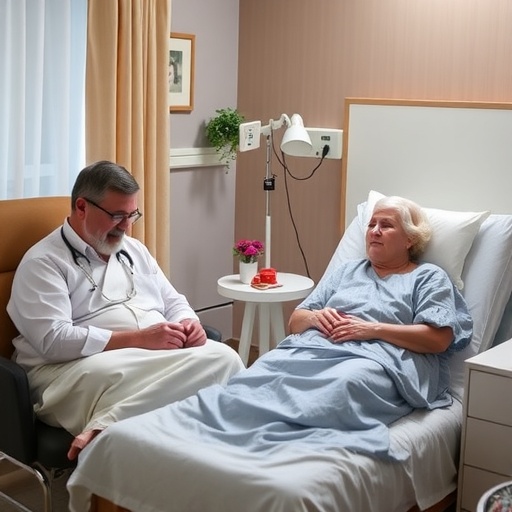
In a groundbreaking retrospective comparative effectiveness study focused on Medicare beneficiaries, researchers have provided compelling evidence that hospital-at-home (HaH) programs may offer significant clinical benefits over traditional inpatient hospital care. This study rigorously analyzed patient outcomes, revealing that HaH was associated with lower rates of in-hospital mortality and a reduction in emergency department visits within 30 days after discharge. Intriguingly, the rate of hospital readmissions within the same timeframe did not differ significantly between patients treated at home and those receiving standard inpatient care. These findings suggest that for carefully selected patient populations, HaH models can maintain, or even improve, crucial short-term clinical outcomes, while simultaneously extending hospital-level care into the domestic setting.
The study leveraged Medicare data, encompassing a large and demographically diverse cohort, to retrospectively compare health outcomes among beneficiaries receiving hospital-level services at home versus those admitted to conventional hospital wards. The investigators employed advanced statistical methodologies to adjust for confounders such as baseline patient health status, comorbidities, and demographic variables, ensuring that their conclusions reflect true differences attributable to the care setting rather than underlying patient characteristics. By analyzing mortality and healthcare utilization metrics—including emergency department visits and hospital readmissions—within 30 days post-discharge, the research team could capture early indicators of treatment effectiveness and safety.
One of the central revelations of the study is the statistically significant reduction in in-hospital mortality observed with hospital-at-home care. This finding challenges traditional assumptions that in-hospital monitoring and complex interventions inherently provide superior survival benefits. The HaH paradigm, which delivers acute medical treatment, monitoring, and supportive care in the patient’s residence through a multidisciplinary care team, may confer advantages such as reduced exposure to nosocomial infections, enhanced patient comfort, and better individualized care plans. These factors might contribute synergistically to decreased mortality risk, signaling a paradigm shift in acute care delivery.
Emergency department utilization presents another important dimension where hospital-at-home appears beneficial. The data showed that patients discharged after HaH interventions were less likely to seek emergent medical attention within 30 days, implying more sustained stability of their clinical condition post-acute treatment. This reduction potentially alleviates strain on emergency services and improves overall healthcare system efficiency. The ability of HaH programs to implement closely monitored transitional care and proactive follow-up could underpin these favorable outcomes, providing a buffer against clinical deterioration.
Although hospital readmission rates—a critical metric for healthcare quality assessment—did not show statistically significant differences between the two groups, this result does not diminish the promise of hospital-at-home models. Instead, it highlights areas requiring further clinical and operational optimization to fully harness the potential of home-based acute care. It also underscores the complexity of readmission phenomena, which can be influenced by myriad factors beyond initial care delivery, including socioeconomic determinants, outpatient follow-up capacity, and patient adherence to treatment regimens.
The nuanced findings from this large-scale Medicare population study have critical implications for health policy, insurance coverage, and healthcare infrastructure development. Transitioning eligible patients to HaH programs could reduce reliance on costly hospital beds, lower healthcare-associated complications, and improve patient-centric care delivery. However, successful widespread implementation will demand robust frameworks addressing technological integration, care coordination, and equitable access to healthcare resources across diverse populations. Furthermore, reimbursement models will need refinement to incentivize these innovative approaches while ensuring sustainability.
From a clinical perspective, the expanded adoption of hospital-at-home may enable tailored interventions aligned with patient preferences and comorbid profiles, particularly in aging populations with complex chronic diseases. By integrating remote monitoring technologies, telehealth platforms, and mobile healthcare professionals, HaH can deliver timely diagnostics, medication management, and symptom control that are otherwise accessible only in institutional settings. The resultant improvements in patient experience and health outcomes could redefine expectations for acute care services.
Importantly, this research also identifies equity considerations that warrant timely attention. The differential availability and acceptability of hospital-at-home programs across socioeconomic and geographic spectra might perpetuate disparities if unaddressed. Future studies must rigorously evaluate these dimensions to ensure that HaH deployments contribute to narrowing health inequities rather than widening them. Incorporating culturally competent care models and expanding broadband infrastructure for telehealth are promising strategies to support inclusive adoption.
Moreover, this study shines a spotlight on the urgent need for additional research into best practices for scaling and integrating hospital-at-home services within existing healthcare systems. Comprehensive analyses involving implementation science, cost-effectiveness evaluation, and patient-reported outcomes will be critical to refine protocols and optimize resource allocation. Stakeholder engagement—including patients, clinicians, payers, and policymakers—will be essential for co-creating sustainable models that balance innovation with pragmatism.
In terms of data utilization, the study exemplifies the power of leveraging large administrative datasets like Medicare claims to generate real-world evidence on emerging care models. Such observational studies complement randomized controlled trials by providing insights into effectiveness across broad populations typical of everyday clinical practice. The analytic approaches employed here, including propensity score adjustments and sensitivity analyses, set a high standard for rigor in health services research.
The study’s lead author, Dr. J. Priyanka Vakkalanka, PhD, emphasizes the transformative potential of hospital-at-home models backed by empirical data. Correspondence related to this research can be directed to Dr. Vakkalanka at [email protected] for interested clinicians, researchers, and policymakers seeking deeper engagement or collaboration. Meanwhile, the full peer-reviewed findings are accessible free of charge upon publication via JAMA Network Open, an influential open-access journal committed to advancing clinical knowledge across multidisciplinary dimensions.
In conclusion, this compelling body of evidence heralds a paradigm shift in acute care delivery, suggesting that hospital-level treatment in home settings is not merely feasible but potentially superior in critical short-term outcomes for select Medicare populations. As healthcare systems grapple with growing demands and resource constraints, hospital-at-home models offer a promising, patient-centered alternative. Ongoing research addressing implementation challenges and equity considerations will be paramount to unlocking the full promise of this innovative approach.
Subject of Research: Comparative effectiveness of hospital-at-home versus traditional inpatient care in Medicare beneficiaries
Article Title: Not specified in the provided content
News Publication Date: Not specified in the provided content
Web References: Not provided
References: (doi:10.1001/jamanetworkopen.2026.10810)
Image Credits: Not provided
Keywords: Health care delivery, Hospitals, Home care, Health insurance, Mortality rates, Emergency medicine
Tags: clinical outcomes hospital-at-home programsemergency department visits reduction HaHhealthcare utilization post-discharge analysishospital readmissions comparison HaHhospital-at-home care benefitshospital-at-home vs traditional inpatient outcomeshospital-level care in domestic settingin-hospital mortality rates hospital-at-homeMedicare beneficiary health outcomespatient selection criteria hospital-at-homeretrospective comparative effectiveness studystatistical adjustment in health outcome studies