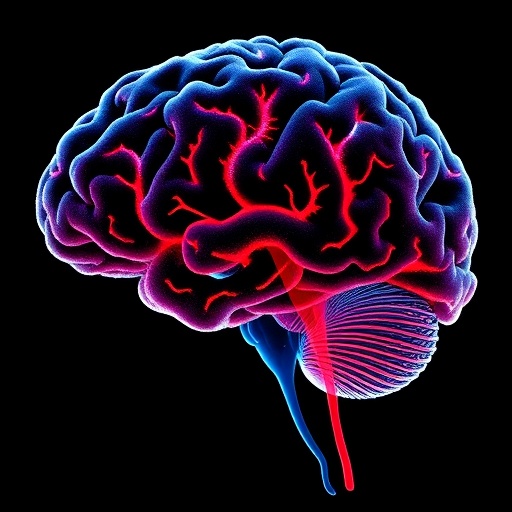
The insula, a folded region tucked deep within the lateral sulcus of the cerebral cortex, is emerging as one of neuroscience’s most important—and most complicated—research targets. Once treated largely as a sensory relay, the insular cortex is now linked to the way the brain represents internal bodily states, processes emotions, evaluates risk, generates conscious feelings and guides behavior. A new comparative review in Nature Neuroscience examines how closely the insula’s structure and function are shared across humans, monkeys and rodents, and asks a crucial question for modern brain science: when results from laboratory animals are applied to people, how much biological common ground can researchers safely assume?
The insula receives and integrates information from across the body, including signals related to heart rate, breathing, digestion, pain and temperature. This process, known as interoception, allows the brain to monitor the body’s internal condition and may contribute to subjective experiences such as anxiety, disgust, hunger and physical discomfort. At the same time, the region participates in attention, decision-making, motivation and social cognition. Because it sits at the intersection of sensory, emotional and cognitive systems, disruption of insular circuits has been associated with a remarkably broad range of conditions, including addiction, mood and anxiety disorders, autism-related traits, schizophrenia, neurodegenerative diseases and metabolic disorders.
The review by Charbonneau, Carp, Bennett and colleagues addresses a persistent problem in translational neuroscience: researchers often use the same anatomical name for brain regions that may not be organized in precisely the same way across species. The human insula is not simply a scaled-up version of the rodent or monkey insula. Differences in brain size, cortical folding, cellular organization, connectivity and behavior can alter the meaning of an experimental result. Establishing homology—evidence that a structure in different species derives from a shared evolutionary feature and performs related functions—therefore requires more than matching location on a brain map.
One major challenge is anatomy. In humans and other primates, the insula is a relatively extensive cortical territory hidden beneath the frontal, parietal and temporal opercula. Its surface is marked by complex folds, and its subdivisions contain distinct patterns of neurons, connections and sensory representations. Rodents have a much smoother and differently proportioned cortex, and their insular regions are arranged within a substantially different anatomical landscape. Such differences do not make rodents irrelevant, but they do mean that researchers must identify conserved circuits and computational principles rather than assume that every named subregion has a direct human counterpart.
Connectivity provides one of the most informative tools for making that comparison. The insula communicates with sensory areas, the amygdala, hippocampus, thalamus, hypothalamus, striatum, prefrontal cortex and brainstem systems involved in autonomic regulation. These connections position it to translate bodily signals into emotional and behavioral responses. Yet the strength, organization and direction of those pathways can vary among species. A circuit that supports threat learning in a rodent, for example, may overlap with networks involved in human anxiety while still differing in its precise wiring and behavioral context. Comparative research must therefore combine tract tracing, functional imaging, electrophysiology and molecular analyses.
Nonhuman primates occupy an especially valuable position in this research landscape. Their expanded and folded insular cortex, together with more complex social and cognitive behavior, offers anatomical and functional parallels that are difficult to reproduce in rodents. Primate studies can help clarify how insular networks contribute to subjective states, decision-making and social evaluation. At the same time, such work is expensive, technically demanding and limited by ethical considerations. The review emphasizes that primates are not automatically perfect models of the human insula; their similarities must be demonstrated at multiple levels, from cellular architecture to circuit dynamics and behavior.
Rodents remain indispensable because they offer experimental access that is often impossible in humans or nonhuman primates. Researchers can record activity from identified neurons, manipulate specific pathways with genetic tools, observe behavior under controlled conditions and study disease mechanisms across the lifespan. Rodent models have been particularly useful for examining pain, reward, aversion, stress and interoceptive behavior. Their limitations become most important when experiments are interpreted as direct models of complex human experiences. A rodent response to a visceral stimulus may reveal fundamental principles of bodily signal processing without reproducing the conscious feeling, language-rich interpretation or social meaning that accompanies the same bodily state in humans.
Human studies bring their own strengths and constraints. Magnetic resonance imaging can identify the insula and measure changes in blood flow or connectivity across the whole brain, while lesion studies and clinical observations reveal how damage affects perception and behavior. However, human neuroimaging generally measures population-level activity indirectly and with limited cellular resolution. Associations between insular activation and a mental state can also be difficult to interpret, because the region may be responding to bodily arousal, attention, salience or decision uncertainty rather than representing a single emotion. Cross-species comparisons will be most powerful when similar experimental designs are paired with careful control of these confounding factors.
The authors argue that future progress will depend on a more integrated comparative framework. Instead of treating species as interchangeable, researchers should map insular organization across anatomical, molecular, physiological and behavioral levels. Advances in single-cell transcriptomics could reveal whether neuronal types and gene-expression patterns are conserved, while high-resolution imaging and modern circuit-tracing methods may expose shared or divergent pathways. Computational models could further help distinguish general principles—such as the integration of bodily signals with predictions—from species-specific implementations. Standardized behavioral and physiological measurements would make it easier to determine whether apparently similar findings truly reflect the same underlying process.
This approach could strengthen the translation of insula research into treatments for brain and body disorders. The region’s involvement in autonomic regulation, emotion and motivation makes it a potential target for neuromodulation, pharmacological intervention and behavioral therapy. But successful translation depends on knowing which findings reflect deeply conserved biology and which depend on human-specific cortical expansion or cognition. By placing the human, monkey and rodent insula within a single comparative framework, the review highlights both the promise and the danger of cross-species neuroscience. The insula may be a shared evolutionary interface between body and brain—but understanding exactly how that interface works in each species will determine whether discoveries in the laboratory can genuinely improve human health.
Subject of Research: Comparative structure and function of the insular cortex in humans, monkeys and rodents
Article Title: Comparative insights into insula structure and function
Article References: Charbonneau, J.A., Carp, S.B., Bennett, J.L. et al. “Comparative insights into insula structure and function.” Nature Neuroscience (2026). https://doi.org/10.1038/s41593-026-02380-3
Image Credits: AI Generated
DOI: https://doi.org/10.1038/s41593-026-02380-3
Keywords: insular cortex, comparative neuroscience, interoception, brain anatomy, neuropsychiatric disorders, translational neuroscience, humans, monkeys, rodents
Tags: animal models in neuroscience researchcomparative neuroscience of insulacross-species brain structure comparisoninsula in conscious feeling generationInsula structure and functioninsula-related neurological and psychiatric disordersinsula’s role in decision-making and motivationinsular cortex in emotion regulationinteroception and bodily awarenessneural basis of risk evaluationneural circuits involved in social cognitiontranslational neuroscience and human brain studies