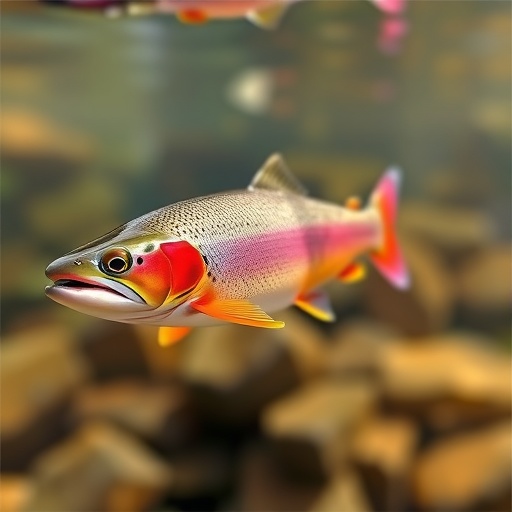
In a groundbreaking study set to redefine our understanding of freshwater fish species, researchers have unveiled significant findings regarding the biometric variations between two immensely popular species: the rainbow trout, Oncorhynchus mykiss, and the brown trout, Salmo trutta. Conducted in the rich and diverse aquatic ecosystems of Himachal Pradesh, India, this extensive research highlights the variations in morphological features that can be attributed to differing environmental conditions.
The quest to understand the attributes of Oncorhynchus mykiss, native to North America, alongside Salmo trutta, indigenous to Europe, has led scientists to focus on measurable traits such as length, weight, and fin structure. These quantitative attributes serve not only as identifiers in species differentiation but also provide insight into how each species adapts to their respective habitats. The findings of this research have far-reaching implications, potentially guiding conservation efforts and aquaculture practices.
Understanding the physical characteristics of these trout species is essential, given their economic and ecological significance. Oncorhynchus mykiss is particularly favored in aquaculture due to its rapid growth and adaptability to a range of environmental conditions. In contrast, Salmo trutta is often celebrated for its strong sporting qualities, making it a staple in recreational fishing. The research conducted aimed to analyze how different habitats impact the growth and development of these species, which could ultimately inform better management practices.
The research methodology was comprehensive, encompassing numerous data collection techniques that included not only biometric measurements but also genetic sampling. This two-pronged approach allows for a holistic view of how these trout species function in their natural environments, thus deepening our understanding of their biology. This research represents a significant advancement in the field of ichthyology, shedding light on species adaptability and habitat preferences.
In correlating habitat types with biometric data, researchers identified notable differences between the two species. For instance, Oncorhynchus mykiss displayed a more streamlined body shape, which is an evolutionary trait leading to increased swimming efficiency in fast-flowing waters. Conversely, Salmo trutta appeared to have a bulkier build, providing advantages in slower, more stagnant waters.
The diverse environments within Himachal Pradesh offer an exceptional backdrop for this type of research. With its various aquatic habitats, including rivers, lakes, and streams, researchers observed how ecological factors such as water temperature, flow rate, and food availability significantly influenced the morphology of the two species. Such variation underlines the principle that fish are not merely influenced by their genetics, but also heavily by the ecosystems they inhabit.
Additionally, the study found that the fin configurations between the two trout species differed significantly. Oncorhynchus mykiss possessed more elongated fins, adding to the agility and speed required to evade predators in fast currents. In juxtaposition, Salmo trutta exhibited more robust fins, which support maneuverability in varied environmental contexts. This nuanced understanding of fin morphology serves multiple purposes, from genetic conservation to ensuring sustainable fishing practices.
Beyond physical characteristics, the research also delved into behavioral traits, hypothesizing that these could influence survival outcomes in various habitats. For example, feeding patterns and social structures observed within different populations provided additional layers of complexity that are crucial for understanding interspecific interactions. Understanding these patterns is vital in managing fisheries and ensuring that both species can thrive without undue competition.
It is also noteworthy to mention the genetic analysis undertaken in this research, which revealed insights into the evolutionary histories of both trout species. By examining mitochondrial DNA, researchers could unveil both species’ phylogenetic relationships. Such intricate relationships provide a greater understanding of biodiversity and the evolutionary paths these species have taken, giving vital context to their current biological statuses.
The practical implications of this research cannot be overstated. The insights gained could help guide local conservation strategies, particularly as environmental changes increasingly threaten fish populations worldwide. Effective management of these trout species could mitigate risks while promoting sustainable fishing practices, ultimately benefiting both the ecosystem and local economies dependent on these fish.
Through a combination of fieldwork and laboratory analysis, this study stands as a testament to the importance of collaborative scientific endeavor. The partnerships formed among researchers, conservation organizations, and local communities were instrumental in the successful execution of this study. Such collaborations highlight the necessity of an integrated approach to ecological research, ensuring all voices are heard in the quest for knowledge and conservation.
Furthermore, this study serves as a clarion call for future research not just focused on trout, but across various ecological panels worldwide. Understanding the relationships between species and their environments is integral to biodiversity conservation, and findings like these provide a model for similar studies globally.
In summary, the meticulous biometric analysis of Oncorhynchus mykiss and Salmo trutta in Himachal Pradesh opens new avenues for both scientific research and practical applications in conservation and fisheries management. As environmental changes persist, drawing connections between ecological variables and species traits becomes paramount for maintaining biodiversity. The ongoing commitment to understanding these important relationships will be vital for the future health and sustainability of aquatic ecosystems.
This compelling narrative captures the essence of the research while highlighting the critical role these species play in their ecosystems. As the scientific community continues to innovate and collaborate, studies such as this one pave the way for a deeper understanding of biodiversity and ecological resilience.
Subject of Research: Biometric analysis of Oncorhynchus mykiss and Salmo trutta in Himachal Pradesh.
Article Title: Biometric analysis of Oncorhynchus mykiss (Walbaum, 1792) and Salmo trutta, Linnaeus, 1758 from the different habitat in Himachal Pradesh.
Article References: Kumari, H., Mahajan, D., Thakur, K. et al. Biometric analysis of Oncorhynchus mykiss (Walbaum, 1792) and Salmo trutta, Linnaeus, 1758 from the different habitat in Himachal Pradesh. Sci Rep 15, 38817 (2025). https://doi.org/10.1038/s41598-025-22721-9
Image Credits: AI Generated
DOI: https://doi.org/10.1038/s41598-025-22721-9
Keywords: Trout species, Biometric analysis, Oncorhynchus mykiss, Salmo trutta, Ecology, Conservation, Fisheries, Himachal Pradesh.
Tags: aquaculture practices for trout speciesbiometric analysis of trout in Indiacomparative study of rainbow and brown trouteconomic significance of trout in fisheriesenvironmental influence on fish characteristicsfreshwater fish species differentiationHimachal Pradesh aquatic ecosystemsimplications for trout conservation effortsOncorhynchus mykiss morphological featuresrecreational fishing and trout speciesSalmo trutta habitat adaptationtrout species biometric variations