


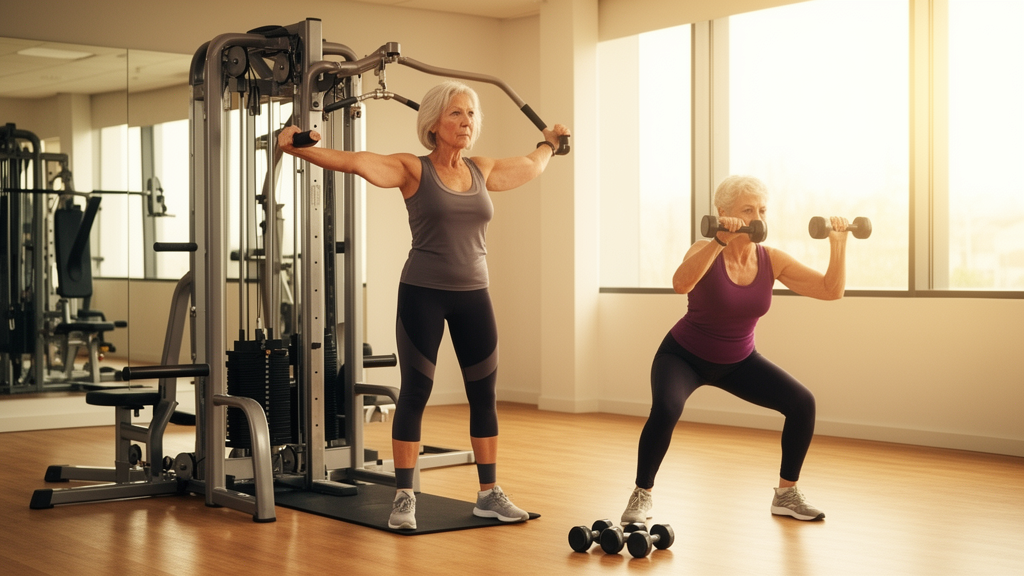
A new commentary published in Aging Clinical and Experimental Research argues that the comparative effectiveness of OsteoStrong, a machine-based isometric training program, versus dynamic multicomponent exercise in older women with low bone density has not yet been settled, and that several methodological issues in the underlying trial complicate the interpretation of its results.
The commentary, written by Furkat Ruzmetov and colleagues and published as a Matters Arising piece on 15 October 2026, responds to the BONEMORE randomized trial, in which Lindberg and colleagues assigned 194 older women with osteopenia or osteoporosis to either OsteoStrong or dynamic multicomponent exercise. According to the commentary, the trial found superior improvements in gait speed, back endurance, and balance in the dynamic exercise group. The authors of the commentary acknowledge that these findings are clinically relevant, but they contend that the trial’s design and execution leave important questions about which modality is genuinely more effective unanswered.
Central to the critique is the difference in training volume between the two arms. Participants in the OsteoStrong group trained for roughly 20 minutes per week, while the dynamic exercise group trained for about 120 minutes per week, a six-fold difference that the commentary argues confounds any comparison between the two modalities. Any advantage observed for dynamic exercise could reflect the greater time commitment rather than the nature of the exercise itself, making it difficult to attribute the outcomes to the training modality specifically.
The commentary also raises concerns about how the trial’s results were framed. The BONEMORE trial was designed as a non-inferiority study, yet the functional outcomes were interpreted as evidence of superiority, a shift the commentary authors identify as problematic. In addition, they note that participants’ high baseline activity levels may limit the generalizability of the findings to less active older women, and that unblinded follow-up assessments created a risk of detection bias, since assessors aware of group assignments could have influenced the measurement of functional outcomes.
According to the commentary, the BONEMORE trial does demonstrate that both OsteoStrong and dynamic exercise improve physical function in older women with osteopenia or osteoporosis. However, the authors conclude that the unequal training volumes, the shift from a non-inferiority to a superiority interpretation, the high baseline activity of participants, and the unblinded assessments together prevent definitive conclusions about which approach is comparatively more effective. They call for future research addressing these methodological gaps as a necessary step toward strengthening exercise recommendations for older women with low bone density, a population for whom exercise remains a cornerstone of osteoporosis management.
Subject of Research: Methodological critique of a randomized trial comparing OsteoStrong isometric training with dynamic multicomponent exercise in older women with osteopenia or osteoporosis
Article Title: OsteoStrong and dynamic exercise in older women: rethinking comparative effectiveness
Article References: Ruzmetov, F., Jasur, R., Jumayev, L., Amonov, A., Ahmadov, X., Usmanov, B., Narzullayev, F., & Naghashidi, T. (2026). OsteoStrong and dynamic exercise in older women: rethinking comparative effectiveness. Aging Clinical and Experimental Research, 38(1), Article 208. https://doi.org/10.1007/s40520-026-03536-8
Image Credits: AI Generated
DOI: 10.1007/s40520-026-03536-8
Keywords: OsteoStrong, dynamic exercise, osteoporosis, osteopenia, BONEMORE trial, older women, physical function, gait speed, balance, comparative effectiveness, non-inferiority, training volume
News Source: Ophelia Keating. (October 29, 2026). Commentary questions how OsteoStrong compares with dynamic exercise in older women. Scienmag.



