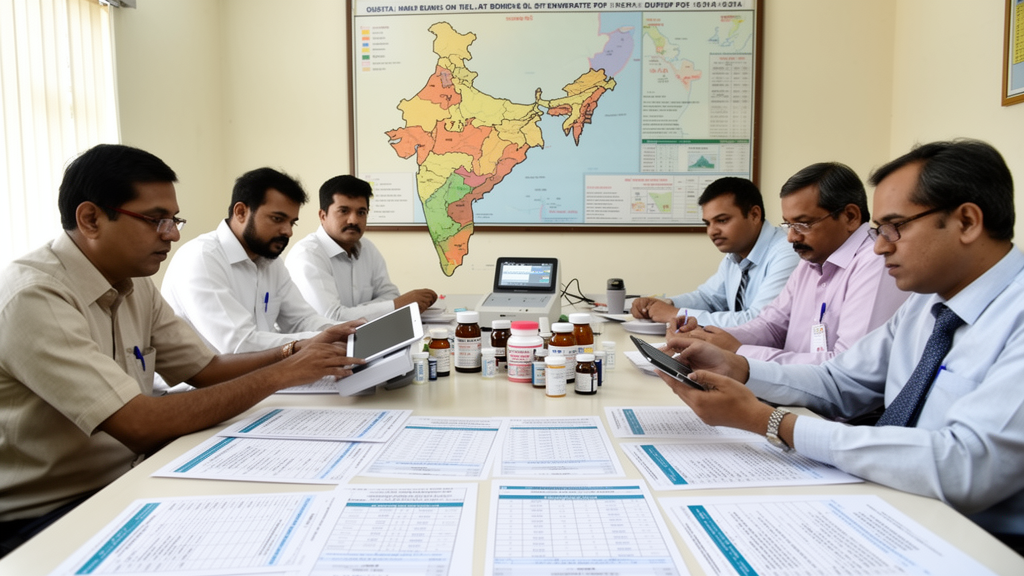
A 2026 commentary describes how India’s Health Technology Assessment India has created a structured programme for carrying national evidence-based recommendations into state planning and practice. The initiative, called Accelerating Dissemination and Operational Promotion of HTAIn-recommended Technologies, or ADOPT, links the HTAIn Secretariat with health officials responsible for programmes, procurement and public health. Its reported activities include 50 weekly virtual sessions, a national meeting attended by representatives from 28 states and eight union territories, and the establishment of five regional centres. The commentary presents ADOPT as a practical response to a persistent implementation gap: HTA recommendations can be influential nationally, but their use across a decentralised and pluralistic health system remains uneven because institutions differ in capacity, procurement readiness and administrative priorities.
Health Technology Assessment India, established in 2017, has assessed diagnostics, medical devices, pharmaceuticals and public health interventions. The authors say these assessments have informed price negotiations, revisions to health benefit packages and the adoption of cost-effective interventions in areas including tuberculosis, cancer, maternal and child health and hepatitis C. They cite a recent study that reported returns on investment from HTA-informed interventions ranging from 8.5:1 to 3,906:1. Those figures concern earlier HTA-informed interventions rather than ADOPT itself, and the commentary does not present them as outcomes of the newer implementation programme. More broadly, the aim is to ensure that technically supported decisions can be translated into choices about what health systems buy, finance and deliver.
The commentary identifies four constraints that have restricted the translation of HTAIn outputs into subnational action. Dissemination of findings and recommendations has sometimes been episodic, making implementation status harder for decision-makers to track. Some technologies recommended on the basis of cost-effectiveness have had limited availability on procurement platforms or government e-marketplaces used by payer agencies. Programme personnel have also raised field-level concerns about feasibility within population-wide health programmes. In addition, the budget impact of cost-effective technologies can influence adoption; the authors cite the phased introduction of pangenotypic sofosbuvir-velpatasvir for hepatitis C in resource-constrained settings as an example. These observations show why the production of an assessment is only one part of making use of its recommendations.
India’s response has combined institutional structures, designated personnel, training and recurring discussion. State HTA committees have been constituted in Punjab, Haryana, Tamil Nadu and Gujarat, while states have designated HTA nodal officers to act as links between the HTAIn Secretariat and state governments. The wider package also includes sensitisation meetings, simpler communication of findings through policy briefs, efforts to incorporate recommendations into state programme implementation plans, and capacity-building through tailored workshops, expert masterclasses and online courses. HTAIn and HTA resource centres have initiated these training activities. The commentary says they provide a foundation for developing officials who can interpret and apply HTA evidence in routine decisions, rather than confining assessment work to specialist teams or occasional policy exercises.
Between May 2025 and July 2026, HTAIn conducted 50 weekly ADOPT virtual sessions involving state HTA nodal officers, state programme officers and representatives from states and union territories. Average attendance was approximately 60 participants per session. A principal investigator presented the findings and recommendations of an HTA study, after which discussion focused on clinical effectiveness, value for money and implementation considerations. Participants used these sessions to assess the relevance, affordability and feasibility of recommended technologies in their own contexts. The engagement therefore functions as a structured route for moving from national recommendations to locally informed conversations. The commentary does not report a controlled comparison showing that these sessions changed adoption rates, clinical outcomes or health-system performance.
ADOPT also convened a national sensitisation meeting with 134 participants from 28 states and eight union territories. Senior state health policymakers, administrators and programme officials used the forum to discuss implementation experiences, barriers and context-specific adaptations across health technologies. In parallel, HTAIn has established five regional ADOPT Centres. Their stated functions are stakeholder engagement, dissemination of HTA evidence, support for integrating that evidence into state planning processes, and documentation of post-implementation experience. These roles are intended to support adoption, scale-up and refinement of recommended technologies. By linking implementation feedback with later assessment and planning activity, the centres are intended to make uptake an iterative process in which experience across health systems can inform further use.
The commentary points to earlier examples showing what can happen when HTA is embedded directly in operational and financing processes. HTA-informed procurement decisions in tuberculosis control and the sickle cell elimination programme were associated with estimated savings of USD 195 million and USD 5.5 million, respectively. HTA evidence has also contributed to health benefit package design and pricing decisions under the government-funded health insurance programme, PM-JAY. These are not evaluations of ADOPT and the reported savings cannot be attributed to its sessions or centres. They instead illustrate the potential of linking assessment evidence to procurement, programme planning and benefit design. Where such institutional links are absent, HTA can remain advisory even when its evidence is considered credible by policymakers.
The authors frame the ADOPT experience as consistent with implementation-science ideas that treat uptake as a process shaped by governance, institutional capacity, stakeholder engagement and cross-learning rather than as a linear sequence. Discussions during ADOPT sessions and state HTA committee meetings indicated that differences in technical capacity, the availability of field implementation data and procurement readiness influenced how far states and union territories could act on recommendations. The initiative supplies forums, personnel and training intended to address those constraints, but it does not remove the need for decisions and execution within each jurisdiction. The commentary provides no adoption rate, controlled estimate of implementation effects or quantified reduction in delays. Its findings primarily document the architecture of an implementation effort and the issues officials identified while examining how national recommendations could be used.
The implementation lessons may also be relevant elsewhere in Southeast Asia, where subnational entities play substantial roles in health service delivery. The commentary proposes three priorities: creating structured platforms that connect evidence producers with policymakers, embedding HTA within routine planning, procurement, financing and benefit-package processes, and strengthening subnational capacity to interpret and apply assessments. India’s five regional ADOPT centres are intended to help identify systemic bottlenecks, facilitate peer learning and support consistent application of recommendations across states and union territories. The programme is presented as one model for addressing the “last mile” of evidence use as countries in the region advance toward universal health coverage. Whether that model produces durable results will depend on continued stakeholder engagement, institutional integration and measurable progress in implementation, outcomes not yet quantified in the commentary.
Subject of Research: A commentary on India’s programme for implementing health technology assessment recommendations in state health systems
Article Title: From evidence to action: bridging the implementation gap for health technology assessment in India
Article References: Bhattacharjee, S., Chanana, N., Gupta, P., Sarkar, S., Venugopal, B., Sahoo, K. C., Sachin, O., Jagadeesh, K. V., Prinja, S., & Rajsekar, K. (2026). From evidence to action: bridging the implementation gap for health technology assessment in India. International Journal of Public Health, 71, Article 1610379. https://doi.org/10.3389/ijph.2026.1610379
Image Credits: AI Generated
DOI: 10.3389/ijph.2026.1610379
Keywords: health technology assessment, India, ADOPT initiative, health policy, stakeholder engagement, procurement, health systems, capacity building, universal health coverage, implementation science, evidence, action
News Source: Ophelia Keating. (October 22, 2026). Commentary maps India’s effort to move health technology assessments into state action. Scienmag.