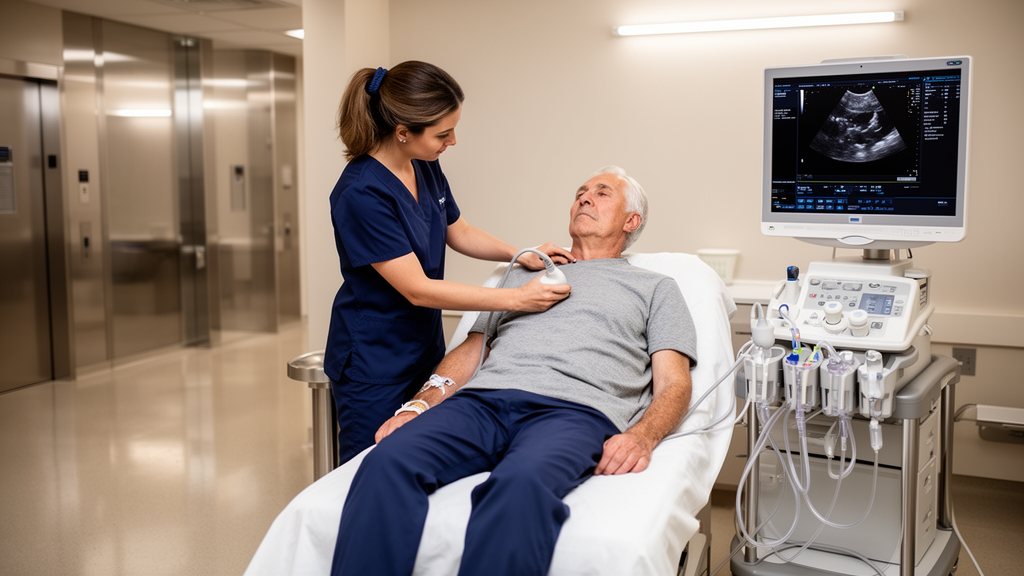
A recent comment published in Echo Research & Practice argues that existing clinical guidelines regarding dobutamine stress echocardiography, or DSE, for patients undergoing elective abdominal aortic aneurysm repair require significant revision. The author, A. Chaudhuri, contends that current recommendations, specifically those citing an aneurysm size greater than 4 centimeters as a relative contraindication for DSE, are outdated and lack supporting evidence. This critique highlights a disconnect between established vascular surgical practices and the cardiologic protocols that often govern pre-operative assessments in multidisciplinary settings.
The central issue identified in the comment is a specific statement in a 2019 guideline by Steeds et al. This guideline lists the presence of an abdominal aortic aneurysm larger than 4 centimeters as a relative contraindication for performing dobutamine stress echo testing. Chaudhuri notes that this didactic statement is presented without a supporting citation, which immediately raises questions about its validity. In contemporary vascular surgery, particularly in the United Kingdom and other regions with advanced practices, DSE has become a standard part of the pre-operative assessment pathway for elective AAA repair.
Modern vascular surgical centers have increasingly centralized their operations, benefiting from multidisciplinary input that includes cardiology. Within this framework, provocative testing such as DSE or cardiopulmonary exercise testing, known as CPET, is routinely used to unmask coronary problems. These issues are then treated with priority before the patient undergoes major vascular surgery.
The author points out that the 4-centimeter threshold contradicts guidelines from organizations with broader reach, such as the European Society of Vascular Surgery. These guidelines categorically state that dobutamine stress echocardiography can be performed safely in patients scheduled for AAA repair. Multiple other papers cited in the comment also indicate the safety of DSE in this patient population, including clear conclusions that the risk of AAA rupture from DSE is low. This evidence specifically refutes the idea that a 4-centimeter aneurysm size should preclude stress testing.
The discrepancy between the guideline and contemporary practice is further highlighted by the standard thresholds for AAA repair. Generally, AAA repair is indicated when the aneurysm reaches 55 millimeters, or 50 millimeters for female patients. Based on trial data, aneurysms smaller than 4 centimeters do not require treatment. However, the implication of the cited guideline is that no AAA eligible for elective repair is eligible for DSE, which creates a logical and clinical contradiction. This situation is compared to a similar “urban myth” regarding pulmonary function testing in AAA patients, which has also been disproved by evidence.
Although the original paper containing the contested guideline was published in 2019, the comment stresses the importance of addressing how it is interpreted and implemented today. The author observes that the contraindication is being misinterpreted as an absolute barrier by cardiologists who are not accustomed to the multidisciplinary working models linked to centralized regional vascular services. This misinterpretation leads to misleading interactions between medical specialties and can result in delays in patient care pathways for elective AAA repair.
The comment suggests that the uncited nature of the statement implies it may have been made without relevant multidisciplinary input, including from vascular anaesthetists and surgeons. Chaudhuri argues that there is clear merit in amending such statements to reflect contemporary practice based on actual, current data. Alternatively, the statement should be removed altogether to prevent it from affecting patient care.
Subject of Research: Critique of dobutamine stress echocardiography guidelines for elective abdominal aortic aneurysm repair
Article Title: Guidelines on DSE in patients selected for elective AAA repair need to reflect contemporary practice and evidence
Article References: Chaudhuri, A. (2026). Guidelines on DSE in patients selected for elective AAA repair need to reflect contemporary practice and evidence. Echo Research & Practice, 13(1), Article 42. https://doi.org/10.1186/s44156-026-00143-1
Image Credits: AI Generated
DOI: 10.1186/s44156-026-00143-1
Keywords: Dobutamine Stress Echocardiography, Abdominal Aortic Aneurysm, Vascular Surgery, Clinical Guidelines, Pre-operative Assessment, Cardiology, Multidisciplinary Care, Echo Research & Practice, Guidelines, patients, selected, elective
News Source: Ophelia Keating. (November 9, 2026). Comment Challenges Dobutamine Stress Echo Guidelines for AAA Patients. Scienmag.